
Is Delta-8 Legal in Hawaii? (2026 Guide for Hemp Products & THC Laws)

Featured Product

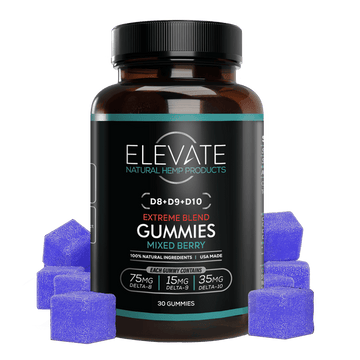
Delta 8 THC Gummies
$62.95
Shop NowIf you've been searching "is delta 8 legal in hawaii," the short answer will probably frustrate you: it depends on how the delta 8 was made. Hawaii has one of the stricter hemp regulatory frameworks i
Table of Contents
- Key Takeaways
- Overview: How Hawaii Regulates Hemp & Delta-8 THC
- Is Delta-8 Legal in Hawaii Right Now?
- Key Hawaii Laws & Rules That Affect Delta-8
- Delta-8 THC vs. Federal Law: Why the Farm Bill Isn't Enough
- How Hawaii Treats Delta-8, Delta-9, and Other THC Isomers
- What Kinds of Hemp Products Are Legal in Hawaii?
- Risks of Buying Delta-8 in Hawaii (Despite Store Availability)
- How Elevate Approaches Hawaii Orders & Compliance
- How Hawaii Compares to Other Delta-8 States
- Practical Tips for Hawaii Residents Interested in Hemp Products
- FAQ: Delta-8 and Hemp Product Laws in Hawaii
- Related Articles
If you've been searching "is delta 8 legal in hawaii," the short answer will probably frustrate you: it depends on how the delta 8 was made. Hawaii has one of the stricter hemp regulatory frameworks in the U.S., and the state draws a hard line between naturally occurring cannabinoids and those created through chemical conversion. This guide breaks down exactly what's allowed, what's banned, and how to stay on the right side of Hawaii law in 2026.
Key Takeaways
Hawaii banned delta 8 THC created through isomerization (chemical conversion of CBD) in February 2022, making most commercial delta 8 thc products illegal under state law. Even though hemp is legal at the federal level, Hawaii's rules override consumer access for chemically converted cannabinoids.
Delta-8 THC is legal in Hawaii under certain conditions: only naturally occurring delta 8 directly extracted from the hemp plant without chemical conversion, and only if the product contains less than 0.3% delta 9 THC. In practice, this type of product is extremely rare in the marketplace because hemp produces delta 8 in only trace amounts.
Despite the ban, delta 8 products can still be found in some local stores and online retailers shipping to Hawaii. Buying or selling such products carries real legal risk, including fines up to $10,000 per offense for retailers.
Elevate does not ship delta 8 THC products to Hawaii due to the state's prohibition on chemically converted cannabinoids. Instead, we offer Farm Bill–compliant hemp products-like low-dose delta 9 THC gummies and cbd products-where state law allows.

Overview: How Hawaii Regulates Hemp & Delta-8 THC
Hawaii hemp law is stricter than federal law, and that distinction matters. While Congress may have opened the door to hemp derived products nationwide, the state of Hawaii decides what actually reaches store shelves and mailboxes within its borders.
The 2018 federal farm bill legalized hemp and hemp derivatives across the country, provided they contain no more than 0.3% delta 9 THC on a dry weight basis. This removed compliant hemp from the federal Controlled Substances Act and allowed the sale of hemp derived cannabinoids, including cannabinoids like CBD.
Hawaii's house bill 2689, signed in July 2020 and effective in 2021, created the state's own hemp program under HRS Chapter 328G. It defined the plant cannabis sativa as "hemp" when its delta 9 thc content falls at or below 0.3% by dry weight, separating it from the marijuana plant. The law authorized industrial hemp cultivation and processing and removed compliant hemp from the state's list of controlled substances.
Then came the critical update. In February 2022, the Hawaii Department of Health adopted interim rules (HAR Chapter 11-37) that specifically target synthetic cannabinoids and cannabinoids created through chemical conversion-including delta 8 thc and delta 10 THC. In Hawaii, the method of production is just as important as the thc content when determining whether a product is legal.
Is Delta-8 Legal in Hawaii Right Now?
Under current Hawaii rules, most commercial delta 8 thc products are considered illegal. The reason is straightforward: nearly all delta 8 on the market is produced through isomerization of hemp derived cbd, and Hawaii prohibits delta-8 THC products created through isomerization.
The February 24, 2022 update to Hawaii's interim rules explicitly bans any manufactured hemp product containing cannabinoids created through chemical conversion or isomerization. This includes delta 8 and delta 10 THC. Hawaii prohibits chemically synthesized delta-8 THC products and treats converted delta 8 as an unlawful additive in any hemp based products sold within the state.
Delta-8 THC is legal in Hawaii if derived from hemp through non-chemical means. Naturally occurring delta-8 THC may be permitted if extracted without chemical conversion, and the finished product stays under 0.3% delta 9 THC. However, this is practically unavailable at scale because natural delta 8 levels in hemp grown commercially are negligible.
State law also prohibits adding synthetic or biosynthetic cannabinoids to any hemp product sold in Hawaii. Hawaii's rules only allow for naturally occurring cannabinoids to be extracted for use in hemp products.
Enforcement has been inconsistent-some stores still sell delta 8-but consumers should assume the state considers these products unlawful until the rules change.
Key Hawaii Laws & Rules That Affect Delta-8
Delta 8's legal status in Hawaii is shaped by several specific statutes and administrative rules. Here's a breakdown of the most important ones.
2018 Federal Farm Bill (Public Law 115-334)
The farm bill removed hemp (≤0.3% delta 9 THC by dry weight basis) and its derivatives from the federal Controlled Substances Act. This made hemp derived delta 8 theoretically permissible under federal law, though not explicitly named.
Hawaii House Bill 2689 (Signed July 2020, Codified as HRS Chapter 328G)
Hawaii's HB 2689 legalized hemp-derived products including delta-8 at the state level by:
Legalizing industrial hemp cultivation and processing
Removing hemp from the state's controlled substances list
Setting the ≤0.3% delta 9 THC legal limit based on dry weight
Hawaii DOH Interim Rules (HAR Chapter 11-37, Updated February 24, 2022)
These rules define what qualifies as a manufactured hemp product and what is banned:
Hemp products containing cannabinoids produced via isomerization or other chemical conversion are prohibited
Converted delta 8 and delta 10 THC are treated as unlawful additives
Rigorous testing, labeling requirements, and manufacturing standards apply to all legal hemp products
Hawaii bans all inhalable and edible manufactured hemp products as of April 2022 under these rules, though subsequent legislation (SB 1655, effective January 1, 2026) reopened limited edible forms like gummies and beverages under tight dose controls.
Act 263 (2023 Session Laws)
This act codified definitions of "synthetic cannabinoid" and "artificially derived cannabinoid" directly into statute, anchoring the delta 8 ban beyond just administrative rules.
Delta-8 THC vs. Federal Law: Why the Farm Bill Isn't Enough
Many people assume delta 8 is thc legal in hawaii-and everywhere else-simply because it comes from hemp and seems to fit under the farm bill. That assumption misses a critical point: state law can override federal law when it comes to restricting consumer access to cannabis products.
Here's what the 2018 farm bill actually did:
Removed hemp (≤0.3% delta 9 THC) and its derivatives from the federal Controlled Substances Act
Did not explicitly mention delta 8 THC, but did not ban it if derived from lawful hemp
Left room for states to impose their own restrictions
The DEA's 2020 Interim Final Rule added complexity by keeping "synthetically derived tetrahydrocannabinols" as Schedule I controlled substances at the federal level. This creates ambiguity around delta 8 made via chemical conversion from CBD isolate. Delta-9 THC is federally prohibited but legal in some states for medical or recreational use, adding another layer to the patchwork.
Even if a hemp product is arguably lawful under federal law, Hawaii can still ban or restrict it within state borders-and has done exactly that for isomerized delta 8.
For comparison, consider the range across states: new mexico broadly allows hemp-derived delta 8 with relatively loose restrictions, while rhode island treats all thc isomers as controlled substances with no hemp loophole. Hawaii falls somewhere in between, with delta 8 severely restricted but not all hemp products banned.
How Hawaii Treats Delta-8, Delta-9, and Other THC Isomers
Hawaii draws different legal lines depending on the type of THC, how it was produced, and what form it takes. Here's how the major thc isomers break down.
Delta-8 THC
Delta 8 thc is a minor cannabinoid primarily derived from hemp plants. It's usually produced by converting hemp derived cbd through isomerization-a process that changes the position of the double bond in the molecule's chemical structure. Delta-8 THC is about 50-66% as potent as delta-9 THC and produces milder psychoactive effects than delta 9. It activates CB1 and CB2 receptors in the body, producing varying effects depending on dose and individual tolerance. Under Hawaii law, delta 8 produced via chemical conversion is illegal. Only naturally occurring delta 8 extracted without conversion is technically permitted.
Delta-9 THC
Hemp-derived delta 9 thc products are legal in Hawaii when they stay at or below 0.3% by dry weight per federal law and meet state testing and labeling standards. Delta-9 THC is found in higher concentrations in marijuana plants, and marijuana-derived delta 9 above the 0.3% threshold is subject to medical cannabis or criminal rules. Hawaii's medical cannabis program operates through licensed marijuana dispensaries and licensed dispensaries for qualifying medical conditions.
Delta-10 THC and Other Variants (THC-O, etc.)
Delta 10 THC and other hemp derivatives like thc o are grouped with delta 8 in Hawaii's ban on chemically converted cannabinoids. They cannot be added to legal hemp products if created synthetically. The same prohibition on synthetically derived cannabinoids applies across the board.
What Kinds of Hemp Products Are Legal in Hawaii?
Not all hemp products are off-limits-far from it. The issue is specifically with synthetically altered or chemically converted cannabinoids. Here's what you can and can't buy.
Generally legal in Hawaii (when meeting ≤0.3% delta 9 THC and other state requirements):
CBD tinctures, capsules, and topicals from licensed manufacturers
Full-spectrum hemp products where total thc (including delta 9 and any naturally present delta 8) remains within the legal limit
Hemp-derived delta 9 THC gummies that are clearly labeled and tested, compliant with HB 2689 and DOH rules
Hemp flower sold in permissible forms under state regulations
Under senate bill 1655 (effective January 1, 2026), permitted hemp processors may sell hemp products in different forms like gummies or beverages. Hawaii limits manufactured hemp products to a maximum of 1 mg of THC per serving and no more than 5 doses per package.
Prohibited:
Products containing added synthetic or chemically converted cannabinoids (most delta 8 thc products and delta 10)
Vape cartridges and other hemp products intended for inhalation containing cannabinoids
Any product exceeding the total thc or thc ratio thresholds
Age and registration rules:
Some stores in Hawaii restrict delta-8 sales to individuals over 21, and age restrictions apply to the sale of compliant manufactured hemp products-particularly those containing any THC
Minors can purchase delta-8 products, except tinctures after 2026
Retailers of hemp products in Hawaii must register with the state, and retail registration for hemp product sellers will be mandatory starting in 2026

Risks of Buying Delta-8 in Hawaii (Despite Store Availability)
Despite the prohibition, residents can buy delta-8 THC products online in Hawaii, and delta 8 gummies, vapes, and other cannabinoid content products are still sold in some vape shops, smoke shops, convenience stores, and gas stations. The products being on shelves doesn't mean they're legal.
Hawaii DOH rules classify most of these delta 8 items as unlawful manufactured hemp products, exposing:
Retailers to inspections, fines (up to $10,000 per offense), and product seizure
Consumers to potential possession issues if enforcement tightens, since such products may fall under broader THC and controlled substance laws
Quality and safety concerns compound the legal risk. Unregulated delta 8 thc products often bypass state-mandated lab testing, batch testing, and quality control standards. Chemical conversion processes can leave residual solvents or harmful byproducts when not properly controlled. Without verified labeling requirements, cannabinoid content and thc content may differ wildly from what's printed on the package.
Travelers should not attempt to fly into or out of Hawaii with delta 8 products. TSA and local law enforcement may treat them as illegal THC items, regardless of where they were purchased.
Until Hawaii revises its rules, treating delta 8 as effectively banned is the safest legal assumption.
How Elevate Approaches Hawaii Orders & Compliance
At Elevate, we believe compliance isn't optional-it's foundational. We follow both federal law and each state's specific hemp regulations, and that means making hard calls about where we can and can't ship certain products.
Here's what that looks like for Hawaii:
We do not ship hemp derived delta 8 products to Hawaii due to the February 2022 ban on chemically converted cannabinoids
We screen orders by destination to avoid violating state-level prohibitions
What we can offer Hawaii customers (as long as current state rules allow):
Farm Bill–compliant cbd products (broad-spectrum or isolate) with no detectable delta 9 THC
Select full-spectrum hemp products where delta 9 THC remains under 0.3% and all Hawaii labeling and testing rules are met
All Elevate hemp products are third-party lab tested with Certificates of Analysis available for every batch. Our formulations use organic hemp and are reviewed by a medical advisory council. Every order is backed by a 30-day money-back guarantee.
We encourage Hawaii residents to check our shipping policy and product-specific legality information before ordering. Hawaii's rules and pending legislation can shift, so we update our compliance practices as laws evolve.
How Hawaii Compares to Other Delta-8 States
Hawaii sits in the "banned but patchily enforced" category-stricter than many states, but not as absolute as a few others.
State |
Delta-8 Status |
Key Detail |
|---|---|---|
Hawaii |
Banned (if chemically converted) |
Only naturally occurring delta 8 from hemp is technically permitted |
New Mexico |
Broadly legal |
Hemp-derived delta 8 sold with fewer restrictions |
Rhode Island |
Flatly banned |
All THC isomers treated as controlled substances |
South Carolina |
Legal with limits |
Delta 8 generally recognized as legal if hemp-derived |
Some states treat delta 8 as legal but severely restricted through total thc caps, serving-size limits, or registration requirements. Others allow it only inside licensed cannabis dispensaries, not through regular hemp channels or local stores.
The takeaway: delta 8 laws are a patchwork. If you travel between states, re-check legality each time. What you can legally buy in one state may carry criminal risk in another.
Practical Tips for Hawaii Residents Interested in Hemp Products
Here's an actionable checklist for staying on the right side of Hawaii law while still benefiting from hemp products.
Avoid purchasing delta 8 THC products in Hawaii, even if they appear on store shelves. The legal status is clear under current rules.
Choose hemp products with clear labels showing ≤0.3% delta 9 THC and no mention of delta 8 or delta 10 THC additives.
Check lab reports (COAs) for each product. Ask whether the retailer can explain how their other hemp derivatives are manufactured and whether any cannabinoids are chemically converted.
Start with non-intoxicating options like CBD-only or broad-spectrum hemp products. If you want mild THC effects, look for low-dose, hemp-derived delta 9 THC gummies that meet Hawaii's THC limits and age restrictions.
Consult a local attorney or medical professional for personalized legal or health advice. Elevate cannot provide formal legal counsel, and laws may change. We encourage you to legalize hemp products advocacy through proper legislative channels if you believe Hawaii's rules should evolve.

FAQ: Delta-8 and Hemp Product Laws in Hawaii
These FAQs cover common questions not fully addressed above.
Can I legally order delta-8 products online and ship them to Hawaii?
Many mainland websites will technically process an order to a Hawaii address, but state law treats most isomerized delta 8 as illegal. If products are intercepted or enforcement increases, consumers assume the legal risk. The fact that a transaction goes through doesn't make the product legal in hawaii once it arrives.
Is possession of delta-8 in Hawaii a crime, or just the sale?
Hawaii's rules are written primarily around manufactured hemp products and the businesses that sell hemp products. However, possession of products deemed unlawful can still create legal exposure under broader THC and controlled substance laws. The distinction between sale and possession is nuanced-consult a Hawaii attorney for specifics related to your situation.
Are there any medical marijuana programs in Hawaii that allow delta-8 THC?
Hawaii's medical cannabis program focuses on marijuana-derived products with delta 9 THC and does not create a special carveout for delta 8. Patients with qualifying medical conditions should only use cannabis products obtained through licensed dispensaries. Delta 8 from other cannabinoids or hemp channels is not covered.
Will delta-8 from hemp show up differently on a drug test in Hawaii?
Standard drug tests do not distinguish between delta 8 THC and delta 9 THC metabolites. Using delta 8-whether from hemp or any other source-can trigger a positive THC result, identical to what marijuana use would produce. This is true regardless of where you purchased the product.
Could Hawaii's legal status for delta-8 change in the future?
It's possible. Future revisions to Hawaii's hemp rules, new state legislation, or a revised federal farm bill could clarify or change how delta 8 is treated. The trend toward allowing limited edible thc products (like the changes under SB 1655) suggests the regulatory landscape is evolving. Always check the most current state guidance before buying any THC-containing hemp product.
Related Articles
- Is Delta 8 Legal in California?
- Is Delta 8 Legal in Florida?
- Is Delta 8 Legal in Georgia?
- Is Delta 8 Legal in New York?
- Is Delta 8 Legal in North Carolina?
- Is Delta 8 Legal in South Carolina?
Ready to order?
Buy Delta 8 in Hawaii →Join Our Newsletter
Sign up to be the first to know about our can't-miss product drops, special VIP offers & exclusive discounts.