THCP Products: Premium Hemp-Derived Cannabinoid Collection
THCP (tetrahydrocannabiphorol) is a hemp-derived cannabinoid with a seven-carbon side chain, two carbons longer than delta-9 THC, giving it far stronger binding affinity at CB1 receptors and greater perceived potency per milligram. Elevate THCP products are batch-tested by an ISO 17025-accredited lab and comply with the 2018 Farm Bill.
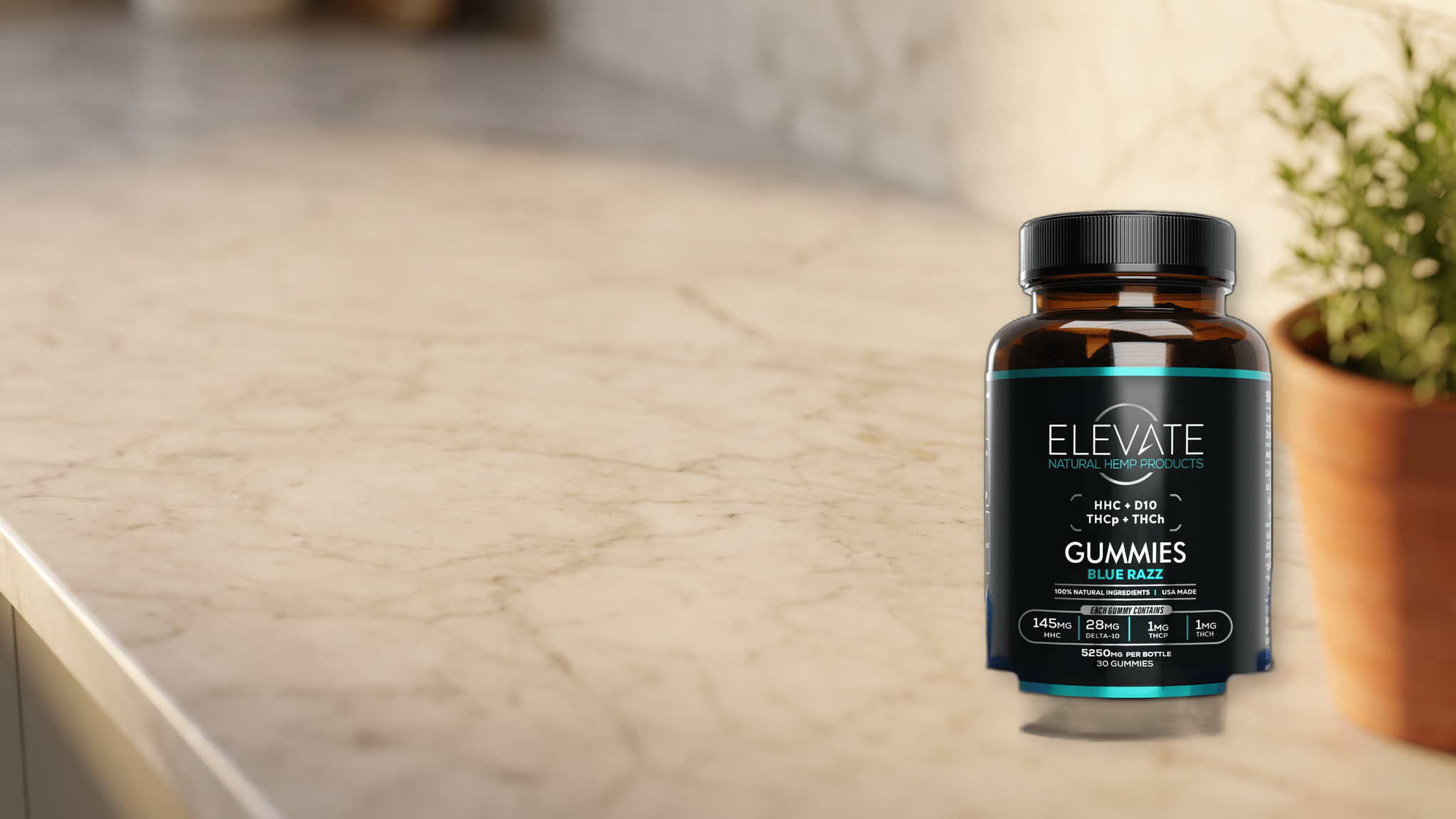
THCP (tetrahydrocannabiphorol) is a hemp-derived cannabinoid with a seven-carbon side chain, two carbons longer than delta-9 THC, giving it far stronger binding affinity at CB1 receptors and greater perceived potency per milligram. Elevate THCP products are batch-tested by an ISO 17025-accredited lab and comply with the 2018 Farm Bill.
Adult use only 21+
Filters
THCP (tetrahydrocannabiphorol) is a naturally occurring cannabinoid distinguished by its seven-carbon alkyl side chain—two carbons longer than delta-9-THC's five-carbon chain. This structural difference gives THCP a notably higher binding affinity for CB1 receptors, which may translate to greater perceived potency per milligram. Elevate's THCP products are hemp-derived, batch-tested by an ISO 17025-accredited lab, and ship federally legal under the 2018 Farm Bill.
Compare Products
| Product | Potency | Type | Best For |
|---|---|---|---|
THCP Gummies | 2–5 mg THCP per gummy | Edible | Predictable dosing, longer-lasting experience |
THCP Vape Cartridge | Varies by blend (THCP + supporting cannabinoids) | Inhalable | Fast onset, on-the-go convenience |
THCP Disposable Vape | Blend with THCP concentration listed on COA | Inhalable | No-maintenance, travel-friendly format |
THCP Tincture | 1–3 mg THCP per serving | Sublingual | Precise micro-dosing, flexible serving sizes |
What Sets THCP Apart—and Why It Matters
Molecular structure is the first thing that separates one cannabinoid from another, and THCP makes the distinction impossible to ignore. Short for tetrahydrocannabiphorol—also written as Δ9-tetrahydrocannabiphorol—THCP carries a seven-carbon alkyl side chain where standard delta-9-THC has only five. Those two extra carbons aren't a footnote. They reshape how the molecule docks with CB1 receptors in the endocannabinoid system, potentially increasing binding affinity enough to make each milligram feel meaningfully more potent.
THCP is a naturally occurring cannabinoid found in trace amounts within the cannabis plant and hemp inflorescence. Italian researcher Giuseppe Citti and colleagues first isolated and characterized it, confirming THCP as a genuine phytocannabinoid—not a lab-made artifact. Because concentrations in raw flower are so low—often below 0.1%—most THCP products rely on careful extraction or precision synthesis from hemp-derived precursors. That reality makes sourcing, testing, and transparency non-negotiable when you're shopping.
Elevate builds every THCP product around those principles. Our hemp is U.S.-grown, slow-dried, properly aged, and hand-trimmed when flower is involved. Each finished batch—whether THCP gummies, a THCP vape cartridge, or a tincture—ships with a certificate of analysis from ACS Laboratory, an independent ISO 17025-accredited facility that verifies cannabinoid concentration, potency, and the absence of contaminants. Every result is also published in our Trust Center so you can pull up lab data before you buy.
The pharmacology behind THCP's heptyl side chain follows a well-understood pattern across the cannabinoid family: longer alkyl chains generally correlate with stronger cannabinoid receptor engagement. That principle is exactly why precise mg dosing matters more here than with conventional THC—and why informed consumers are paying attention. Whether you're exploring THCP for the first time or comparing it to CBD, delta-8, or CBN, understanding this molecular distinction helps you make a smarter choice.
Below you'll find a straightforward buying guide, a format comparison, and answers to the most common THCP questions—everything you need to choose the right product with confidence. You can also explore our broader cannabinoid collections, including CBN products, CBG products, and our hemp education hub for deeper context.
How to Choose the Right THCP Product
1. Verify the Certificate of Analysis
A trustworthy THCP product lists exact mg content per serving and confirms delta-9-THC stays below the Farm Bill's 0.3% threshold. Elevate publishes every COA through our Trust Center, tested by ACS Laboratory under ISO 17025 protocols that validate minor cannabinoid profiles—not just THC and CBD.
2. Understand Potency per Milligram
Because THCP's binding affinity for CB1 receptors may be significantly higher than conventional THC's, effective servings are smaller—often 1–5 mg. Look for clear mg-per-serving labeling rather than total-cannabinoid percentages alone. That potentially elevated in vivo cannabimimetic activity is precisely what makes precise dosing essential with this cannabinoid.
3. Pick Your Format
- Gummies — Consistent concentration per piece; onset in 45–90 minutes; ideal for measured, longer-lasting experiences.
- Vape cartridges and disposables — Faster onset (minutes); easier to titrate in real time; best for users comfortable with inhalables.
- Tinctures — Sublingual absorption offers a middle ground on onset speed and dosing flexibility.
4. Check Hemp Origin and Extraction
Elevate sources hemp-derived THCP from U.S.-grown plants cultivated under USDA hemp production guidelines. CO₂ and ethanol extraction methods preserve the full spectrum of minor cannabinoids—including CBD—which may contribute to the entourage effect. Because THCP occurs at concentrations often below 0.1% in raw hemp, advanced extraction or controlled synthesis from hemp-derived precursors is required to reach usable potency—making third-party COA verification essential to confirm actual THCP content.
5. Confirm Legal Compliance
All Elevate THCP products ship federally legal under the 2018 Farm Bill. The Farm Bill's 0.3% threshold applies specifically to delta-9-THC concentration—not to minor cannabinoids like THCP. Review our Shipping & Compliance page for state-specific details before ordering.
6. Match the Product to Your Wellness Goals
THCP's unique pharmacology appeals to wellness-focused consumers exploring minor cannabinoids beyond CBD and delta-9. Whether your goal is deeper relaxation, sharper focus, or simply broadening your cannabinoid experience, matching the right format and serving size to your personal routine is key. Elevate's clearly labeled products—and the comparison table above—make that process straightforward.
Sources
- Agriculture Improvement Act of 2018 (2018 Farm Bill), Section 297A — Definition of HempDefines hemp as Cannabis sativa L. with a delta-9-THC concentration of not more than 0.3% on a dry weight basis, establishing the federal legal framework for hemp-derived cannabinoid products including THCP.
- USDA Agricultural Marketing Service: U.S. Domestic Hemp Production ProgramOutlines federal requirements for hemp cultivation, testing, and compliance, including the 0.3% delta-9-THC threshold that governs upstream raw material used in finished THCP products.
- FDA Consumer Update: What You Need to Know About Products Containing Cannabis or Cannabis-Derived CompoundsProvides the FDA's position on cannabis-derived products, labeling expectations, and consumer safety considerations relevant to hemp-derived cannabinoids.
- ISO/IEC 17025:2017 — General Requirements for the Competence of Testing and Calibration LaboratoriesInternational standard that specifies competence requirements for laboratories performing testing and calibration, including cannabinoid potency and contaminant screening for hemp products.
FAQ
What is THCP and how does it differ from THC?
THCP (tetrahydrocannabiphorol) is a naturally occurring cannabinoid whose seven-carbon alkyl side chain is two carbons longer than delta-9-THC's five-carbon chain. This structural difference may give THCP a higher binding affinity for CB1 receptors, which could amplify its perceived potency per milligram. While both cannabinoids are found in the cannabis plant, THCP exists only in trace amounts in raw hemp inflorescence, so finished products concentrate it through extraction or precision synthesis from hemp-derived starting materials. That's why checking a product's certificate of analysis for verified THCP content is so important.
What is the significance of THCP's seven-carbon alkyl side chain?
The seven-carbon alkyl side chain is the primary reason THCP may interact with CB1 receptors more strongly than THC. In cannabinoid pharmacology, longer alkyl chains generally correlate with increased receptor engagement—the same structure-activity pattern that explains why THC binds more strongly than CBN. THC's five-carbon chain already engages well; adding two more carbon atoms to create THCP's heptyl chain may substantially increase that affinity. This is why even low-mg THCP servings—1 to 5 mg—can produce noticeable psychoactive effects, and why precise dosing matters more with THCP than with conventional THC products.
Is THCP naturally occurring in hemp?
Yes, THCP is a naturally occurring cannabinoid identified in the inflorescence of the cannabis plant, including hemp varieties. Giuseppe Citti and colleagues first isolated and characterized the compound, confirming it as a genuine phytocannabinoid rather than a synthetic artifact. However, it appears only in trace amounts—often below 0.1% of total cannabinoid content. Because natural concentrations are so low, most THCP products use extraction and concentration techniques or convert hemp-derived cannabinoid precursors through controlled synthesis to achieve usable potency levels.
How does THCP interact with CB1 receptors?
THCP may bind to CB1 receptors in the endocannabinoid system with a higher affinity than delta-9-THC. Its longer seven-carbon alkyl side chain may fit more effectively into the receptor's binding pocket, which could intensify the compound's psychoactive effects at lower concentrations. CB1 receptors are primarily located in the central nervous system, and their engagement may play a role in mood, appetite, and perception. This potentially heightened affinity is why responsible THCP dosing starts at just 1–2 mg for new users.
Is THCP psychoactive?
Yes, THCP is psychoactive. Its potentially enhanced binding affinity for CB1 receptors means it may produce stronger psychoactive effects per milligram than standard delta-9-THC. Users commonly describe the experience as more intense and longer-lasting. Because of this potency, Elevate recommends starting with the lowest available serving size—typically 1–2 mg—and waiting at least 90 minutes before considering an additional serving, especially with edibles like THCP gummies.
Can THCP products cause a positive drug test?
Yes, THCP products are very likely to trigger a positive result on standard drug tests. Most panels screen for THC metabolites, and THCP's structural similarity to delta-9-THC means the body may produce cross-reactive metabolites. If you face workplace or athletic testing, avoid all THC-related cannabinoids—including THCP, delta-8, and delta-9—well in advance. No cannabinoid product can guarantee a negative test result.
Is THCP legal under federal law and the Farm Bill?
THCP derived from hemp is federally legal under the 2018 Farm Bill, provided the finished product contains no more than 0.3% delta-9-THC by dry weight. The Farm Bill's threshold applies specifically to delta-9-THC concentration, not to other minor cannabinoids like THCP—so hemp-derived THCP products are compliant as long as delta-9 stays below that limit. However, state laws vary; some states restrict specific cannabinoids regardless of federal status. Check Elevate's Shipping & Compliance page for state-by-state delivery details before ordering.
What THCP product formats does Elevate offer?
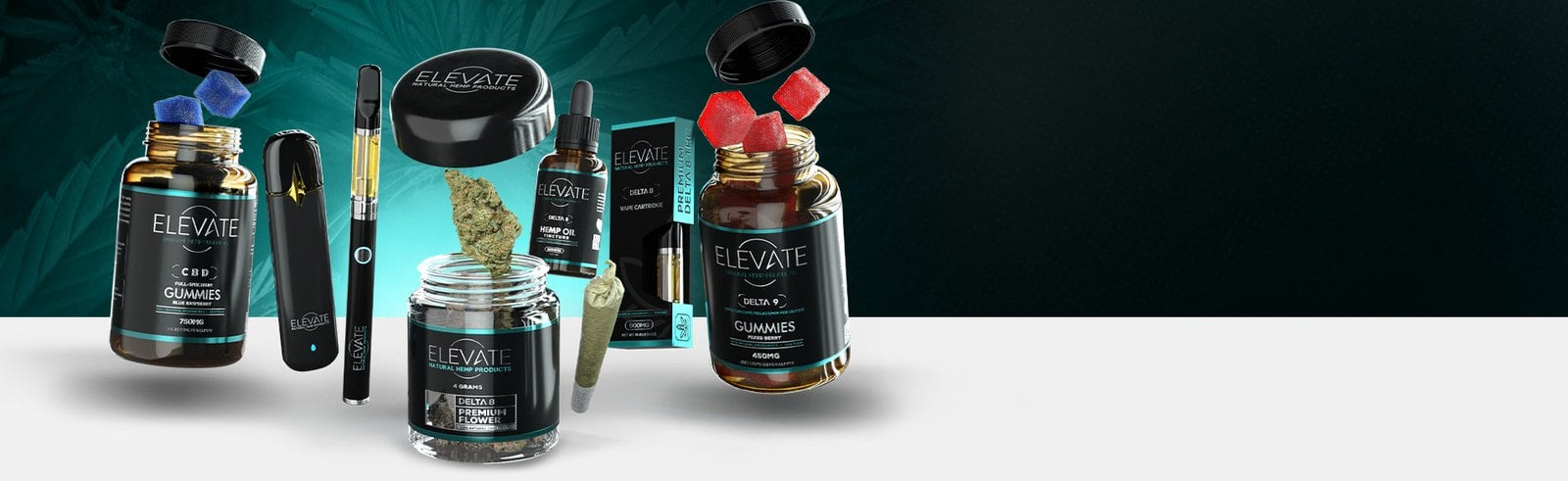
Elevate offers THCP in four formats designed for different preferences: gummies (2–5 mg THCP per piece) for predictable per-piece dosing, vape cartridges and disposable vapes for rapid onset within minutes, and tinctures (1–3 mg per serving) for flexible sublingual micro-dosing. Each format lists exact THCP concentration per serving on the label and is backed by a batch-specific certificate of analysis from ACS Laboratory, accessible through our Trust Center.
How should I dose THCP gummies or vapes?
Start low—1 to 2 mg of THCP for your first session, regardless of format. THCP's potentially higher CB1 receptor binding affinity means it may feel significantly stronger than an equivalent mg of delta-9-THC. With gummies, allow 45–90 minutes for full onset before considering another serving. With vapes, take a single short draw and wait 10–15 minutes. Experienced cannabinoid users may work up to 3–5 mg per session, but gradual titration is the safest approach.
What's the difference between THCP and CBD?
THCP and CBD are both cannabinoids found in the cannabis plant, but they interact with the endocannabinoid system in fundamentally different ways. THCP may have a strong binding affinity for CB1 receptors and can produce psychoactive effects; CBD has minimal CB1 engagement and is non-intoxicating. CBD is typically consumed in higher servings (25–50 mg), while THCP's potency means effective servings are as low as 1–5 mg. Many Elevate products combine both cannabinoids to leverage the entourage effect. If you're new to hemp cannabinoids, our CBD collection is a great starting point.
Are Elevate's THCP products third-party lab tested?
Yes, every Elevate THCP product is batch-tested by ACS Laboratory, an independent ISO 17025-accredited facility. Each certificate of analysis verifies THCP and delta-9-THC concentration, confirms potency matches the label, and screens for pesticides, heavy metals, residual solvents, and microbial contaminants. ISO 17025 protocols specifically validate minor cannabinoid profiles—not just THC and CBD—so you can trust the THCP number on the label. View and download every COA through Elevate's Trust Center before purchasing.
Where does Elevate source its hemp for THCP products?
Elevate sources hemp exclusively from U.S.-grown farms that comply with USDA hemp cultivation guidelines and the 2018 Farm Bill. Our flower is slow-dried, properly aged, and hand-trimmed to preserve terpene and cannabinoid integrity. From there, hemp-derived cannabinoid extracts undergo precision processing to isolate or concentrate THCP to the levels listed on each product label. You can learn more about our sourcing standards on our hemp education page.
Can beginners use THCP products?
Beginners can use THCP products, but caution is essential. THCP's potency may be meaningfully higher than standard delta-9-THC due to its potentially enhanced CB1 receptor affinity, so even experienced THC users should reset expectations. Start with the lowest available serving—1 mg in a gummy or a single short vape draw—and wait the full onset window (up to 90 minutes for edibles) before adding more. Elevate's clearly labeled mg-per-serving dosing makes it straightforward to control your intake from the very first session.
What is the entourage effect and does it apply to THCP?
The entourage effect describes how multiple cannabinoids, terpenes, and plant compounds may work together to shape the overall experience more than any single compound alone. It absolutely applies to THCP when the product is formulated as full-spectrum or broad-spectrum, retaining CBD, minor cannabinoids, and terpenes alongside THCP. Elevate's blended formulations are designed with this principle in mind, combining THCP with complementary hemp-derived compounds for a more rounded, nuanced experience.
How should I store THCP products?
Store THCP products in a cool, dark place away from direct sunlight and heat—ideally between 60°F and 75°F. Gummies and tinctures should remain sealed in their original packaging to slow oxidation, which can degrade cannabinoid potency over time. Vape cartridges should be stored upright to avoid leaking. Properly stored, most THCP products maintain labeled potency for 12–18 months from the manufacture date printed on the package.