


THC for Sleep
THC for sleep pairs cannabinoids like delta-9 THC and CBN in nighttime formulations users choose for their evening wind-down. Elevate's sleep lineup is hemp-derived, precisely dosed per gummy, and independently lab tested.

THC for sleep pairs cannabinoids like delta-9 THC and CBN in nighttime formulations users choose for their evening wind-down. Elevate's sleep lineup is hemp-derived, precisely dosed per gummy, and independently lab tested.

Adult use only 21+
Filters


Compare Products
Wind-down formats built around relaxing, sedating profiles for your nighttime routine.
| Product | Potency | Type | Best For |
|---|---|---|---|
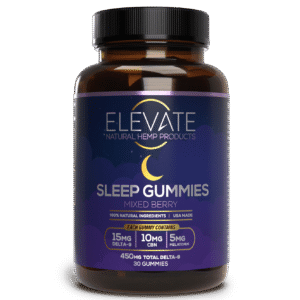
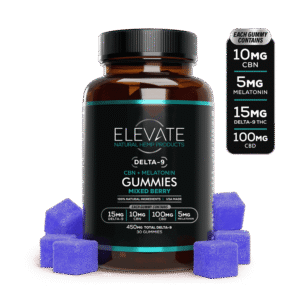
Delta 9 + CBN Sleep Gummies - Mixed Berry | Delta 9 + CBN blend | Delta 9 + CBN Gummy | Deep nighttime wind-down |
THC Sleep Gummies | Sleep-formulated THC blend | THC Sleep Gummy | End-of-day routine |
Blue Lotus Gummies - 30 Count | Blue lotus botanical blend | Botanical Blend Gummy | Calm evening relaxation |
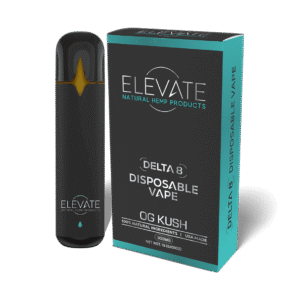
Delta 8 THC Disposable Vape Pen - OG Kush | Indica Delta 8 distillate | Indica Delta 8 Disposable Vape | Fast-acting bedtime calm |
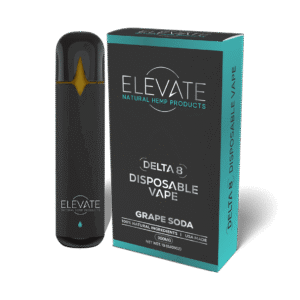
Delta 8 Disposable Vape Pen - Grape Soda | Indica Delta 8 distillate | Indica Delta 8 Disposable Vape | Relaxed late-evening sessions |
Exotic THCa Flower - Blueberry Muffin | Exotic-grade indica THCa flower | Indica THCa Hemp Flower | Flower fans seeking couch comfort |
What Is THC and How Does It Relate to Sleep?
THC, short for delta-9-tetrahydrocannabinol, is the primary psychoactive compound found in the cannabis plant. It's the molecule responsible for the characteristic "high" associated with marijuana use, but its relationship with the body goes far deeper than altered perception. At a biological level, THC interacts with a complex signaling network that plays a direct role in regulating how—and how well—you sleep each night.
That network is called the endocannabinoid system (ECS), and it exists in every human body regardless of whether you've ever used cannabis. The ECS is made up of endocannabinoids (compounds your body produces naturally), enzymes that build and break them down, and two primary receptor types: CB1 receptors, concentrated heavily in the brain and central nervous system, and CB2 receptors, found mainly in peripheral tissues and immune cells. Together, these components help regulate a wide range of physiological processes, including mood, appetite, pain signaling, and—critically—the sleep-wake cycle.
THC works by mimicking the shape of your body's own endocannabinoids, particularly anandamide, which allows it to bind directly to CB1 receptors in the brain. When THC activates these receptors in regions associated with arousal and circadian rhythm, it may influence how quickly you fall asleep, how long you stay asleep, and the quality of the sleep stages you cycle through. This mechanism is what makes cannabis sleep research such an active and evolving field—scientists are still mapping exactly how receptor activation translates into changes in sleep architecture.
What makes THC distinct from other cannabinoids—like CBD or CBN—is the strength and specificity of its CB1 receptor binding. While CBD has a more indirect relationship with the ECS, THC's direct activation is what produces both its psychoactive effects and its more pronounced influence on sleep onset and deep sleep stages. This is also why dosing matters so much: the same compound that may support relaxation and drowsiness at low doses can cause anxiety or restlessness at higher amounts, fundamentally changing the sleep experience.
Understanding this biological foundation is essential before exploring specific dosing strategies, product formats, or comparisons with other cannabinoids. Without it, you're essentially guessing—and when it comes to something as important as sleep, informed decisions consistently outperform trial and error. If you'd like to learn more about thc for sleep and how different formulations work, we break that down in greater detail as well.
The key takeaway here is that THC doesn't operate in a vacuum. It plugs into a system your body already uses to manage sleep, and its effects depend on individual biology, receptor density, tolerance, and the presence of other cannabinoids in whatever product you choose. That interplay is what makes the science both promising and nuanced—and why the sections ahead will matter for anyone seriously considering THC as part of their nighttime routine.
How THC May Affect Sleep Quality, Deep Sleep, and REM Sleep
Understanding THC and sleep requires looking beyond whether someone simply falls unconscious faster. Sleep is a complex, multi-stage process, and the cannabinoid's influence on each stage tells a nuanced story that every prospective user should understand before reaching for a gummy at bedtime.
THC and the Process of Falling Asleep
One of the most consistently reported effects of THC is its potential role in shortening sleep onset latency—the time it takes to transition from full wakefulness to sleep. Many users report that low to moderate doses of THC help with falling asleep more quickly, and preliminary research suggests this effect may be linked to THC's interaction with CB1 receptors in the central nervous system. These receptors are part of the endocannabinoid system, which plays a regulatory role in circadian rhythm signaling and arousal states. For people who spend long stretches staring at the ceiling, this is often the primary appeal.
The Impact on Deep Sleep
Deep sleep—also known as slow-wave sleep—is the physically restorative stage where tissue repair, memory consolidation, and hormonal regulation are believed to occur most actively. Some research has observed that THC may increase the amount of time spent in deep sleep, particularly at lower doses. This is significant because many common sleep disorders, including insomnia and sleep apnea, are associated with reduced deep sleep duration. If THC can support longer periods in this critical stage, it could meaningfully influence how rested someone feels the following day.
However, this relationship is not straightforward. Higher doses of THC have been associated with diminishing returns, and chronic nightly use may alter baseline sleep architecture over time—meaning the initial deep sleep benefits could plateau or shift as the body develops tolerance.
The REM Sleep Trade-Off
Here is where the conversation gets more complex. While THC may extend deep sleep, it appears to have a suppressive effect on REM sleep—the stage associated with dreaming, emotional processing, and certain types of cognitive restoration. Multiple studies have observed reduced REM duration and delayed REM onset in participants using THC before bed.
For some individuals, particularly those experiencing nightmares related to PTSD or trauma-related sleep disruptions, a reduction in REM activity may actually feel beneficial. Users in this group frequently report fewer distressing dreams and more restful nights. But for others, long-term REM suppression raises legitimate concerns. REM sleep is has been studied for its role in learning, mood regulation, and mental health—and consistently shortchanging this stage could carry consequences that aren't immediately obvious.
What This Means for Overall Sleep Quality
Taken together, these effects create a layered picture: THC may help someone fall asleep faster and spend more time in physically restorative deep sleep, but it may do so at the expense of REM sleep. Whether this trade-off improves or compromises overall sleep quality depends on individual biology, the specific sleep challenges someone faces, dosing habits, and duration of use.
This is precisely why a one-size-fits-all recommendation doesn't work. Someone dealing with acute stress-related sleeplessness may experience a very different outcome than someone with a chronic circadian rhythm disorder. If you're considering exploring cannabinoid-based sleep support, you can learn more about THC for sleep to better understand how product format, cannabinoid ratios, and dosing strategies all factor into the equation—and why a conversation with your healthcare provider remains an essential starting point.
THC vs. CBD vs. CBN: Which Cannabinoid Is Best for Sleep?
Not all cannabinoids work the same way when the lights go out. If you're exploring plant-based options for nighttime support, understanding the differences between THC, CBD, and CBN can help you make a more informed choice—because the cannabinoid you reach for may shape your experience in meaningfully different ways.
THC is the most widely studied cannabinoid in the context of THC and sleep. It interacts directly with CB1 receptors in the brain, and users report that it may help shorten the time it takes to fall asleep. Research has also associated THC with increased time spent in deep sleep stages, which is the phase most closely linked to physical restoration. However, THC may simultaneously suppress REM sleep, which could affect dreaming and long-term sleep quality for some individuals. The relationship between THC and sleep architecture is dose-dependent—lower doses are generally associated with more favorable outcomes, while higher doses may lead to next-day grogginess or tolerance buildup over time.
CBD, by contrast, doesn't produce intoxicating effects and works through different pathways in the endocannabinoid system. Rather than directly inducing drowsiness, cbd has been studied for its potential to ease anxious thoughts and promote a sense of calm that may indirectly support sleep readiness. Many people find that CBD works best as a complementary ingredient alongside THC rather than as a standalone sleep aid, particularly when nighttime restlessness stems from a racing mind rather than difficulty staying asleep.
CBN is often marketed as the "sleepy cannabinoid," though the evidence behind that claim is still preliminary. CBN is a minor cannabinoid that forms as THC ages and oxidizes, and while anecdotal enthusiasm is strong, the limited research available suggests its sedative reputation may be somewhat overstated when used in isolation. That said, many users report enhanced sleep support when CBN is combined with THC in what's sometimes called an entourage effect—where multiple cannabinoids work synergistically.
Product format matters here, too. Full-spectrum formulations inspired by indica-leaning cannabis profiles—which naturally contain a blend of THC, CBD, CBN, and sleep-associated terpenes like myrcene and linalool—tend to receive the most favorable user feedback for nighttime use. These blended profiles may offer more balanced support than any single cannabinoid alone.
So which is "best"? The honest answer is that it depends on your body, your sleep challenges, and your sensitivity. For many adults, a low-dose THC product with supporting amounts of CBD and CBN represents a reasonable starting point. If you want to explore your options further, browse our thc for sleep collection to find formulations designed with nighttime use in mind. As always, consult a healthcare provider before adding any cannabinoid to your routine—especially if you're currently taking other medications.
THC Gummies and Edibles for Sleep: What to Know
If you're exploring THC for sleep, you've likely noticed that gummies and other ingestible formats dominate the market—and for good reason. The way your body processes an edible is fundamentally different from inhaled cannabis, and those differences matter significantly when your goal is a full night of rest.
When you consume THC gummies or other edibles for sleep, the cannabinoid passes through your digestive system and liver before entering the bloodstream. During this first-pass metabolism, delta 9 THC is partially converted into 11-hydroxy-THC, a metabolite that many researchers believe crosses the blood-brain barrier more efficiently. The result is an onset that typically takes 45 minutes to two hours—slower than smoking or vaping—but produces effects that users report lasting significantly longer, often six to eight hours. For someone seeking sustained support throughout the night rather than help only with falling asleep, this pharmacokinetic profile is particularly relevant.
Timing is one of the most overlooked factors when using an edible as a sleep aid. Because onset is delayed and varies based on metabolism, body composition, and whether you've eaten recently, many users find that taking a gummy 60 to 90 minutes before their target bedtime produces better-aligned results than consuming one right as they get into bed. Starting with a low dose—typically 2.5 to 5 milligrams of delta 9 THC—allows you to gauge your individual response before gradually adjusting.
Product composition also matters. Many sleep-focused edibles combine THC with complementary cannabinoids like CBN or CBD, along with supportive ingredients such as melatonin or L-theanine. These formulations are designed around the idea that multiple compounds working together may support relaxation more effectively than isolated THC alone—a concept often referred to as the entourage effect.
A few practical considerations are worth keeping in mind. Edibles can produce stronger subjective effects than expected, especially for new users, so patience with dosing is essential. The extended duration, while beneficial for sleep continuity, also means residual grogginess is possible the following morning if the dose is too high. And because individual biology plays such a large role, what works for one person may feel entirely different for another.
Before incorporating any THC-based product into your nighttime routine, consulting a healthcare provider is a smart step—particularly if you take other medications or have underlying health conditions. To explore options designed specifically for nighttime use, browse our thc for sleep collection.
THC and Melatonin: Can You Combine Them?
As interest in using THC for sleep continues to grow, one of the most common questions people ask is whether they can pair it with melatonin—the hormone-based sleep aid already sitting on millions of nightstands. The short answer is that many people do combine them, but the longer answer requires some nuance.
Melatonin is a hormone your body naturally produces in response to darkness, signaling to your brain that it's time to wind down. Supplemental melatonin is widely used to support the timing of sleep onset, particularly for people dealing with jet lag or irregular schedules. THC, on the other hand, interacts with the endocannabinoid system—a separate biological pathway that may influence relaxation, sleep latency, and time spent in deeper sleep stages. Because these two substances work through fundamentally different mechanisms, some users report that taking them together creates a complementary effect: melatonin helps set the body's internal clock while cannabinoids may support the subjective quality of rest.
However, combining any sleep aid with THC deserves careful consideration. Both substances can cause next-day grogginess, especially at higher doses, and their combined sedative effects may be stronger than either one alone. Individual responses vary significantly based on tolerance, metabolism, and overall health. If you're already taking other medications or supplements, the interaction profile becomes even more complex.
The most sensible approach is to start with the lowest effective dose of each—many people find that a small amount of melatonin (0.5–1 mg) alongside a low-dose THC product is sufficient. Speaking with a healthcare provider before combining them is strongly recommended, particularly for anyone with underlying health conditions. If you're exploring cannabinoids as part of your nighttime routine, you can browse THC for sleep options designed with responsible dosing in mind.
Side Effects, Tolerance, and Safety of Using THC for Sleep
While THC and sleep research continues to evolve in promising directions, any honest conversation about cannabinoids must address the less comfortable realities. Like any compound that interacts with brain chemistry, THC carries potential side effects and risks that deserve careful consideration—especially for anyone thinking about nightly use.
The most commonly reported short-term side effects include next-morning grogginess, dry mouth, increased heart rate, dizziness, and occasional anxiety or paranoia—particularly at higher doses. Some users report vivid or unsettling dreams during nights when they skip their usual dose, which researchers believe may be linked to REM sleep rebound. Because THC is associated with suppressed REM activity during regular use, the brain may compensate with intensified dreaming when the compound is suddenly absent.
Tolerance is perhaps the most significant practical concern for people exploring THC as ongoing sleep support. With consistent nightly use, the endocannabinoid system's CB1 receptors can become desensitized, meaning the same dose that once helped with falling asleep may gradually lose its effectiveness. This often leads users to incrementally increase their dose—a pattern that raises both cost and risk over time. Many sleep researchers and cannabis clinicians recommend periodic "tolerance breaks" of two to three days, or cycling between cannabinoid profiles, to help maintain sensitivity. Microdosing strategies—typically 1 to 3 milligrams of THC—may also slow tolerance development compared to higher-dose approaches.
Dependency is a related but distinct concern. While THC does not carry the same physiological dependency profile as many pharmaceutical sleep medications, some individuals do develop a psychological reliance on it for sleep. Discontinuation after prolonged nightly use has been studied for its effects on sleep quality, and findings suggest that temporary insomnia, increased sleep latency, and restlessness can occur during the adjustment period. These withdrawal-related sleep disruptions typically resolve within one to two weeks but can be discouraging enough to pull someone back into habitual use.
Safety considerations also extend to specific populations. Individuals with a personal or family history of psychotic disorders, those under 25 whose brains are still developing, pregnant or nursing individuals, and anyone taking medications that interact with the cytochrome P450 enzyme system should exercise particular caution. THC can influence how the liver metabolizes certain drugs, potentially altering the effectiveness or side-effect profile of other medications.
For people managing sleep disorders, it's essential to understand that THC may mask underlying conditions rather than address their root causes. Conditions like sleep apnea, restless leg syndrome, or chronic insomnia driven by anxiety or medical issues each have distinct mechanisms that may require targeted intervention beyond what any cannabinoid can offer. Using THC without understanding the source of your sleep difficulty could delay more appropriate care.
The legal landscape adds another layer of complexity. Hemp-derived THC products sold under the 2018 Farm Bill are not subject to the same rigorous testing standards as pharmaceuticals, and product quality varies dramatically between brands. Third-party certificates of analysis, transparent sourcing, and clearly labeled cannabinoid content are non-negotiable when selecting a product you plan to use regularly.
None of this means THC is inherently unsafe for sleep—but it does mean that informed, intentional use matters enormously. If you're considering incorporating THC into your nighttime routine, consulting a healthcare provider who understands cannabinoid science can help you navigate dosing, monitor for interactions, and establish a plan that prioritizes long-term sleep health over short-term convenience. Explore our collection of thc for sleep options formulated with these safety considerations in mind.
- Fast-Acting Relief
- Deep, Restful Sleep
- No Grogginess
- Lab-Tested Potency
FAQ
How does THC help with sleep?
THC interacts with CB1 receptors in the brain's endocannabinoid system, which helps regulate the sleep-wake cycle. By mimicking the natural endocannabinoid anandamide, THC may shorten sleep onset latency (the time it takes to fall asleep) and increase time spent in deep sleep, the physically restorative stage of the sleep cycle.
Does THC affect REM sleep?
Research suggests that THC may reduce time spent in REM sleep, the stage associated with dreaming. While this can benefit people who experience nightmares or REM-related sleep disruptions, long-term REM suppression may have implications for memory consolidation and emotional processing.
What is the best THC dose for sleep?
Low to moderate doses of THC are most commonly associated with improved sleep onset and increased deep sleep. Higher doses may cause anxiety or restlessness, which can negatively impact sleep quality. Dosing depends on individual factors like tolerance, body weight, and the presence of other cannabinoids in the product.
How is THC different from CBD and CBN for sleep?
THC binds directly and strongly to CB1 receptors in the brain, producing both psychoactive effects and pronounced influence on sleep onset and deep sleep stages. CBD has a more indirect relationship with the endocannabinoid system and is non-psychoactive, while CBN is a mildly psychoactive cannabinoid also studied for sedative properties. Each interacts with the body differently.
Can THC cause sleep problems at higher doses?
Yes. While low doses of THC may promote relaxation and drowsiness, higher amounts can trigger anxiety, restlessness, or an elevated heart rate — all of which can interfere with falling and staying asleep. This is why careful, informed dosing is essential when using THC for sleep.