Is THCA Legal in Hawaii? (2026 Guide by Elevate)

Featured Product

Tropicana Cherry
$70.00
Shop NowHawaii's cannabis laws are among the strictest in the country, and if you're wondering whether THCA is legal in Hawaii, the answer is far from simple. As of mid-2026, the aloha state treats THCA produ
Table of Contents
- Key Takeaways
- How Legal Is THCA in Hawaii Right Now?
- Hawaii Cannabis Laws vs. Federal Law
- How Hawaii Law Defines Hemp, THCA, and Total THC
- THCA vs. THC: Why the Difference Matters Legally
- Current THCA Product Rules in Hawaii (Flower, Vapes & More)
- Possession Limits and Age Restrictions in Hawaii
- Enforcement: How Hawaii Treats THCA in Practice
- Staying Compliant: Lab Tests, COAs, and Documentation
- Medical Cannabis vs. Hemp-Derived THCA in Hawaii
- Ordering Hemp-Derived Products Online to Hawaii
- How Elevate Approaches Compliance for Hawaii Customers
- Risk Management Tips for Hawaii Residents and Visitors
- Outlook: How Hawaii's THCA Laws May Change by Late 2026
- FAQ: THCA and Hawaii Law
- Related Articles
Hawaii's cannabis laws are among the strictest in the country, and if you're wondering whether THCA is legal in Hawaii, the answer is far from simple. As of mid-2026, the aloha state treats THCA products very differently than most mainland states, and what's marketed as "hemp" online may not be considered legal once it reaches Hawaiian shores. This guide breaks down everything Hawaii residents and visitors need to know about THCA's legality, enforcement realities, and how to stay on the right side of the law.
Key Takeaways
Hawaii's cannabis laws are stricter than many states, and THCA sits in a shifting legal gray area as of mid-2026. The state uses a total THC standard that combines delta 9 THC with the potential THC that THCA converts into when heated. This means many high thca products, especially smokable hemp products like thca flower and pre rolls, are effectively treated as illegal marijuana under hawaii law.
Recent Hawaii law changes between 2024 and 2026, including interim rules and new enforcement authority, give state agencies the power to seize non-compliant hemp products. Hawaii explicitly bans smokable hemp products as of 2026, and Hawaii enacted authority to seize non-compliant hemp products starting in 2026. Retailers and distributors must register with the state or face fines up to $10,000 per offense.
Even if a product meets federal guidelines allowing hemp with less than 0.3 delta 9 thc by dry weight, Hawaii can still restrict it if total thc exceeds legal limits or if the product falls into a banned category. Federal law alone does not make THCA products clearly legal in hawaii, because Hawaii's hemp regulations are stricter than federal laws regarding hemp products.
Recreational marijuana remains illegal in Hawaii. Medical cannabis patients with a valid medical card can legally purchase higher-THC products through state licensed dispensaries, but the general public does not have that option.
Elevate focuses on farm bill compliant, lab tested hemp products and advises Hawaii consumers to check current state and local rules, verify age restrictions, and review lab results before purchasing or possessing any thca products. This article does not constitute legal advice.
How Legal Is THCA in Hawaii Right Now?
So, is thca legal in hawaii in 2026? The short answer: THCA from hemp is not expressly named as a controlled substance on Hawaii's schedules, but it is heavily regulated through the state's total THC standard and product-type bans. In practice, possession of high-THCA products may lead to legal complications, especially if those products are in smokable or inhalable form.
Hawaii law focuses less on whether a product's label says "THCA" and more on whether that cannabis product behaves like marijuana after heating. Because thca converts into psychoactive thc when smoked, vaped, or baked, the state treats high-THCA flower, pre rolls, and vapes as functionally equivalent to high-THC marijuana. This pushes most thca flower and similar products into a risky or effectively illegal category for retail consumers.
The contrast with federal law is important. Under federal regulations, hemp derived thca can appear legal if delta 9 thc content measures at or below 0.3% by dry weight. But Hawaii layers stricter rules on top of that federal definition. Products that meet federal guidelines may still violate state law if their total thc, calculated with THCA conversion, exceeds the legal limit.
If you're a visitor or a resident, treat THCA similarly to other cannabis products in Hawaii. Don't assume that out-of-state rules or online marketing claims about farm bill compliance automatically protect you locally. Thca's legality depends on how Hawaii measures and categorizes the product, not just how it's labeled at the point of sale.
Hawaii Cannabis Laws vs. Federal Law
Hawaii cannabis laws combine the federal farm bill definition of hemp with state-specific restrictions on hemp derived products, including those containing THCA. Understanding where federal and state authority overlap, and where they diverge, is essential for anyone trying to purchase thca or other hemp derived products for use in the state.
The 2018 farm bill removed hemp from the federal controlled substance schedules, defining it as cannabis with no more than 0.3% delta 9 thc by dry weight. This made room nationally for hemp derived thca products, CBD, and other cannabinoids to enter the market. Hawaii follows federal guidelines allowing hemp with less than 0.3% delta 9 thc, adopting the federal definition as a baseline.
However, Hawaii law goes further. The state adds its own cannabis laws around processing, sales, and product formats. Through Act 263 (2023) and subsequent interim rules adopted between 2022 and 2026, Hawaii restricts smokable hemp, imposes strict labeling requirements, and uses a total THC calculation that includes thca. These stricter rules mean a product that is fully legal under federal law can still be treated as a controlled substance under hawaii law once total thc exceeds state legal limits or the product violates form-factor bans.
The result is a patchwork where federal compliance is necessary but not sufficient. If you're relying solely on the federal definition to justify possessing or selling THCA in Hawaii, you're exposing yourself to potential state-level enforcement.
How Hawaii Law Defines Hemp, THCA, and Total THC
Hawaii does not carve out THCA as a completely separate legal category. Instead, the state defines hemp and marijuana through a total THC framework that includes thca in its calculations.
Total thc, under Hawaii's administrative rules, means the sum of measured delta 9 thc plus the amount of THCA that could convert to delta 9 thc when heated. Regulators apply a standard conversion formula: THCA percentage multiplied by 0.877, then added to the delta 9 thc percentage. This gives a post-decarboxylation estimate of the product's total psychoactive potential.
Under hawaii law, if total thc is above 0.3% by dry weight, the product is classified as marijuana rather than legal hemp, regardless of whether it was grown from certified hemp seed or marketed as hemp derived. Products exceeding total THC limits are classified as marijuana in Hawaii, which means they fall under the state's controlled substance framework. THCA products exceeding the total THC limit face legal restrictions in Hawaii.
This total THC approach is intentionally stricter than pure federal delta 9 thc limits. It aims to close the loophole where high-THCA flower is sold as "hemp" because its raw form delta 9 thc reads below 0.3%, even though the product will deliver significant psychoactive thc once lit. Hawaii includes thca in its total thc standard specifically because of this conversion reality. Total THC's inclusion of potential THC from THCA conversion is what distinguishes Hawaii's framework from states that only test for delta 9 in raw flower.
For consumers, the legal status of any hemp product depends on the lab-tested total thc number, not just the delta 9 thc reading on a certificate of analysis.
THCA vs. THC: Why the Difference Matters Legally
Understanding the chemistry behind THCA and THC explains why Hawaiian lawmakers regulate these compounds the way they do.
THCA, or tetrahydrocannabinolic acid, is the acidic precursor that occurs naturally in raw cannabis and hemp plants. On its own, THCA does not cause a typical "high." You could eat raw hemp flower rich in THCA and experience little to no intoxication.
The shift happens through decarboxylation. When THCA is exposed to heat through smoking, vaping, or cooking, it loses a carboxyl group and converts into delta 9 thc, the psychoactive compound that binds to endocannabinoid receptors and produces euphoria. Heating THCA converts it into psychoactive THC, and Hawaii's regulations explicitly account for this transformation.
Because THCA readily converts to THC, Hawaii regulators treat high-THCA hemp as functionally equivalent to high-THC marijuana when calculating total thc and legal limits. This scientific link is the basis for Hawaii's conservative approach to cannabis products that may be marketed as hemp but are intended for intoxication. If a product's thc content after conversion exceeds 0.3%, it's marijuana in the eyes of the state, regardless of how it's branded.
Current THCA Product Rules in Hawaii (Flower, Vapes & More)
Hawaii has moved aggressively to restrict smokable hemp products, especially those with high THCA content. Under both permanent statutes and interim rules adopted between 2022 and 2026, the state draws clear lines around which product formats are allowed and which are banned.
Hawaii prohibits the sale of smokable hemp products including flower and pre rolls to consumers. Hawaii bans smokable hemp products including thca flower, and this ban applies regardless of the product's labeled THC or THCA content. Even if raw delta 9 thc is technically under 0.3%, the flower is prohibited from retail sale in the state. Intoxicating hemp-derived cannabinoids, including THCA, are prohibited in Hawaii when delivered through inhalable formats.
Vape products and inhalable hemp extracts face the same restriction. Vape cartridges containing THCA, THC, or other hemp derivatives are not permitted for sale to consumers under Hawaii's current framework. Some thca concentrates may also fall under this prohibition if designed for inhalation.
Thca products available on the broader national market include flower, pre rolls, and concentrates, but these formats face the heaviest restrictions in Hawaii. Online sellers who are aware of Hawaii's rules often refuse to ship these items to the state specifically because state law and enforcement practices allow seizure of non-compliant smokable hemp.
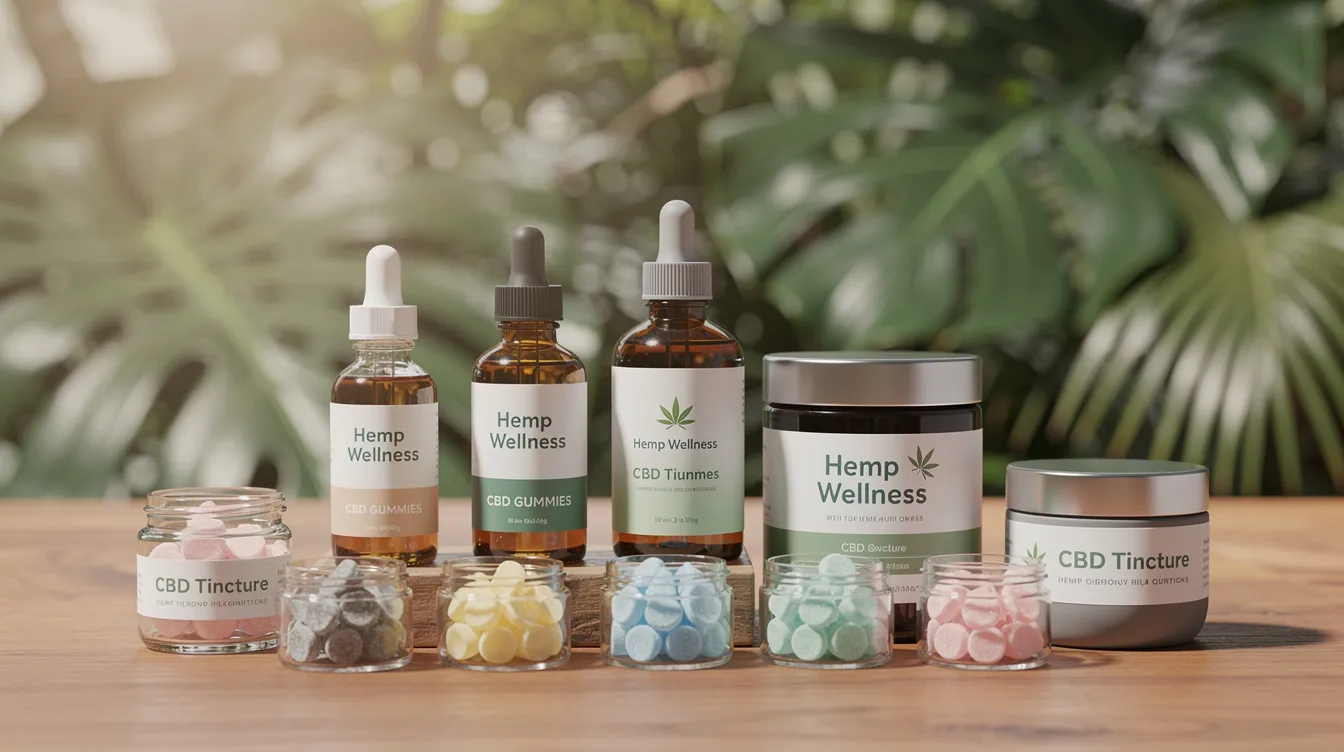
Ingestible consumable hemp products like gummies, tinctures, and beverages are treated differently but still face strict limits. Manufactured hemp products must comply with strict potency limits in Hawaii. For example, gummies and capsules are limited to 1 mg total THC per serving and 5 mg per container. Beverages must stay at or below 0.5 mg per container. All must maintain total thc at or below 0.3% by weight, carry proper labeling, and come with third-party lab verification.
In short, the product's legality depends on both format and thc concentration. Low-THC edibles and tinctures have a path to compliance. Smokable or inhalable products do not.
Possession Limits and Age Restrictions in Hawaii
Hawaii's possession framework splits into two tracks: the medical cannabis system and the general hemp market. THCA can fall into either bucket depending on total thc and product source.
Registered medical cannabis patients can possess up to four ounces of usable cannabis, and medical cannabis products purchased from state licensed dispensaries, including those containing THCA, count toward this limit. The medical program provides clear legal protections for patients with a valid medical card.
For general hemp derived products, no specific possession limit exists for compliant hemp-derived THCA products. If a product legitimately qualifies as legal hemp under Hawaii's total THC standard, there is no statutory cap on how much you can hold. However, any product that exceeds total thc legal limits can be treated as illegal marijuana regardless of quantity. Possession of 3 grams or less of marijuana has been decriminalized in Hawaii, which reduces penalties but does not make it legal. Possession of compliant THCA products is generally tolerated by local authorities, but the burden of proving compliance falls on the consumer.
Age restrictions are clear. Most reputable retailers and platforms require buyers to be at least 21 years old for products with psychoactive potential. Elevate follows 21+ standards for any intoxicating or potentially intoxicating cannabis products. Minors cannot legally buy THCA or other cannabis products in Hawaii. Adults should carry ID for in-person purchases at smoke shops or other retail locations.
Enforcement: How Hawaii Treats THCA in Practice
In real-world enforcement, Hawaii law enforcement officers often cannot distinguish hemp from marijuana by sight or smell. This makes documentation and lab testing critically important for anyone carrying hemp derived products.
Officers may rely on Hawaii's total THC rules when deciding whether to seize a product for lab analysis, especially if it looks like high-potency cannabis flower or a THC vape. During a stop, officers may temporarily confiscate suspected products, and laboratory results will determine whether total thc exceeds Hawaii's legal limits for hemp.
Hawaii enacted authority to seize non-compliant hemp products in 2026. Starting July 1, 2026, the hawaii department of health and the Attorney General's office began enforcing retailer and distributor registration requirements. Businesses with noncompliant products, including flower, pre rolls, and vapes, must remove those items from shelves. Penalties can reach up to $10,000 per offense and include product seizure.
Properly labeled, lab tested products with clear Certificates of Analysis tend to fare better in enforcement scenarios, though they are not an absolute shield from investigation. Products without documentation are far more likely to be treated as a criminal offense, particularly if total thc exceeds limits.
Penalties range from no action if results confirm compliant hemp, all the way up to controlled substance charges. Selling or distributing noncompliant products in significant quantities could potentially result in charges as serious as a class c felony, depending on the circumstances and quantity involved.
Staying Compliant: Lab Tests, COAs, and Documentation
Lab testing is the consumer's main protection under Hawaii cannabis laws, especially for hemp derived thca products ordered online. Consumers should verify lab results to ensure compliance with THC limits before purchasing or possessing any product.
A Certificate of Analysis should show delta 9 thc percentage, THCA percentage, the total thc calculation, contaminant screening for heavy metals, pesticides, and residual solvents, the lab name, and the testing date. THCA products must be third-party tested for compliance, and Hawaii requires testing and labeling of hemp products to ensure compliance with its standards.
For Hawaii consumers, keeping COAs, either printed or digital, along with original packaging when transporting hemp derived products can help demonstrate legal status if questioned by local authorities. This simple step is one of the most practical things you can do to protect yourself.
Elevate only offers hemp products that are third party lab tested, farm bill compliant, and transparently labeled. We encourage Hawaii customers to double-check total thc before purchasing, ensuring the product meets both federal and state thresholds.
Avoid untested or unlabeled cannabis products in Hawaii. These are far more likely to be treated as controlled substances during enforcement actions, and no amount of verbal explanation will substitute for a valid, current COA.
Medical Cannabis vs. Hemp-Derived THCA in Hawaii
There's an important distinction between regulated medical cannabis products from licensed dispensaries and over-the-counter hemp derived thca items sold online or in smoke shops.
Medical cannabis patients purchasing from licensed Hawaii dispensaries operate within a clearer legal framework. These patients hold a medical card, follow defined possession limits, and buy medical cannabis products that meet state testing and labeling standards. Medical cannabis patients can legally purchase higher-THC products in Hawaii through this regulated channel, including flower, tinctures, and concentrates that would be illegal for the general public.
Hemp derived THCA products sold outside the medical program do not benefit from the same explicit protections. They must meet strict hemp definitions and total thc limits to avoid being treated as marijuana. The legal status of these other hemp derived products depends entirely on lab-verified compliance with Hawaii's total THC standard.
Some patients may prefer hemp derived options like CBD or low-THC functional products for wellness purposes, but they should understand that these are regulated differently than medical cannabis in Hawaii. If you're considering THCA for medical reasons, speaking with a healthcare professional and exploring Hawaii's medical program alongside federally compliant hemp products is the safest approach. Organizations like aloha green and other state licensed dispensaries can provide guidance on what's available through the medical channel.
Ordering Hemp-Derived Products Online to Hawaii
Many online hemp retailers differentiate between states and may restrict shipping of certain cannabis products, including high-THCA items, to Hawaii. This isn't arbitrary; it reflects the real legal risks of sending restricted products across state lines into a jurisdiction with stricter rules.
While federal law allows interstate shipment of compliant hemp, Hawaii's own restrictions on smokable hemp and total thc mean that not all THCA products offered online are legal in hawaii to receive. A product that's considered legal in Oregon or Colorado may cross the line into controlled substance territory once it arrives in Hawaii.
Responsible brands, including Elevate, check state rules and may choose not to ship thca flower, pre rolls, or vapes to Hawaii if they risk being classified as illegal marijuana upon arrival. Hawaii allows online orders of compliant THCA products, but "compliant" means meeting Hawaii's total THC standard and product-format rules, not just federal definitions.
Before completing a purchase, verify at checkout whether a retailer ships a specific product type to Hawaii. Read any state-specific disclaimers on the product page or shipping policy. Prioritize non-smokable, low-THC hemp wellness products that clearly meet both federal and hawaii law requirements. Always review COAs before purchase.
How Elevate Approaches Compliance for Hawaii Customers
Elevate is committed to selling only lab tested, farm bill compliant hemp products and to respecting each state's unique regulatory landscape, including Hawaii's conservative cannabis laws. Consumer safety and protecting consumers from legal risk are central to how we operate.
Our product catalog is vetted against federal law and state-specific rules. For Hawaii, this may mean limiting or excluding high-THCA flower, pre rolls, and vapes that could violate total THC or smokable hemp restrictions. We don't sell products into states where they'd put our customers at legal risk.
Our testing standards include third-party, dispensary-level lab reports covering delta 9 thc, THCA, total thc, heavy metals, pesticides, and residual solvents. COAs are available to customers before purchase, so you can verify compliance on your own terms.
We provide educational content like this guide to help Hawaii customers understand cannabis laws, but we clearly state that our content is informational only and does not constitute legal advice. We encourage you to explore Elevate's selection of compliant hemp wellness products and to contact our support team with questions about lab results or product contents. Always confirm local legal status yourself before placing an order.
Risk Management Tips for Hawaii Residents and Visitors
Hawaii's THCA and cannabis regulations are evolving, and cautious, informed behavior is essential to avoid legal issues. Here are practical steps to protect yourself:
Buy only from reputable, transparent sellers who provide full COAs and comply with hawaii law
Avoid unlabeled or "mystery" cannabis products from unregulated sources
Keep product packaging and COAs with you when transporting hemp derived products
Never consume cannabis products in public or federally controlled spaces like airports and national parks
Do not attempt home cultivation of cannabis or hemp without proper licensing, as home cultivation remains restricted in Hawaii
Traveling between islands or through airports with products that could be interpreted as high-THC marijuana is particularly risky. Federal jurisdiction applies in airports, and smokable hemp derived THCA is almost guaranteed to draw scrutiny. Recreational use of marijuana is not legal in Hawaii, and attempting to consume cannabis openly can result in fines or charges.
Stay updated on hawaii law changes via official state websites, including the Hawaii Department of Health and the Cannabis and Hemp Office. If you plan to run a business or handle larger quantities, consulting a licensed attorney familiar with hemp laws is strongly recommended.
Penalties for violating Hawaii cannabis laws can include fines, confiscation, or criminal charges. Erring on the side of lower-THC, clearly legal hemp products is usually the safest choice.

Outlook: How Hawaii's THCA Laws May Change by Late 2026
Both federal and Hawaii cannabis laws are under active review. Several key developments may reshape the legal status of THCA and other hemp derivatives in the coming months.
At the national level, the broader conversation around revising the farm bill continues. Potential federal law adjustments could tighten or clarify rules on total thc and intoxicating hemp products. Any federal changes will ripple through state-level frameworks, including Hawaii's.
Hawaii's legislature and health agencies have signaled interest in further regulating high thca products and other intoxicating hemp derived cannabinoids. Pending adult-use legalization bills like HB1246 could fundamentally change the landscape, potentially moving THCA and similar products into a regulated recreational cannabis or adult-use framework rather than general retail. As of mid-2026, recreational marijuana remains illegal in Hawaii, but the conversation is active.
Don't assume current rules will remain static. Check for updated interim rules, emergency orders, or new statutes before making purchase or business decisions involving THCA in Hawaii. The enforcement date of July 1, 2026 for retailer registration is just the beginning of what may be a rapidly shifting regulatory environment.
Elevate will continue to monitor both federal regulations and hawaii law, adjust our product offerings accordingly, and update educational content to reflect the most accurate, compliant guidance we can provide.
FAQ: THCA and Hawaii Law
Can I legally possess THCA flower in Hawaii if it's hemp derived?
Possession hinges on total thc content and product type, not just whether it is hemp derived. High-THCA smokable flower is likely to be treated as marijuana under hawaii law even when grown from hemp, because Hawaii bans smokable hemp products and uses a total THC standard that includes thca. If lab results show total thc above 0.3% by dry weight, the product falls outside Hawaii's legal hemp definition and may expose you to controlled substance penalties. Consumers in Hawaii should avoid possessing smokable high-THCA flower unless it comes from the regulated medical cannabis system and they are registered medical cannabis patients.
Does Hawaii list THCA itself as a controlled substance?
Pure THCA is not typically named separately on Hawaii's controlled substance schedules, which focus on THC and "marijuana" more broadly. In practice, Hawaii regulates THCA through the total THC framework, so products high in THCA can still be treated as controlled substances once their conversion potential to THC is considered. The absence of "THCA" by name does not make high-THCA products automatically thca legal in Hawaii.
Is it safer to buy THCA from Hawaii dispensaries than online?
Licensed Hawaii medical dispensaries operate within a clear state regulatory system. Registered patients who buy THCA-containing medical cannabis products there are generally better protected legally. Online purchases may be riskier because not all sellers track hawaii law closely, and products may arrive that exceed total thc limits or violate smokable hemp bans. Anyone prioritizing legal safety in Hawaii should favor regulated medical channels through licensed dispensaries if eligible, or very low-THC hemp wellness products from reputable online brands that openly address Hawaii restrictions.
Will using THCA products cause a failed drug test in Hawaii?
Most drug tests screen for THC metabolites, not THCA itself. However, THCA that has been heated through smoking, vaping, or baking converts into psychoactive thc and can absolutely lead to positive test results. Even hemp derived THCA products can trigger a failed drug test if used in ways that decarboxylate THCA into THC. People subject to workplace or probation drug testing should avoid psychoactive-potential THCA and THC products entirely, regardless of their legal status in Hawaii.
Does this article count as legal advice about Hawaii cannabis laws?
This article is for informational and educational purposes only and does not constitute legal advice. If you have specific legal questions about THCA, cannabis products, possession limits, or business plans in Hawaii, consult a licensed attorney familiar with Hawaii cannabis laws. Laws and interim rules can change quickly, and readers are responsible for verifying the most current hawaii law before acting.
Related Articles
- Is THCA Legal in California?
- Is THCA Legal in Florida?
- Is THCA Legal in Georgia?
- Is THCA Legal in New York?
- Is THCA Legal in North Carolina?
- Is THCA Legal in South Carolina?
Ready to order?
Buy THCA in Hawaii →Join Our Newsletter
Sign up to be the first to know about our can't-miss product drops, special VIP offers & exclusive discounts.