Will Cbd Oil Fail A Drug Test
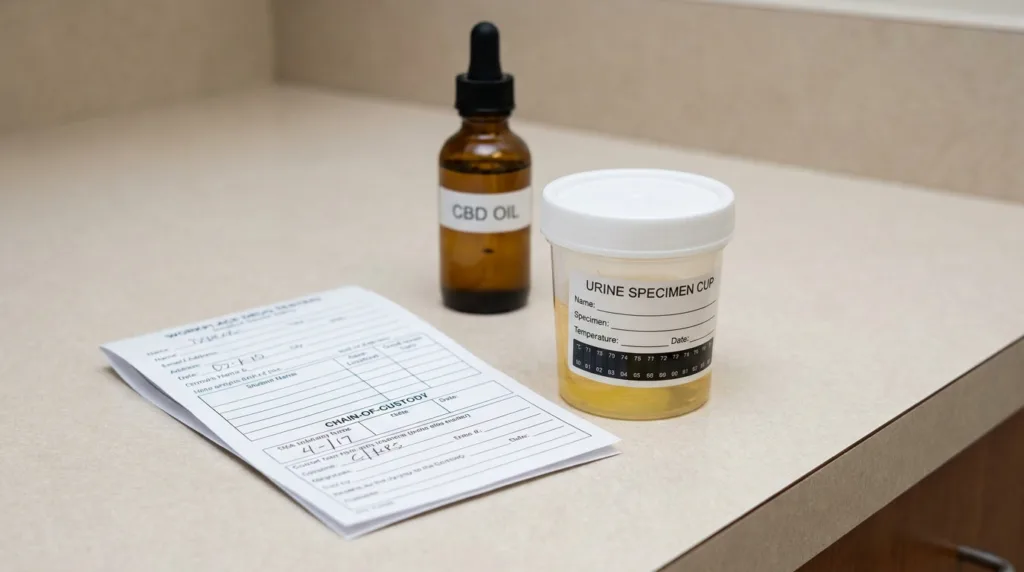
CBD oil itself won't fail a drug test, but full-spectrum products with trace THC can trigger positive results. Drug tests detect THC metabolites, not CBD.
What Is Will Cbd Oil Fail A Drug Test
CBD oil is a wellness product derived from hemp, a variety of the cannabis plant that contains high concentrations of cannabidiol (CBD) and only trace amounts of delta-9 THC — the psychoactive compound responsible for the "high" associated with marijuana. Under the 2018 Farm Bill, hemp-derived products are federally legal in the United States as long as they contain no more than 0.3% delta-9 THC by dry weight. This legislation opened the door for a massive CBD market, but it also created a gray area that leaves many consumers asking one urgent question: can CBD oil cause you to fail a drug test? The short answer is that CBD itself is not what standard drug screenings look for. Most workplace and pre-employment drug tests use immunoassay panels designed to detect THC metabolites, not cannabidiol. However, the concern is legitimate because many CBD oil products — particularly full-spectrum formulations — contain trace amounts of THC that are legally permitted but can accumulate in the body over time. Research from Johns Hopkins Medicine has demonstrated that even products marketed within legal THC limits can produce enough metabolite buildup to trigger a positive result, especially with consistent, high-dose use. Complicating matters further, the FDA has not established comprehensive regulatory standards for over-the-counter CBD products, which means label accuracy varies significantly across the industry. Independent lab analyses have repeatedly found that some products contain more THC than their labels claim, compounding the risk for anyone subject to routine testing. According to the World Health Organization's Critical Review Report on CBD, pure cannabidiol does not appear to have abuse potential or cause dependence, yet the report also acknowledges that product composition matters enormously when assessing real-world outcomes like drug test results . Understanding the distinction between product types — full spectrum, broad spectrum, and isolate — is essential for managing this risk. If you want to learn more about will cbd oil fail a drug test, the critical takeaway is that CBD oil does not inherently guarantee a failed drug test, but the THC content hidden inside your specific product very well could.How Will Cbd Oil Fail A Drug Test Works
To understand why a CBD product might lead to a positive drug test, you first need to understand what drug tests are actually looking for. Standard workplace and federal drug screenings use an immunoassay method — typically a urine test — that detects metabolites of THC, the psychoactive compound in cannabis, not CBD itself. According to guidelines established by SAMHSA (the Substance Abuse and Mental Health Services Administration), the confirmation cutoff threshold for THC metabolites in urine is 50 nanograms per milliliter (ng/mL) on the initial screen and 15 ng/mL on the confirmatory GC-MS test. CBD as a molecule will not trigger these assays. The problem arises when CBD products contain trace amounts of THC that quietly accumulate in fatty tissue over days or weeks of consistent use, eventually pushing metabolite concentrations past those thresholds and producing what many people mistakenly call a false positive — though technically, the test is accurately detecting THC metabolites that were genuinely consumed.
The risk level depends almost entirely on which type of CBD product you choose. Full spectrum CBD oil retains the complete range of cannabinoids naturally present in the hemp plant, including up to 0.3% THC — the legal maximum set by the DEA under the 2018 Farm Bill. While 0.3% sounds negligible, research led by Ryan Vandrey at Johns Hopkins University School of Medicine demonstrated that regular use of full spectrum products can cause THC metabolites to accumulate to detectable levels, particularly in individuals taking higher daily doses. A person consuming 1,000–2,000 mg of full spectrum CBD oil per day, for instance, could ingest several milligrams of THC daily — more than enough to cross the SAMHSA threshold on a routine drug screening. Broad spectrum CBD products undergo additional processing to remove THC while preserving other cannabinoids and terpenes, substantially lowering the risk. CBD isolate, the purest form, contains 99%+ cannabidiol with no other cannabinoids and carries the lowest risk of triggering a positive result on any standard drug test.
[PRODUCT:1]Adding another layer of complexity is the issue of product mislabeling. Research published in the British Dental Journal found that a significant percentage of commercially available CBD products contained more THC than stated on the label . This means that even consumers who deliberately select a broad spectrum or isolate product may unknowingly ingest THC if the product has not been independently verified by third-party lab testing. The WHO Critical Review Report on cannabidiol similarly noted that while CBD itself has a favorable safety profile, the variability in commercial product composition introduces real-world risks that consumers must navigate carefully.
So, how much CBD oil does it take to fail a drug test? There is no single universal answer because the outcome depends on the product's actual THC content, the dose and frequency of use, individual metabolism and body fat percentage, and hydration levels at the time of testing. However, the science is clear: it is the THC inside a CBD product — not the CBD — that creates the risk. Anyone subject to regular drug testing should prioritize verified CBD isolate or broad spectrum products with current certificates of analysis, and you can learn more about will cbd oil fail a drug test in our detailed educational guide.
Benefits of Will Cbd Oil Fail A Drug Test
Understanding whether CBD oil will trigger a positive drug screening is one of the most practical steps you can take before incorporating cannabidiol into your daily routine. When you learn more about will cbd oil fail a drug test, you gain the knowledge needed to select the right CBD products for your situation — particularly if your livelihood depends on passing routine screenings. Rather than avoiding cannabidiol altogether, informed consumers can confidently choose formulations that align with workplace and legal requirements. The primary advantage of this awareness is the ability to distinguish between product types that carry different levels of risk. As WebMD explains, standard urine drug panels screen for THC metabolites, not for CBD itself. This means that a well-sourced CBD isolate — which contains only pure cannabidiol with no other cannabis compounds — poses minimal risk of triggering a positive result. Similarly, broad spectrum CBD products undergo additional processing to remove detectable THC while retaining other beneficial cannabinoids and terpenes. Either option allows users to access the wellness properties that cannabidiol has been studied for without the concern that accompanies full spectrum formulations, which may contain up to 0.3% THC by federal law. Beyond product selection, this knowledge also helps consumers interpret dose-related risk. According to research published in the Journal of the American Academy of Physician Associates , even trace amounts of THC in some CBD products can accumulate over time, especially at higher doses, potentially crossing the 50 ng/mL immunoassay threshold. Steven Dudley, a toxicology expert affiliated with Vanderbilt University Medical Center, has emphasized the importance of verifying third-party lab results before purchasing any cannabidiol product, noting that mislabeled items remain a documented problem in the marketplace. Choosing THC-free options empowers employees, athletes, and licensed professionals to maintain compliance with their organization's drug-testing policies. Users report that selecting verified products gives them peace of mind while still benefiting from the calming and restorative properties associated with cannabidiol — without the anxiety of wondering whether their next screening could jeopardize a career. Importantly, a 2018 WHO critical review concluded that CBD in its pure form does not produce dependence or abuse potential, reinforcing that marijuana-related concerns are specific to THC content, not to cannabidiol itself. Knowledge, in this case, is not just power — it is protection.Common Mistakes With Will Cbd Oil Fail A Drug Test
Even well-intentioned CBD users can stumble into a positive drug test result, and the mistakes that lead there are remarkably consistent. The most frequent reason people receive a positive drug test after using CBD is purchasing mislabeled CBD products without verifying their actual contents. Research published in the British Dental Journal highlights that CBD products on the market frequently contain more THC than their labels indicate, sometimes significantly so. Because the FDA does not pre-approve most CBD supplements before they reach shelves, consumers bear the responsibility of confirming what is actually in their bottle — and many simply do not. A second critical error is assuming that all CBD is completely free of THC. Under the 2018 Farm Bill, hemp-derived CBD may legally contain up to 0.3% THC by dry weight. While that sounds negligible, full spectrum CBD products retain this allowable THC, and those trace amounts can accumulate in fatty tissue over days or weeks of consistent use. The Arizona Poison and Drug Information Center has cautioned that even low-level, repeated THC exposure may build to concentrations detectable by standard immunoassay screenings, potentially triggering a false positive for marijuana use. Third, many users skip third-party Certificates of Analysis entirely. Without an independent lab report confirming cannabinoid levels, there is no reliable way to know whether a product's THC content falls within safe margins. This oversight is especially consequential for individuals governed by strict testing protocols; the Department of Transportation, for example, maintains a zero-tolerance policy for THC among safety-sensitive transportation employees, meaning even the smallest miscalculation in product choice could lead to a drug test failure with career-ending consequences. Finally, underestimating cumulative dosing is a widespread blind spot. Someone taking 100 mg of full spectrum CBD daily ingests a small but consistent stream of THC that, over time, may be enough to produce a positive drug test result. If you are subject to screening, you can learn more about will cbd oil fail a drug test protocols and choose broad spectrum or isolate formulations specifically designed to minimize this risk.How to Choose the Best Will Cbd Oil Fail A Drug Test
Selecting the right CBD oil when you face routine screening requires more than grabbing the first bottle you see at a gas station — it demands a deliberate, evidence-based approach. The critical variable is delta-9 THC, the cannabinoid that standard immunoassay panels actually detect. Research published in the Journal of the American Academy of Physician Associates confirms that even legally compliant hemp products containing up to 0.3% THC can, over time, build enough THC metabolites in your system to trigger a positive result on a drug test . That means your product choice matters enormously. Start with the spectrum. If passing a screening is non-negotiable, prioritize CBD isolate or broad spectrum CBD formulations. CBD isolate contains only cannabidiol with no other cannabinoids, making it functionally THC-free. Broad spectrum CBD products go through additional processing to strip out delta-9 THC while retaining other beneficial hemp compounds. Both options dramatically lower your exposure compared to full spectrum alternatives. Johns Hopkins Medicine has noted that CBD itself does not produce intoxicating effects, reinforcing that the compound alone is not what drug tests flag — residual THC is. Demand third-party Certificates of Analysis (COAs). A trustworthy brand publishes batch-specific lab reports from an independent, ISO-accredited laboratory. Check the cannabinoid profile for the exact milligrams of delta-9 THC per serving, not just per bottle. Reputable companies like Cornbread Hemp make these COAs easily accessible on their website, so you can verify that the THC content aligns with what's printed on the label. Under the 2018 Farm Bill, legal hemp must contain no more than 0.3% delta-9 THC by dry weight, but the FDA does not currently regulate CBD products for accuracy in the same way it oversees pharmaceuticals, which means label claims can be unreliable without independent verification. Look for transparent labeling. The label should clearly state the type of extract — isolate, broad spectrum, or full spectrum — along with total CBD per serving and total THC per serving. Vague terms like "hemp extract" without milligram specifics are a red flag. Also confirm that the hemp is domestically grown and that the brand follows current Good Manufacturing Practices. If you want to learn more about will cbd oil fail a drug test, understanding these selection criteria is the single most effective step you can take to enjoy the potential benefits of CBD products without jeopardizing your career or legal standing.Frequently Asked Questions
Does CBD itself show up on a drug test? No. Standard workplace screenings, including the most common urine test, are designed to detect THC metabolites — not cannabidiol. SAMHSA sets the federal confirmation cutoff for THC-COOH at 15 ng/mL, meaning only THC and its metabolites above that threshold will produce a positive drug test. CBD oil on its own should not trigger a result, but the THC that may be present in certain CBD products is what creates risk. Can CBD oil cause a false positive? It can, particularly with full-spectrum formulations. Even though hemp-derived CBD oil must contain less than 0.3 percent THC under the DEA's federal scheduling framework, daily or high-dose use can cause THC metabolites to accumulate. Research published in the British Dental Journal confirms that repeated consumption of full-spectrum products may gradually elevate THC-COOH levels enough to cross immunoassay thresholds, producing what is effectively a false positive for marijuana use . How long does CBD stay in your system for a drug test? CBD itself typically clears the body within two to five days for occasional users, though heavy, prolonged use may extend that window. More importantly, trace THC from full-spectrum CBD products can remain detectable in urine for up to thirty days, depending on body fat percentage, metabolism, and dosage. What practical steps can I take? Choose broad-spectrum or isolate CBD products verified by independent, ISO-accredited labs. Review certificates of analysis to confirm non-detectable THC levels, and keep dosages as consistent as possible. If you want to learn more about will cbd oil fail a drug test, understanding these distinctions is the most reliable way to enjoy CBD while protecting your drug test results.Join Our Newsletter
Sign up to be the first to know about our can't-miss product drops, special VIP offers & exclusive discounts.