Does THCA Show Up on Drug Tests? Here's What You Need to Know
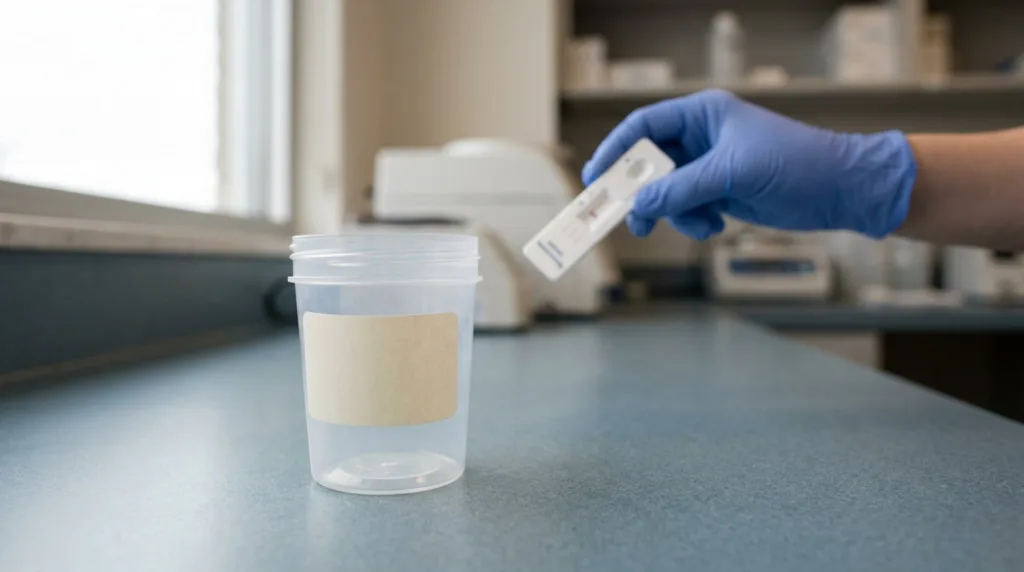
THCA shows up on drug tests because it converts to THC when heated. Decarboxylation changes THCA into psychoactive delta-9 THC, which is detected by standard drug screens.
Table of Contents
- What Is THCA?
- How THCA Converts to THC: Decarboxylation Explained
- Does THCA Show Up on a Drug Test?
- Types of Drug Tests and THCA Detection
- How Long Does THCA Stay in Your System?
- What Factors Affect the Detection Window of THCA?
- THCA, the 2018 Farm Bill, and Employer Drug Screening
- Frequently Asked Questions About THCA and Drug Tests
What Is THCA?
Before we can answer whether THCA triggers a positive result on a drug screening panel, we need to understand what this compound actually is—and why so many people mistakenly assume it's completely separate from THC.
THCA (tetrahydrocannabinolic acid) is a naturally occurring cannabinoid found abundantly in raw, living cannabis plants. In fact, when you look at a freshly harvested cannabis flower, almost all of the "THC" content reported on a label actually exists as THCA. The plant doesn't produce significant quantities of THC on its own; instead, it synthesizes THCA as the dominant acidic precursor. Structurally, THCA carries an extra carboxyl group (–COOH) attached to its molecular backbone—a small but critical chemical difference that makes the compound non-psychoactive in its raw state. This means consuming unheated THCA, such as in raw cannabis juice or freshly harvested flower, won't produce the intoxicating "high" associated with THC.
So what is THCA and is it the same as THC? Not exactly—but the gap between the two is remarkably narrow. The process that bridges that gap is called decarboxylation, a heat-driven chemical reaction that strips away the carboxyl group from THCA's molecular structure. When cannabis is smoked, vaped, baked into edibles, or even left in warm storage over time, decarboxylation converts THCA into delta-9 THC—the psychoactive compound that interacts directly with the CB1 receptors in your ECS (endocannabinoid system). This conversion can happen rapidly with direct flame or more gradually through prolonged exposure to heat and light.
Understanding this relationship is essential because even though THCA itself does not bind efficiently to the ECS receptors responsible for intoxication, it is never more than a modest temperature change away from becoming THC. Preliminary research suggests THCA may have its own distinct interactions within the body, but from a drug testing perspective, the critical point is this: any scenario where THCA encounters heat—whether intentionally or inadvertently—initiates the conversion to THC. And once that conversion occurs, your body metabolizes it through the exact same pathway, producing the same metabolites that standard drug panels are specifically engineered to detect. If you'd like to learn more about does thca show up on drug test outcomes, understanding this foundational chemistry is the essential first step.
How THCA Converts to THC: Decarboxylation Explained
Understanding the relationship between THCA (tetrahydrocannabinolic acid) and THC (tetrahydrocannabinol) starts with one chemical process: decarboxylation. This is the single most important concept for anyone wondering whether their THCA product could trigger a positive drug screen, because it's the bridge between a non-psychoactive compound and the exact molecule that drug tests are designed to catch.
In its natural state, the cannabis plant produces THCA—not THC. THCA sits in the trichomes of raw flower, carrying an extra carboxyl group (a cluster of carbon, oxygen, and hydrogen atoms) attached to its molecular structure. That carboxyl group is the only thing standing between a compound your body largely ignores and one that binds directly to CB1 receptors in the brain to produce psychoactive effects.
So how does THCA turn into THC? When THCA is heated, that carboxyl group breaks away as carbon dioxide and water vapor—a reaction chemists call decarboxylation. The threshold temperature varies, but significant conversion typically begins around 220°F (104°C) and accelerates at higher temperatures. This means every time you smoke a joint, pull from a vaporizer, or cook THCA flower into an edible, you're actively triggering decarboxylation and converting THCA into fully psychoactive THC in real time.
Heat isn't the only catalyst. Prolonged exposure to light and the simple passage of time also cause slow, gradual decarboxylation. That jar of THCA flower sitting on a shelf near a window is quietly converting, percentage point by percentage point, into THC over weeks and months. Even "raw" THCA products typically contain some measurable level of THC due to this natural degradation.
Here's the critical takeaway for drug testing: once decarboxylation occurs, your body cannot distinguish between THC that originated as THCA in hemp flower and THC from any other cannabis source. The liver metabolizes it through the same pathway, producing the identical metabolite—THC-COOH—that immunoassay panels screen for. The original form is irrelevant. Whether you vaped THCA concentrate, smoked THCA flower, or baked it into brownies, the end result inside your body is pharmacologically indistinguishable from conventional THC consumption.
This is precisely why assuming THCA products are "test-safe" is a costly miscalculation. If you'd like to understand the full implications, you can learn more about does thca show up on drug test in our detailed guide.
[PRODUCT:1]Does THCA Show Up on a Drug Test?
"THCA is non-psychoactive, so it won't show up on a drug test—right?" This is one of the most widespread and potentially costly misconceptions in the hemp space. The short answer is yes, THCA can absolutely trigger a positive result on a standard drug screening, and understanding the metabolic pathway behind this reality is essential for anyone facing upcoming or recurring testing. If you want to learn more about does thca show up on drug test scenarios, the science is straightforward—and sobering.
Here's why: standard drug tests do not screen for THCA or even THC itself. Instead, they target THC-COOH (11-nor-9-carboxy-Δ9-tetrahydrocannabinol), which is the primary metabolite your body produces after processing THC. When THCA is heated—whether through smoking, vaping, or cooking—it undergoes decarboxylation and converts directly into THC. Once THC enters your bloodstream, your liver breaks it down into THC-COOH, and this is precisely the compound that immunoassay panels are designed to flag. According to research published in the Journal of Analytical Toxicology (PMID: 29351661), THCA metabolizes into the same detectable metabolites that conventional cannabinoid testing identifies, meaning that consuming heated THCA products is functionally indistinguishable from consuming THC as far as any urine drug screen is concerned.
But what about raw, unheated THCA—say, from juicing cannabis or taking a THCA tincture kept at low temperatures? Even here, the risk is not zero. Partial decarboxylation can occur during storage, extraction, and even within the acidic environment of the stomach. Some researchers have observed that even small amounts of converted THC from nominally "raw" THCA products generate enough THC-COOH to reach detection thresholds. Individual metabolic variation plays a significant role as well; body fat percentage, hydration levels, liver enzyme activity, and frequency of use all influence how quickly and thoroughly your body processes cannabinoids into detectable metabolites.
Most workplace and federal drug screening programs follow guidelines established by SAMHSA (the Substance Abuse and Mental Health Services Administration), which set the initial immunoassay cutoff for cannabinoids at 50 ng/mL of THC-COOH in urine. If a sample meets or exceeds that threshold, it moves to confirmatory testing using GC-MS (gas chromatography-mass spectrometry), which identifies THC-COOH with high specificity at a confirmatory cutoff of 15 ng/mL. This two-step process means that even modest THCA consumption—particularly repeated use over days or weeks—can accumulate sufficient metabolite levels to fail both the initial screen and the confirmation.
The critical takeaway is that the legal distinction between hemp-derived THCA and marijuana-derived THC under the 2018 Farm Bill has absolutely no bearing on drug test outcomes. Testing laboratories do not differentiate between the source of THC-COOH; they simply report whether the metabolite is present above the cutoff. A positive result from THCA flower is reported identically to one from traditional cannabis. For anyone subject to employment screening, DOT testing, probation requirements, military service obligations, or professional licensure reviews, using THCA products carries the same detection risk as using conventional THC products. The safest assumption is that any THCA consumption—heated or raw, legal or otherwise—can and likely will show up on a standard drug test.
Types of Drug Tests and THCA Detection
Not all drug tests work the same way, and understanding how each one detects THC metabolites can help you gauge your actual risk after using THCA products. While the specific compounds each test targets may vary slightly, every standard panel is ultimately looking for evidence that THC has been in your system—and as we've established, THCA converts to THC through decarboxylation, producing the same THC-COOH metabolite that triggers a positive result. Research published in the Journal of Analytical Toxicology has demonstrated that sensitive LC-MS/MS methods can detect cannabinoid metabolites even at remarkably low concentrations, making it increasingly difficult to slip under the radar regardless of which test you face .
Here's how the four major test types compare THCA and THC detection:
| Test Type | What It Detects | General Detection Window | Key Considerations |
|---|---|---|---|
| Urine Test | THC-COOH (primary metabolite) | 3–30+ days depending on use frequency | Most widely used in employment screening; single use may clear in 3–4 days, while heavy or chronic use can extend the window well beyond 30 days |
| Blood Test | Active THC and THC-COOH | 1–7 days for occasional users; longer for heavy users | Shortest practical detection window; primarily used in DUI investigations and post-accident testing where recent impairment is the question |
| Saliva Test | Parent THC compound | 24–72 hours for most users | Growing rapidly in workplace use due to ease of administration; best at detecting very recent consumption |
| Hair Follicle Test | THC-COOH embedded in hair shaft | Up to 90 days | Longest detection window of any standard test; less effective for detecting single or very recent use |
The urine drug screen remains the most common testing method you'll encounter, particularly in pre-employment and random workplace panels. Because THC-COOH is fat-soluble and accumulates in adipose tissue, the detection window for a urine test can vary dramatically—occasional users may test clean within a week, while daily users sometimes test positive for a month or more after their last session.
A blood drug test offers the shortest detection window because it measures active THC circulating in the bloodstream rather than stored metabolites. This makes it the most useful for determining recent use, which is why law enforcement often relies on it during roadside evaluations. However, even a blood test can detect THC for up to a week in frequent users.
The saliva drug test is gaining traction as a convenient, non-invasive option. It detects parent THC in oral fluid, making it effective for identifying consumption within the past one to three days. Its growing adoption in workplace settings means THCA users should be especially cautious about timing.
Finally, the hair follicle test presents the most challenging scenario. Because THC metabolites become trapped in the hair shaft as it grows, this test can reveal a pattern of use stretching back approximately 90 days. While it's generally less sensitive to a single, isolated use, anyone consuming THCA products regularly should assume that a hair test will flag them.
these detection windows are general estimates. Individual factors—including metabolism, body fat percentage, hydration levels, frequency of use, and the potency of the THCA product consumed—can shift these ranges significantly in either direction. If you'd like a deeper dive into the science behind these results, you can learn more about does thca show up on drug test in our detailed guide. The bottom line: no test type gives THCA users a reliable pass.
How Long Does THCA Stay in Your System?
Understanding how long THCA remains detectable isn't as straightforward as checking a single number on a chart. Once THCA converts to THC (tetrahydrocannabinol) through decarboxylation—whether from smoking, vaping, or even body heat during digestion—your liver processes it into THC-COOH, the primary metabolite that drug screens target. This metabolite is fat-soluble, meaning it binds to adipose tissue and releases slowly back into your bloodstream over days or even weeks. The half-life of THC-COOH ranges from approximately 1 to 10 days depending on the individual, which is precisely why the detection window varies so dramatically from person to person.
The single biggest factor determining how long these metabolites linger is your usage pattern. Here are the approximate detection ranges for urine testing, the most common screening method:
- Single or occasional use (once): THC-COOH is typically detectable in urine for approximately 3 to 4 days after consumption. Your body processes and excretes the metabolite relatively quickly when there's no accumulated buildup in fat cells.
- Moderate use (several times per week): Expect a detection window of roughly 5 to 7 days. At this frequency, metabolites begin accumulating faster than your body can clear them, extending the timeline noticeably.
- Heavy or chronic use (daily or near-daily): This is where the numbers become sobering—15 to 30 days or more. Long-term, consistent users saturate their fat stores with THC-COOH, and the slow release from these tissues can keep urine concentrations above cutoff thresholds for weeks. Some documented cases in frequent, high-dose users show detection beyond 45 days.
However, these ranges are general estimates, not guarantees. Individual variation plays an enormous role. Your body mass index, metabolic rate, hydration levels, physical activity, and even genetics all influence how quickly you process and excrete cannabinoid metabolites. A lean person with a fast metabolism who used THCA once may clear THC-COOH in two days, while someone with a higher body fat percentage and slower metabolism could test positive for a week after the same single exposure.
Age and liver function also matter. Older adults and individuals with compromised hepatic efficiency may metabolize THC-COOH more slowly, widening their personal detection window beyond standard estimates. Additionally, the potency and quantity of the THCA product consumed directly affects the metabolite load your body must process—a high-concentration THCA diamond delivers far more convertible material than a low-dose tincture.
One critical point that catches many people off guard: exercise can temporarily increase detectable THC-COOH levels in urine. Because these metabolites are stored in fat, burning fat through vigorous activity releases them back into circulation. This means that working out heavily right before a test could paradoxically push your results above the detection threshold. If you want to learn more about does thca show up on drug test scenarios and how different testing methods compare, the science consistently points to one conclusion: the safest approach is allowing ample clearance time based on your actual usage history, not best-case estimates.
What Factors Affect the Detection Window of THCA?
Understanding why THCA-derived metabolites linger in some people's systems far longer than others requires looking at several interconnected biological and behavioral variables. No two bodies process cannabis compounds identically, and the detection window for THC-COOH—the primary metabolite that drug panels flag—can range from a few days to several weeks depending on the following factors. Body Fat Percentage THC-COOH is highly fat-soluble, meaning it accumulates in adipose tissue rather than being flushed quickly through water-based biological processes. Individuals with higher body fat percentages tend to store more of this cannabinoid metabolite, releasing it gradually back into the bloodstream over time. This slow release is why someone with a larger fat reserve may test positive weeks after their last use, while a leaner individual clears the same metabolites significantly faster. Metabolism Rate Your basal metabolic rate directly influences how quickly your body breaks down and excretes THC-COOH. People with faster metabolisms—often correlated with age, physical activity level, and thyroid function—tend to process and clear these metabolites sooner. Conversely, a slower metabolism extends the window during which a test can return a positive result. Frequency and Dosage of Use This is arguably the most impactful variable. A single, low-dose encounter with a THCA product may clear the system within three to five days for most people. However, daily or heavy use causes THC-COOH to build up in fat cells cumulatively, and chronic users have tested positive 30 days or more after cessation. The higher the dose per session, the more metabolite your body must process. Hydration Levels While staying well-hydrated can dilute urine concentration and marginally affect test readings, it does not meaningfully accelerate the elimination of stored metabolites. Over-hydrating before a test may even raise suspicion at the lab, potentially triggering a retest. Method of Consumption How you consume THCA matters enormously. Smoking or vaping THCA flower causes rapid decarboxylation into THC, producing a significant metabolite load. Edibles containing decarboxylated cannabis undergo first-pass liver metabolism, often generating even more THC-COOH per session. Consuming raw, unheated THCA—such as in juice or tinctures—produces less conversion, but partial metabolic transformation still occurs, and sensitive testing methods can detect even trace amounts. Individual Physiology Genetics, liver enzyme activity, gut microbiome composition, and overall health all play roles that are difficult to predict or control. Two people using the identical product at the same dose can produce meaningfully different test outcomes. A Warning About Detox Products Detox teas, activated charcoal supplements, and "cleansing" kits marketed to cannabis users lack credible scientific evidence supporting rapid metabolite elimination. Relying on these methods before a drug test is unreliable at best and could give you false confidence. If you need to learn more about does thca show up on drug test scenarios, the safest approach is complete abstinence well ahead of any scheduled screening.THCA, the 2018 Farm Bill, and Employer Drug Screening
One of the most consequential misunderstandings in the cannabis space right now is the assumption that legal equals safe for employment purposes. Under the 2018 Farm Bill, hemp-derived cannabinoids—including THCA—are federally legal as long as the plant material contains less than 0.3% delta-9 THC on a dry-weight basis. Because THCA itself is not delta-9 THC, many hemp flower products with high THCA concentrations technically clear that threshold at the point of sale. This has created a thriving market of THCA products marketed as "Farm Bill compliant." But here is the critical distinction every consumer needs to internalize: legality does not equal passing a drug test.
Standard workplace drug screening protocols—whether following SAMHSA (Substance Abuse and Mental Health Services Administration) guidelines for federal employees or Department of Transportation (DOT) regulations for safety-sensitive positions—are designed to detect THC-COOH, the primary metabolite your body produces after processing THC. These immunoassay panels do not care whether the THC-COOH in your urine originated from marijuana purchased at a dispensary or from hemp-derived THCA flower that converted to THC when you smoked, vaped, or even partially metabolized it. A positive result is a positive result, and no Medical Review Officer (MRO) will reverse it simply because you present a receipt from a legal hemp retailer.
Employers are not required to distinguish between hemp-derived and marijuana-derived cannabinoid metabolites. Most corporate drug policies reference the federal scheduling framework or defer entirely to the cutoff concentrations set by SAMHSA—currently 50 ng/mL for initial immunoassay screening and 15 ng/mL for GC-MS confirmation. If your THCA consumption generates enough THC-COOH to exceed those thresholds, the outcome is the same as if you had used traditional cannabis. Even in states where recreational marijuana is fully legal, employers in safety-sensitive industries—and many private-sector companies—retain the right to enforce zero-tolerance THC policies.
The bottom line: if you are subject to any form of workplace, probation, or athletic drug screening, the federal legality of your THCA product offers no protection whatsoever against testing positive. Before using any THCA product, weigh the legal nuance against the very real, career-impacting consequences of a failed test. To understand the full science behind detection, you can learn more about does thca show up on drug test in our detailed guide.
Frequently Asked Questions About THCA and Drug Tests
Below are the most common questions people ask about THCA and drug screening, answered with the metabolic science that actually matters.
How long will one hit of THCA stay in your system?
A single use of THCA flower (which decarboxylates into THC (tetrahydrocannabinol) when smoked) can remain detectable for approximately three to seven days in urine. The body converts THC into the metabolite THC-COOH, which is fat-soluble and lingers in adipose tissue. Individual factors—body fat percentage, hydration, metabolism speed, and physical activity level—all influence how quickly detection becomes unlikely. For a one-time user, most standard panels will clear within a week, but heavier individuals or those with slower metabolisms may test positive for longer.
Do employers check for THCA specifically?
Most workplace panels do not screen for THCA (tetrahydrocannabinolic acid) by name. Standard immunoassay tests target THC-COOH, the downstream metabolite that both THC and THCA produce after consumption and metabolism. Because THCA converts to THC through heat or even partial metabolic pathways in the body, the end result on a drug test is identical. Whether you consumed a federally legal hemp-derived THCA product or traditional cannabis, the metabolite triggering a positive result is the same.
Can raw THCA cause a positive drug test?
Yes, even raw, unheated THCA carries risk. While raw consumption avoids full decarboxylation, trace conversion to THC can still occur during digestion and metabolism. Sensitive confirmatory methods such as LC-MS/MS can flag even low concentrations of THC-COOH. The idea that raw THCA is completely invisible to screening is one of the most dangerous misconceptions in the cannabis space.
What is the difference between THCA and THC on a drug test?
From the test's perspective, there is no meaningful difference. Both compounds ultimately produce THC-COOH in the body, and that single metabolite is what every standard urine, blood, and hair panel is calibrated to detect. The legal distinction between THCA and THC under the 2018 Farm Bill does not translate to a scientific distinction at the lab. If you need to pass an upcoming screening, the safest approach is full abstinence from all cannabinoid products. To learn more about does thca show up on drug test, review the full breakdown above.
Join Our Newsletter
Sign up to be the first to know about our can't-miss product drops, special VIP offers & exclusive discounts.