What Is THCA Flower? Understanding the Science Behind Raw Cannabis
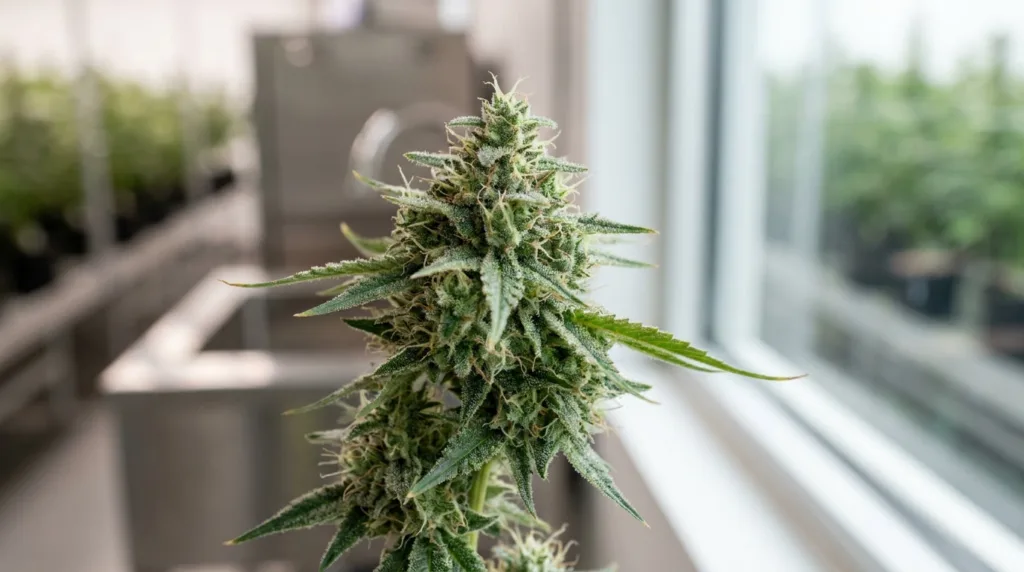
THCA flower is hemp-derived cannabis flower rich in tetrahydrocannabinolic acid (THCA), a non-psychoactive cannabinoid that converts to THC when heated. It's cultivated to maximize THCA content while staying under 0.3% delta-9 THC legal limit.
Table of Contents
- What Is THCA? Understanding Tetrahydrocannabinolic Acid
- What Is THCA Flower and How Is It Made?
- THCA Flower vs THC Flower: Key Differences Compared
- Is THCA Flower OK to Smoke? Effects and Potency Explained
- Is High THCA Flower Legal? Federal and State Considerations
- What to Look for When Buying THCA Flower
What Is THCA? Understanding Tetrahydrocannabinolic Acid
Tetrahydrocannabinolic acid — commonly abbreviated as THCA — is the most abundant raw cannabinoid produced by Cannabis sativa and the direct acidic precursor to Delta-9-tetrahydrocannabinol (THC), the compound most people associate with cannabis's intoxicating effects. To learn more about what is thca flower and why it matters, you first need to understand this molecule at its foundation. During cannabinoid biosynthesis, cannabis plants don't actually produce THC directly. Instead, specialized structures called cannabis trichomes — the sticky, crystalline glands coating mature flower surfaces — synthesize THCA through an enzymatic process. The enzyme responsible, THCA synthase, catalyzes the oxidative cyclization of cannabigerolic acid (CBGA), converting it into tetrahydrocannabinolic acid as the plant's native biosynthetic end product. Research characterizing glandular trichome development confirms that THCA, not THC, is the dominant cannabinoid form across cannabis types regardless of cultivar or legal classification . This distinction carries enormous practical significance. At the molecular level, THCA features an additional carboxyl group (–COOH) attached to its structure that THC lacks. That seemingly minor chemical difference fundamentally alters how the compound interacts with the human endocannabinoid system — specifically, the carboxyl group prevents THCA from efficiently binding to CB1 receptors in the brain, the receptors responsible for producing psychoactive effects. Does THCA cause a high? No. In its raw, unheated form, THCA is non-psychoactive. You could consume raw THCA flower without experiencing the intoxication associated with THC. The critical transformation occurs through decarboxylation — a heat-driven chemical reaction that strips away that carboxyl group, converting the raw cannabinoid into active, psychoactive THC. While smoking or vaping triggers rapid decarboxylation, this conversion also occurs gradually during drying, curing, storage, and prolonged exposure to light or ambient heat, meaning THCA flower slowly converts to small amounts of THC from the moment it's harvested. Understanding this chemistry is essential: THCA flower isn't a marketing invention. It reflects the actual molecular reality of how every cannabis plant produces cannabinoids — and it's this science that underpins the product's unique legal positioning, its effects profile, and the decisions consumers need to make before purchasing.What Is THCA Flower and How Is It Made?
THCA flower is hemp-derived flower cultivated specifically to maximize tetrahydrocannabinolic acid (THCA) content while maintaining delta-9 THC levels below the 0.3% federal threshold that legally defines hemp. To [learn more about what is thca flower](/blogs/learn/what-is-thca-flower), it helps to understand that this product category exists at the intersection of advanced plant breeding, cannabinoid chemistry, and regulatory compliance. At the botanical level, every Cannabis sativa plant — whether classified as hemp or marijuana — produces THCA as its primary cannabinoid. Cannabis trichomes, the resinous glands coating flower surfaces, biosynthesize THCA (and CBDA) as native acidic precursors regardless of cultivar type. The distinction between THCA flower and standard hemp flower isn't botanical — it's intentional. Standard hemp flower is typically bred for high CBD content and minimal THC-lineage cannabinoids. THCA flower, by contrast, is selectively bred to express high THCA concentrations, often reaching 20–25% or more, while the delta-9 THC percentage remains compliant at the moment of testing. Cultivators achieve this through targeted selective breeding programs, crossing genetics that naturally express elevated THCA synthase activity. Genome-wide studies have identified the cannabinoid biosynthesis gene families responsible for THCA production in hemp cultivars, confirming that the same enzymatic machinery found in high-THC cannabis exists in hemp-legal plants . Growers then optimize environmental conditions — light cycles, nutrient profiles, temperature, and humidity — to push THCA percentage as high as genetically possible while carefully timing harvest to avoid excessive decarboxylation that would convert THCA into delta-9 THC and push the plant out of legal compliance. What distinguishes THCA flower from standard hemp flower is precisely this cannabinoid profile. A typical CBD hemp flower might contain 15% CBDA with trace THCA. High THCA flower reverses that ratio dramatically. Measuring these concentrations accurately is critical for both compliance and consumer transparency. Researchers have developed near-infrared spectroscopy methods to rapidly assess THCA and other cannabinoid levels directly in cannabis inflorescences, enabling non-destructive quality evaluation during cultivation and post-harvest processing . These tools help producers verify that their flower meets the specific THCA-to-THC ratio required for legal sale. One essential detail consumers should understand: decarboxylation — the chemical conversion of THCA to THC — doesn't happen only when you light a joint. It's a thermally driven reaction that begins slowly during drying, curing, and storage. Every THCA flower product is gradually shifting its cannabinoid profile from the moment of harvest, making proper storage and timely testing essential quality markers.THCA Flower vs THC Flower: Key Differences Compared
If you want to learn more about what is thca flower, the most important starting point is understanding how it compares to traditional THC flower — because the differences are simultaneously subtle and significant. Here's the core reality that trips most people up: THCA flower and THC flower come from the same plant species. Cannabis glandular trichomes produce tetrahydrocannabinolic acid as their primary raw cannabinoid regardless of whether the cultivar is classified as hemp or marijuana. The distinction between these two products isn't botanical — it's regulatory, chemical, and contextual. THCA flower is hemp-derived flower cultivated to maximize tetrahydrocannabinolic acid content while remaining below 0.3% Delta-9-tetrahydrocannabinol (THC) at the point of pre-harvest testing. THC flower — what dispensaries in legal states sell as marijuana — typically contains significant delta-9 THC because it has already undergone partial decarboxylation during drying and curing, or because regulatory testing accounts for total THC differently. The following table breaks down every meaningful dimension of comparison:| Factor | THCA Flower | THC Flower (Marijuana) |
|---|---|---|
| Chemical composition (raw) | High THCA (15–25%+), delta-9 THC below 0.3% | Variable THCA plus significant delta-9 THC already present |
| Chemical composition (after heat) | Decarboxylation converts THCA to delta-9 THC — potency mirrors high-THC marijuana | Already contains delta-9 THC; additional conversion occurs with heat |
| Legal classification (federal) | Hemp under the 2018 Farm Bill if delta-9 THC ≤0.3% dry weight | Schedule I controlled substance (marijuana) |
| Source plant | Cannabis sativa — hemp-classified cultivar | Cannabis sativa — marijuana-classified cultivar |
| Effects when consumed raw | Non-psychoactive; no intoxicating high | Mildly psychoactive due to existing delta-9 THC content |
| Effects when smoked/vaped | Psychoactive — THCA converts to THC upon combustion | Psychoactive — delivers delta-9 THC directly |
| Potency range | 15–25%+ THCA (converts to roughly equivalent THC potency when heated) | 15–30%+ THC (combination of delta-9 THC and remaining THCA) |
| Purchasing availability | Available online and in many retail shops in states permitting hemp sales | Restricted to licensed dispensaries in states with legal cannabis programs |
Is THCA Flower OK to Smoke? Effects and Potency Explained
Yes, THCA flower can be smoked — but understanding what happens the moment you light it is critical to setting accurate expectations. In its raw, unheated state, tetrahydrocannabinolic acid is a non-psychoactive cannabinoid, meaning consuming THCA flower without heat activation will not produce the intoxicating effects associated with cannabis. The experience changes entirely once fire, a vaporizer, or any significant heat source enters the equation.
When you smoke THCA flower, a chemical process called decarboxylation occurs almost instantaneously. Heat strips a carboxyl group (–COOH) from the THCA molecule, converting it into Delta-9-tetrahydrocannabinol (THC) — the well-known psychoactive cannabinoid responsible for the "high" associated with cannabis. This heat activation is not unique to smoking; it happens whenever THCA is vaped, cooked into edibles, or exposed to sustained elevated temperatures. Research using FTIR spectroscopy and thermogravimetric analysis has shown that solid-state THCA decarboxylation follows predictable kinetics that begin well below combustion temperatures, meaning some conversion even occurs gradually during drying, curing, and storage before the flower ever reaches the consumer [chemrxiv:14216561.v1].
[PRODUCT:1]This is why potency considerations matter so much. A THCA flower product testing at 25% THCA has the potential to deliver a substantial delta-9 THC experience once smoked, even though its pre-combustion lab report shows less than 0.3% THC. The conversion is not perfectly 1:1 — molecular weight differences mean roughly 87.7% of the THCA mass converts to THC — but the resulting potency is significant and comparable to what users might expect from traditional high-THC cannabis flower.
What users may experience after smoking THCA flower includes the full range of effects commonly associated with delta-9 THC: euphoria, altered sensory perception, relaxation, and increased appetite. Individual responses vary based on tolerance, dose, and the broader cannabinoid and terpene profile of the specific cultivar. It is important to note that these are experiential observations, not therapeutic claims — no FDA-approved therapeutic indications exist for smoked THCA flower.
The key distinction to remember: raw THCA flower and heated THCA flower are functionally two different products. One is non-psychoactive; the other, after decarboxylation, delivers the full psychoactive potential of THC. If you want to learn more about what is thca flower before deciding how to consume it, understanding this conversion process is the single most important piece of the puzzle.
Is High THCA Flower Legal? Federal and State Considerations
The legality of THCA flower exists in one of the most contentious gray areas in cannabis regulation today. Under the 2018 Farm Bill, hemp is federally defined as cannabis containing no more than 0.3% Delta-9-tetrahydrocannabinol (THC) on a dry weight basis. Because THCA flower is tested in its raw, unheated state — where the dominant cannabinoid is THCA, not delta-9 THC — it can technically qualify as hemp-derived and pass federal compliance testing, even when THCA concentrations reach 20% or higher. This is where the total THC calculation controversy enters the picture. Some federal and state regulators argue that lab testing should account for the inevitable conversion of THCA to THC through decarboxylation, using a formula that adds delta-9 THC to a percentage of the THCA present. Under this total THC calculation, most high THCA flower would far exceed the 0.3% threshold and would be classified as marijuana — a Schedule I controlled substance. The DEA has signaled interest in this interpretation, but enforcement remains inconsistent, and the 2018 Farm Bill's language specifically references delta-9 THC concentration rather than total potential THC. State laws complicate matters further. Some states have explicitly banned THCA flower or adopted total THC testing requirements that effectively prohibit its sale. Others follow the federal delta-9-only standard, allowing THCA flower to be sold freely alongside other hemp-derived products. A handful of states remain ambiguous, with no clear guidance on how THCA flower should be categorized. What this means in practice is that the same THCA flower product can be perfectly legal in one state and a felony-level substance in another. The legal landscape is evolving rapidly, with pending legislation and court decisions that could reshape the market at any time. Disclaimer: Cannabis laws vary significantly by state and municipality. This information is provided for educational purposes only and does not constitute legal advice. Before purchasing or possessing THCA flower, readers should verify their local regulations and consult qualified legal counsel if needed. To understand the product itself more fully, you can learn more about what is THCA flower in our comprehensive guide.What to Look for When Buying THCA Flower
Not all THCA flower is created equal, and knowing what separates premium product from subpar inventory protects both your wallet and your well-being. Here are the critical quality markers to evaluate before purchasing. Third-Party Lab Testing and COAs A Certificate of Analysis (COA) from an accredited, independent laboratory is non-negotiable. Third-party lab testing verifies not only the THCA percentage and overall potency but also screens for pesticides, heavy metals, residual solvents, and microbial contaminants. If a vendor can't produce a current, batch-specific COA, walk away — no exceptions. THCA Percentage Verification High THCA flower typically tests between 15% and 30% THCA by dry weight. Cross-reference the percentage listed on packaging against the COA to confirm accuracy. Be aware that THCA slowly converts to delta-9 THC from the moment of harvest due to environmental factors like heat and light, so freshness matters — older flower may have shifted cannabinoid ratios since its original lab date. Terpene Profile A detailed terpene profile on the COA signals both quality and transparency. Terpenes like myrcene, limonene, and caryophyllene contribute to aroma, flavor, and the entourage effect. Richer terpene diversity generally indicates well-cultivated, properly cured flower. Visual and Aromatic Quality Examine the buds themselves. Premium hemp-derived THCA flower displays dense trichome coverage — those frosty, crystalline structures where cannabinoids are biosynthesized. The aroma should be vibrant and strain-specific, not hay-like or muted, which can indicate poor curing or aged product. Sourcing from Reputable Vendors Purchase from established vendors who provide full supply-chain transparency, consistent COAs, and clear strain information. To explore verified options, browse our what is thca flower collection for lab-tested selections that meet these standards.Join Our Newsletter
Sign up to be the first to know about our can't-miss product drops, special VIP offers & exclusive discounts.