
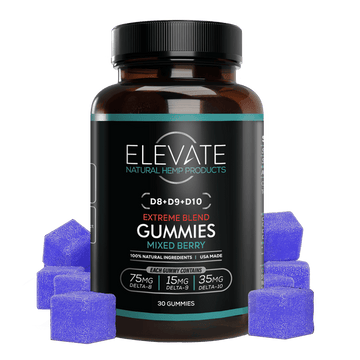
The Strongest Delta 8 Gummies For Sale: Our Picks

Featured Product

Free Delta-9 Gummies Sample
$6.95
Shop NowThe strongest delta-8 gummies contain 50 mg to 100 mg or more of Delta-8 THC per individual piece, far exceeding standard-potency options that typically offer 10 mg to 25 mg per gummy. Potency is measured by milligram concentration per serving, not total package milligrams. Verified strength requires a third-party Certificate of Analysis (COA) confirming exact cannabinoid content per piece.
What Are the Strongest Delta-8 Gummies?
The strongest Delta-8 gummies are cannabis edible products that contain the highest mg of Delta-8 THC per individual piece, typically ranging from 50 mg to 100 mg or more per gummy. Potency in this context is measured by the milligram concentration of Delta-8 THC in each serving — not the total milligrams per package, which is a common source of confusion. For example, a package advertising "1,000 mg" might contain 40 gummies at 25 mg each — a moderate dose per piece, not a high-potency product. Similarly, a jar labeled "2,000 mg" with 80 gummies still only delivers 25 mg per serving, which falls squarely in the standard-potency range. What distinguishes genuinely high-potency options from standard products (which usually contain 10 mg to 25 mg per gummy) is not just the number printed on the label but whether that concentration has been verified through independent, third-party lab testing via a Certificate of Analysis (COA). A credible COA will detail the exact cannabinoid profile, confirm the Delta-8 THC content per serving, and screen for contaminants such as heavy metals, residual solvents, and pesticides — all of which are critical quality indicators for any ingestible cannabis product. When evaluating COAs, consumers should also check the date of testing, as results from outdated or expired batches may not accurately reflect the product currently on shelves. Reputable brands typically update their lab reports with each new production batch and make them easily accessible via QR codes on packaging or dedicated pages on their websites.
If you want to learn more about strongest delta 8 gummies, understanding how potency actually works is the essential first step. Simply put, a higher milligram count per gummy means more Delta-8 THC enters your system per serving — but "strongest" should never be evaluated on labeled dosage alone. Independent lab analyses have repeatedly revealed significant discrepancies between what brands claim and what products actually contain. A 2023 study examining commercially available hemp-derived products found that a notable percentage of tested items had cannabinoid concentrations that deviated from their labeled amounts by more than 20%. Without verified COA data, a gummy labeled at 100 mg could contain substantially less — or, in some cases, include unintended cannabinoids such as Delta-9 THC, Delta-10 THC, or CBN that alter the experience unpredictably. This is particularly concerning because the conversion process used to manufacture Delta-8 THC from CBD (acid-catalyzed isomerization) can produce these byproducts if not carefully controlled and purified. During this process, CBD is dissolved in a solvent and exposed to an acid catalyst under controlled temperature and time conditions; variations in any of these parameters can shift the reaction toward unwanted cannabinoid isomers or degradation products. Some manufacturers perform additional distillation and chromatography steps to isolate pure Delta-8 THC, while lower-quality producers may skip these refinement stages to reduce costs — resulting in a less predictable final product. Consumers seeking genuinely high-potency products should look for COAs from ISO 17025-accredited laboratories and verify that the batch number on the lab report matches the product packaging.
It's also worth noting that Delta-8 THC, while milder than Delta-9 THC, is not without risk at high doses. The psychoactive effects of Delta-8 are generally described as roughly half to two-thirds as intense as Delta-9, but at concentrations of 50 mg or above per serving, even experienced cannabis users may encounter effects that feel significantly stronger than anticipated. Case reports have documented adverse effects including visual disturbances following overconsumption of Delta-8 products¹. Additional reported side effects at high doses include elevated heart rate, pronounced sedation, anxiety, dry mouth, and impaired short-term memory — symptoms that mirror high-dose Delta-9 consumption, though they typically resolve within several hours. This means the "strongest" option is not automatically the best option for every consumer. Individual tolerance, body weight, metabolism, and prior cannabinoid experience all influence how a high-potency cannabis edible will affect you. Someone who regularly consumes 25 mg Delta-8 gummies may find 50 mg manageable, while a first-time user could experience overwhelming psychoactive effects at the same dose. It is also important to consider that certain medications — particularly those metabolized by the cytochrome P450 enzyme system in the liver — may interact with Delta-8 THC, potentially intensifying or prolonging its effects. Individuals taking prescription medications should consult a healthcare provider before consuming high-potency cannabinoid edibles. Additionally, because edibles must pass through the digestive system before reaching the bloodstream, onset can take anywhere from 45 minutes to two hours — a delay that frequently leads users to consume a second serving prematurely, inadvertently doubling their intake. Consuming edibles on an empty stomach can accelerate onset slightly but may also intensify peak effects, while eating them alongside a fatty meal can improve cannabinoid absorption and lead to a more sustained experience. The most responsible approach is to prioritize products with transparent lab results, start with lower servings regardless of your experience level, and increase gradually over multiple sessions — ensuring that potency claims are backed by science rather than marketing.
¹ Source: doi:10.3389/fopht.2023.1349525
Understanding Delta-8 THC Potency
To [learn more about strongest delta 8 gummies](https://www.yoursite.com/blogs/learn/strongest-delta-8-gummies), you first need to understand how Δ8-Tetrahydrocannabinol (Δ8-THC) actually works in your body — and why Delta-8 potency isn't just a number on a label. Delta-8 THC binds to the same CB1 receptors in your endocannabinoid system as its more famous cousin, Delta-9 THC, but with roughly two-thirds the psychoactive intensity. This reduced binding affinity is what gives Delta-8 its characteristically smoother mood effects — less anxiogenic overstimulation, more functional relaxation. The molecular difference is small — a double bond on the eighth carbon chain rather than the ninth — but it meaningfully changes how the compound interacts with your neural pathways. CB1 receptors are concentrated in the central nervous system, particularly in regions governing mood, memory, and pain perception, which is why even this reduced affinity still produces tangible psychoactive effects. However, "milder" does not mean "risk-free." Case studies have documented adverse reactions, including visual disturbances, even at moderate doses, underscoring the importance of understanding your personal threshold before chasing maximum THC content (doi:10.3389/fopht.2023.1349525). Individual factors like body weight, metabolic rate, and even recent food intake can dramatically shift how a given dose affects you. So what do the milligram thresholds actually mean in practice? Low potency: 5–15 mg per gummy — Suited for beginners or microdosing. Effects are subtle, typically producing mild calm without significant cognitive impairment. Many first-time users report light stress relief and a gentle sense of ease that doesn't interfere with work, conversation, or driving. If you've never tried any THC product before, starting at 5 mg and waiting at least 90 minutes before considering a second dose is the most reliable way to gauge your baseline sensitivity.- Moderate potency: 20–40 mg per gummy — The range most experienced users gravitate toward for noticeable relaxation and mood elevation. At the lower end of this bracket (20–25 mg), expect a clear shift in headspace — mild euphoria, reduced tension, and enhanced enjoyment of music or food. At the upper end (35–40 mg), effects become more pronounced: deeper body relaxation, stronger mood lift, and potential drowsiness that makes this range popular for evening use.
-
High potency: 50 mg and above per gummy — Reserved for users with established tolerance. At these levels, effects approach Delta-9 intensity, and the margin for overconsumption narrows considerably. Some brands now offer gummies at 75 mg or even 100 mg per piece, but these concentrations carry real risk for anyone without significant daily exposure to cannabinoids. Overconsumption symptoms — racing heart, dizziness, pronounced anxiety — are far more likely at these doses and can last several hours given the slow metabolic curve of edibles. Here's what most brands won't tell you: a gummy labeled at 50 mg doesn't guarantee you're experiencing 50 mg of active Delta-8. Independent lab analyses consistently reveal discrepancies between labeled and actual THC content — sometimes by 30% or more. This means the "strongest" product on the shelf may deliver less than a properly dosed moderate option. The inconsistency often stems from poor manufacturing controls — uneven mixing of distillate into the gummy base creates "hot spots" and "cold spots" within a single batch. One gummy might contain 60 mg while the next from the same package holds only 35 mg. Without batch-specific certificates of analysis that include potency ranges rather than single averages, consumers have no reliable way to verify what they're actually ingesting. What delta gives you the best high? That depends entirely on your neurochemistry, tolerance, and goals. For many users, Delta-8 delivers the most balanced experience — meaningful mood effects without the paranoia or cognitive fog that higher-affinity Delta-9 can trigger. Some users also compare Delta-8 to Delta-10, which tends to produce more energizing, sativa-like effects but with even less psychoactive intensity. Others explore THC-P or HHC for stronger experiences, though these newer cannabinoids lack the same depth of user data and independent testing. The point is that "best" is personal and context-dependent — a 25 mg Delta-8 gummy might outperform a 50 mg alternative if the former is accurately dosed, cleanly extracted, and matched to your tolerance level. But potency without verification is just marketing. Always prioritize third-party certificates of analysis over headline milligram counts.
Top Brands for High-Potency Delta-8 Gummies
Not every brand printing a large milligram number on its packaging actually delivers what it promises. Independent lab analyses have repeatedly shown significant discrepancies between labeled and actual Delta-8 THC content across the market, with some products testing at 20–40% below their advertised potency. This reality means identifying the best delta-8 brands requires looking far beyond surface-level marketing claims. If you want to learn more about strongest delta 8 gummies, start by understanding the criteria that separate genuinely premium products from the rest. The following breakdown covers each critical evaluation area so you can make purchasing decisions grounded in evidence rather than hype. Third-Party Lab Testing Is Non-Negotiable The single most important indicator of a trustworthy brand is a current, batch-specific Certificate of Analysis (COA) from an accredited independent laboratory. Top-tier brands make these readily accessible on their websites — typically linked directly from the product page or through a scannable QR code on the packaging — not buried behind customer service requests. A legitimate COA verifies cannabinoid potency, confirms Delta-9 THC compliance below 0.3%, and screens for contaminants including heavy metals, pesticides, residual solvents, and microbial impurities. Pay attention to the date on the COA as well: a report from over six months ago may not reflect the current production batch you're buying. If a brand cannot produce this documentation, walk away regardless of how impressive the dosage claims appear. It's also worth checking whether the testing laboratory itself holds ISO 17025 accreditation, which is the international standard for analytical testing competence. Some brands use obscure or unaccredited labs that may produce unreliable results, effectively rendering the COA meaningless. Cross-referencing the lab name with state licensing databases adds an extra layer of confidence in the reported data. Quality Control and Ingredient Transparency Premium gummies come from manufacturers operating under strict quality control protocols, ideally in cGMP-compliant facilities. Current Good Manufacturing Practice (cGMP) certification indicates that the production environment meets FDA-recognized standards for consistency, sanitation, and process documentation — the same standards applied to conventional dietary supplements. Examine ingredient lists carefully — reputable brands use clearly identified hemp-derived Delta-8 distillate alongside recognizable food-grade ingredients such as organic cane sugar, natural fruit pectin, and botanical flavoring agents. Avoid products with vague proprietary blends that obscure what you're actually consuming. Homogeneity is another frequently overlooked quality marker. In a well-manufactured batch, every gummy should contain a consistent amount of Delta-8 THC. Poorly mixed batches can result in one gummy containing 15mg and another containing 35mg from the same jar, creating unpredictable experiences and potential safety concerns. Brands that publish homogeneity testing data alongside their standard potency COAs demonstrate a higher commitment to dosing accuracy that directly impacts your experience. Customer Reputation as a Verification Layer Verified purchase reviews across multiple platforms provide real-world potency feedback that complements lab data. Look for consistent reports about accurate dosing, predictable onset times, and reliable effects. Pay particular attention to reviewers who describe their tolerance levels and prior experience, as these details help you contextualize whether a product's potency aligns with your own needs. A gummy that a daily user describes as "moderate" may be quite strong for someone newer to Delta-8. Patterns of complaints about inconsistency or misleadingly weak products are red flags that no amount of polished branding can offset. Be cautious of brands whose review profiles consist almost entirely of five-star ratings with generic language, as this can indicate incentivized or fabricated feedback. Trustworthy review signals include detailed descriptions of effects, mention of specific product batches, and a natural distribution of ratings that includes constructive criticism alongside praise. Actionable Selection Checklist Before purchasing, confirm these four elements: accessible and recent third-party COAs from accredited laboratories, transparent ingredient sourcing with cGMP-compliant manufacturing, consistent positive reviews from verified buyers across independent platforms, and clear dosage information per gummy with supporting homogeneity data when available. This framework protects you from the substantial portion of the market where "strongest" remains nothing more than an unverified word on a label. Taking five minutes to verify these criteria before placing an order can mean the difference between a product that reliably meets your expectations and one that wastes your money while potentially exposing you to untested substances.Safety and Legality of Strong Delta-8 Edibles
Before purchasing high-potency Delta-8 products, understanding the legal and safety landscape is essential — especially since Delta-8 legality remains one of the most contested areas in cannabis regulation today. Consumers who skip this step risk not only legal consequences but also exposure to poorly manufactured products that may contain harmful substances. Under the 2018 Farm Bill, hemp-derived cannabinoids containing less than 0.3% Delta-9 THC by dry weight are federally legal. Delta-8 THC technically falls under this umbrella because it's typically synthesized from hemp-derived CBD rather than extracted directly from marijuana. However, this federal framework leaves significant room for interpretation, and the reality on the ground varies dramatically by state. The Drug Enforcement Administration has also weighed in, suggesting that synthetically derived cannabinoids may not qualify for the Farm Bill's protections — a stance that could reclassify many Delta-8 products as controlled substances depending on how courts interpret the manufacturing process. As of now, more than a dozen states have explicitly banned or restricted Delta-8 THC sales, while others have imposed age requirements or packaging regulations. States like Colorado, New York, and Alaska have moved to prohibit Delta-8, despite being cannabis-friendly in other respects. Meanwhile, states such as Florida, Texas, and Georgia currently permit Delta-8 sales but have pending legislation that could change the landscape at any time. Some states have taken a middle-ground approach, allowing sales but requiring product registration, child-resistant packaging, and clear labeling of cannabinoid content. Before purchasing the strongest delta 8 gummies, always verify your state's current regulations — they shift frequently, and possession of Delta-8 in a prohibited state can carry the same penalties as other controlled substance violations. The FDA has not approved Delta-8 THC for any therapeutic use and has issued multiple warning letters to companies making unsubstantiated health claims. Their position emphasizes concern over unregulated manufacturing processes, particularly the chemical conversion of CBD to Delta-8, which can produce harmful byproducts if performed without proper laboratory controls. Common byproducts of poorly executed isomerization include Delta-9 THC in concentrations exceeding legal limits, Delta-10 THC, and unknown cannabinoid analogs whose safety profiles have never been studied. A comprehensive WHO review of cannabinoid safety further underscores the importance of proper manufacturing controls and rigorous testing, noting that impurities introduced during synthesis represent a distinct risk category separate from the cannabinoid's inherent effects. The FDA has also reported a sharp increase in adverse event reports associated with Delta-8 products, including hospitalizations involving children who accidentally consumed edibles that lacked child-resistant packaging. This lack of FDA oversight makes consumer diligence even more critical. When evaluating high-potency Delta-8 gummies, prioritize these safety standards:
You can also browse our Delta 8 gummy lineup when comparing options.
Once you've shortlisted what matters in terms of potency and testing, Delta 8 gummy lineup is where the practical buying comparison usually happens.
Knowing what to look for on a COA and how to read per-serving milligram counts puts you in a stronger position when comparing actual products.
Remember, the strongest Delta-8 gummy isn't necessarily the safest. High potency without verified purity increases your risk of exposure to contaminants or experiencing adverse effects. Starting with a lower dose — even when you have access to high-potency options — allows you to gauge your individual response before escalating. Prioritize quality verification over milligram count every time.How to Choose the Right Strongest Delta-8 Gummies
Selecting the right high-potency Delta-8 gummy requires looking far beyond the milligram number printed on the package. Smart product selection starts with understanding that potency claims mean nothing without verification — and in this market, verification is entirely in your hands. With dozens of brands competing for attention using increasingly aggressive strength claims, the difference between a genuinely potent product and an overhyped one often comes down to documentation, formulation transparency, and how well a company stands behind its numbers. Start with the Certificate of Analysis (COA). Every reputable brand provides third-party lab results confirming the actual Delta-8 THC content per gummy, the absence of heavy metals, pesticides, and residual solvents, and whether Delta-9 THC levels remain below 0.3%. If a brand doesn't publish COAs or makes them difficult to find, walk away. Cross-reference the batch number on your product with the batch number on the COA — they should match exactly. Pay attention to the testing laboratory itself — look for ISO 17025-accredited labs, which follow internationally recognized standards for calibration and testing. Also note the date on the COA: results from more than twelve months ago may not reflect the current product's composition, especially if the brand has changed suppliers or formulations since testing. A fresh, batch-matched COA from an accredited lab is the single most reliable indicator that what's on the label is actually in the gummy. Dosage guidance matters more than maximum strength. Beginners should start at 10–15 mg per serving regardless of how strong the gummy is. Experienced users comfortable with Delta-8's effects may work up to 25–50 mg or higher, but even then, increasing incrementally over multiple sessions is the responsible approach. A practical strategy is to increase by no more than 5–10 mg per session, waiting at least two to three hours after ingestion before deciding whether to take more — edibles absorb through the digestive system, and onset can take anywhere from 45 minutes to two hours depending on metabolism, stomach contents, and individual body chemistry. Remember that individual responses vary significantly, and higher doses don't guarantee proportionally better results — they can, however, increase the likelihood of unwanted side effects including anxiety, dizziness, or even visual disturbances.¹ Keeping a simple log of your dose, timing, and experience across sessions helps you identify your personal effective range without overshooting it. For practical consumer advice, check the ingredients list for artificial additives, confirm the hemp source is U.S.-grown, and verify the extraction method. CO2 extraction and ethanol extraction are generally considered cleaner methods that preserve cannabinoid integrity, while cheaper hydrocarbon-based processes may leave behind trace solvents if not properly purged. Look for brands that disclose their full cannabinoid profile, not just Delta-8 content — minor cannabinoids and terpenes influence the overall experience. For example, a gummy that includes CBN alongside Delta-8 may produce more sedative effects suited for nighttime use, while one containing CBG could promote a more alert, focused experience. Terpene profiles like myrcene-dominant blends tend to enhance relaxation, whereas limonene-forward formulations often support mood elevation. Understanding these complementary compounds allows you to match a product to your specific goals rather than selecting based on milligram count alone. Finally, don't confuse marketing with quality. The [strongest delta 8 gummies](/collections/strongest-delta-8-gummies) earn that label through transparent testing and consistent formulation, not bold packaging claims. A trustworthy brand will welcome scrutiny, make lab results easy to access, and provide clear dosing instructions rather than encouraging users to chase the highest possible dose. When in doubt, reach out to a brand's customer support with specific questions about sourcing, testing frequency, and cannabinoid profiles — how they respond tells you as much about the product as any lab report. ¹ Phan et al., "Visual Snow After Delta-8-Tetrahydrocannabinol Use," Frontiers in Ophthalmology, 2023 .Benefits and Effects of High-Potency Delta-8 Gummies
Users who want to learn more about strongest delta 8 gummies often start by asking what these products actually feel like and whether the reported wellness benefits hold up under scrutiny. Understanding the full spectrum of effects, both positive and negative, is essential before committing to a high-potency product that delivers 50 mg or more of Delta-8 THC per serving.
Commonly Reported Delta-8 Effects
Delta-8 THC binds to the CB1 receptors in the endocannabinoid system with lower affinity than Delta-9, which typically produces a milder, more clear-headed psychoactive experience. Users of high-potency gummies frequently describe a calm euphoria rather than the intense cerebral rush associated with traditional THC. Mood enhancement is among the most consistently reported effects, with many consumers noting reduced anxiousness, elevated outlook, and a general sense of ease that doesn't interfere with daily functioning.
The onset timeline also matters when evaluating these effects. Unlike vaping or smoking, gummies must pass through the digestive system and liver before entering the bloodstream. This first-pass metabolism converts Delta-8 THC into 11-hydroxy-Delta-8-THC, a metabolite that many researchers believe crosses the blood-brain barrier more efficiently. The result is an experience that takes 45 to 120 minutes to begin but often lasts significantly longer than inhaled forms, sometimes persisting for four to eight hours depending on dose and individual metabolism. For high-potency gummies specifically, this extended duration is a key reason users prefer them for evening relaxation or sustained relief throughout the night.
Wellness Benefits Worth Noting
Beyond mood enhancement, anecdotal reports and emerging research suggest several potential wellness benefits. These include appetite stimulation, temporary relief from physical discomfort, and improved sleep onset for those who struggle with restlessness. Some users specifically choose high-potency formulations because they find lower doses insufficient for managing persistent tension or sleep difficulties.
Appetite stimulation deserves particular attention because early preclinical research has shown Delta-8 THC may increase food intake even at low doses. A 2004 study published in Pharmacology, Biochemistry and Behavior observed increased appetite and food consumption in mice treated with Delta-8 THC, suggesting the cannabinoid interacts with appetite-regulating pathways in a meaningful way. While human clinical trials remain limited, users who struggle with low appetite due to stress, medication side effects, or chronic conditions frequently cite this benefit as a primary reason for choosing Delta-8 over CBD-only products.
Sleep support is another area where high-potency gummies show particular promise. Users dealing with racing thoughts or physical restlessness at bedtime often report that a stronger dose helps quiet mental chatter more effectively than lower-concentration alternatives. The sedative quality tends to build gradually, aligning well with a pre-sleep routine when the gummy is taken 60 to 90 minutes before the desired sleep time.
Side Effects and Responsible Use
However, stronger does not automatically mean better for every individual. High-potency Delta-8 gummies carry a proportionally greater risk of adverse effects, particularly for inexperienced users. Reported side effects include dizziness, dry mouth, elevated heart rate, and in rare cases, visual disturbances such as visual snow syndrome. One documented case linked heavy Delta-8 edible consumption to persistent visual phenomena requiring clinical evaluation (Fopht, 2023).
Other less-discussed side effects include temporary cognitive fog the following morning, especially when high-potency gummies are consumed late at night. Some users also report mild gastrointestinal discomfort, which may stem from the gummy's carrier ingredients rather than the Delta-8 itself. Checking for allergens, artificial sweeteners like sorbitol, and unnecessary fillers in the ingredient list can help minimize these non-cannabinoid-related reactions.
Individual tolerance varies enormously. Starting with a fraction of a high-potency gummy, such as a quarter or even an eighth of a single piece, and waiting at least 90 minutes before considering additional intake remains the safest approach. Keeping a simple journal that tracks dose, timing, food intake beforehand, and resulting effects can help users dial in their ideal amount over several sessions rather than guessing each time. Responsible use means respecting your own biochemistry rather than chasing the highest possible dose, because the optimal experience lies at the intersection of potency and personal tolerance.
Looking to shop now? Browse our strongest Delta 8 gummies for compliant adult-use options.
Join Our Newsletter
Sign up to be the first to know about our can't-miss product drops, special VIP offers & exclusive discounts.