
Is Delta 9 Real Weed? The Truth You Need to Know

Delta-9 THC is the primary psychoactive compound in cannabis, responsible for the euphoric effects. It binds to CB1 receptors in the brain, creating the 'high' associated with marijuana. Delta-9 is not an alternative but the actual molecule that defines traditional cannabis.
Table of Contents
- What Is Delta-9 THC?
- Is Delta-9 the Same as Real Weed?
- Hemp-Derived vs. Marijuana-Derived Delta-9: Chemical Structure and Effects
- Legal Status: The 2018 Farm Bill and State Regulations
- Is Delta-9 Synthetic? Safety and Product Quality
- Delta-9 vs. Delta-8 and Delta-10: Are They All 'Real Weed'?
- Does Delta-9 Show Up on a Drug Test?
What Is Delta-9 THC?
Delta-9 tetrahydrocannabinol — known simply as delta-9 THC — is the principal psychoactive cannabinoid produced naturally by the Cannabis sativa plant. If you've ever experienced the euphoric, mind-altering effects associated with cannabis, delta-9 THC is the molecule responsible. It isn't an alternative to cannabis or some laboratory knock-off; it is the compound that defines the traditional cannabis experience at a molecular level. To learn more about is delta 9 real weed, it helps to start with the science behind this single, well-studied compound. The molecule itself. Tetrahydrocannabinol carries the molecular formula C₂₁H₃₀O₂. It belongs to a broader family of over one hundred cannabinoids synthesized within the trichome glands of Cannabis sativa, but delta-9 THC stands apart because of how powerfully it interacts with the human endocannabinoid system. Specifically, delta-9 THC binds with high affinity to CB1 receptors — G-protein-coupled receptors concentrated throughout the central nervous system, particularly in areas governing memory, coordination, pleasure, and time perception. This CB1 receptor activation is what triggers the psychoactive effects users associate with being "high." Why it matters for the current question. The World Health Organization's Expert Committee on Drug Dependence has reviewed delta-9 THC extensively, confirming its status as a naturally occurring phytocannabinoid with well-characterized pharmacology — distinct from truly synthetic cannabinoids that pose far greater and less predictable risks [who-cbd-review]. Whether the delta-9 THC in a given product was extracted from a marijuana plant or a hemp plant, the molecule itself is chemically identical. Grasping this foundational fact is essential before evaluating how legal classifications, sourcing methods, and product formulations create the practical differences consumers actually encounter in today's market.Is Delta-9 the Same as Real Weed?
Asking whether delta-9 is real weed is a bit like asking whether H₂O is real water. Delta-9 THC isn't an alternative to cannabis — it's the molecule that makes cannabis cannabis. If you want to learn more about is delta 9 real weed, the short answer is that delta-9 THC and marijuana are inseparable concepts, but they aren't synonyms.
Tetrahydrocannabinol — specifically delta-9 THC — is the primary psychoactive compound in the cannabis plant. It's the single molecule responsible for the euphoria, relaxation, altered perception, and appetite stimulation people associate with marijuana. When someone smokes, vapes, or eats traditional cannabis and feels "high," that experience is driven overwhelmingly by delta-9 THC binding to CB1 receptors in the brain. Without it, cannabis would have no more intoxicating effect than a handful of oregano.
So what's the actual difference between delta-9 vs weed? "Real weed" is a whole plant containing hundreds of compounds — cannabinoids, terpenes, flavonoids — that work together through what researchers call the entourage effect. Delta-9 THC is just one of those compounds, albeit the most defining one. Think of marijuana as an orchestra and delta-9 THC as the lead instrument. The full ensemble creates a richer sound, but the lead carries the melody.
Here's where modern confusion enters the picture. The 2018 Farm Bill legalized hemp containing no more than 0.3% delta-9 THC by dry weight, creating a legal pathway for hemp-derived delta-9 products — gummies, beverages, tinctures — that contain the exact same molecule found in marijuana-derived delta-9. At the molecular level (C₂₁H₃₀O₂), there is zero chemical difference. A laboratory cannot distinguish between delta-9 THC extracted from hemp and delta-9 THC extracted from high-potency marijuana. The World Health Organization's expert review of cannabinoids confirms that naturally occurring delta-9 THC maintains consistent pharmacological properties regardless of its plant source [who-cbd-review].
This means hemp-derived delta-9 products are not synthetic, not "fake," and not a lesser version of the compound. They are the real thing. However, they may lack the full spectrum of terpenes and minor cannabinoids present in whole-plant marijuana, which can influence the overall experience through the entourage effect. A delta-9 gummy made from hemp isolate will get you high — genuinely high — but the character of that experience may differ from smoking a complex, terpene-rich flower.
The bottom line: delta-9 THC is real weed's defining ingredient. It is not a knockoff, a synthetic substitute, or a legal loophole trick. It is the actual psychoactive molecule that has made cannabis one of the most widely used substances on Earth for thousands of years.
Hemp-Derived vs. Marijuana-Derived Delta-9: Chemical Structure and Effects
One of the most persistent misconceptions in the cannabis space is that hemp-derived delta-9 THC is somehow a different molecule than the Tetrahydrocannabinol found in marijuana. At the molecular level, this simply isn't true. Whether extracted from legally classified hemp or high-THC marijuana, delta-9 THC shares the exact same chemical structure: C₂₁H₃₀O₂. The molecular weight, the arrangement of atoms, and the way the compound interacts with your CB1 receptors are identical regardless of plant source. A laboratory analyzing both would find them indistinguishable.
This distinction matters because the difference between "hemp" and "marijuana" is a legal classification based on the 0.3% dry-weight THC threshold — not a chemical one. The delta-9 THC molecule doesn't know which plant it came from, and your endocannabinoid system can't tell the difference either. The psychoactive effects — euphoria, altered perception, relaxation, increased appetite — are driven by the same receptor binding activity in both cases.
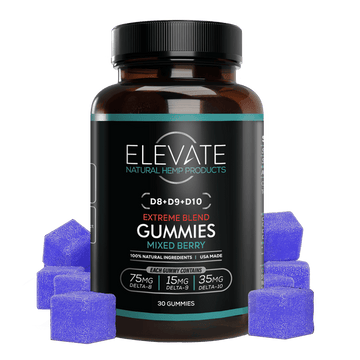
[PRODUCT:1]Does hemp-derived delta-9 produce a different high from marijuana-derived delta-9? Some users do report subjective differences, but these are not attributable to the delta-9 THC molecule itself. Instead, the variations typically arise from three factors: terpenes, minor cannabinoid profiles, and dosing. Marijuana flower contains a complex matrix of hundreds of compounds — including terpenes like myrcene, limonene, and linalool — that work synergistically through what researchers call the entourage effect. This interplay between cannabinoids and terpenes can shape the character of a high, making it feel more sedating, energizing, or creative depending on the cultivar's unique profile (PubMed:35636366).
Hemp-derived delta-9 products, particularly edibles and gummies, often contain isolated or distilled THC with a narrower range of accompanying compounds. Without the full spectrum of terpenes and minor cannabinoids — including trace amounts of Δ8-T and other isomers — the experience may feel "cleaner" but less nuanced to experienced users. Additionally, dosing in hemp-derived products tends to be more precisely measured than in smoked flower, which can further influence perceived intensity and onset timing.
The bottom line is straightforward: the psychoactive effects of delta-9 THC are governed by the molecule's interaction with your brain, not by which plant produced it. To learn more about is delta 9 real weed and how product formulation shapes your experience, understanding this chemical equivalence is the essential starting point.
Legal Status: The 2018 Farm Bill and State Regulations
The legal distinction between hemp-derived and marijuana-derived delta-9 Tetrahydrocannabinol hinges entirely on a single threshold written into federal law. Understanding this threshold is essential to grasping why chemically identical molecules can occupy radically different legal categories.
The 2018 Farm Bill (officially the Agriculture Improvement Act of 2018) removed hemp from the Controlled Substances Act's definition of marijuana, effectively legalizing the cultivation, processing, and sale of hemp and its derivatives nationwide. The critical legal boundary: hemp is defined as Cannabis sativa containing no more than 0.3% THC by dry weight. Any cannabis plant exceeding that threshold is classified as marijuana, which remains a Schedule I controlled substance under federal law — grouped alongside heroin and LSD as having "no currently accepted medical use and a high potential for abuse" [farm-bill-2018].
This single threshold is where the market for legal delta-9 products was born. Because the law measures THC concentration by dry weight rather than by total milligrams per serving, manufacturers can formulate hemp-derived products — particularly edibles like gummies — that contain meaningful doses of delta-9 THC while staying at or below the 0.3% dry-weight limit. A sufficiently heavy gummy, for example, can legally contain 5–10 mg of delta-9 THC and still comply with federal requirements. The molecule itself is identical to what you'd find in any marijuana-derived product sold at a dispensary.
However, state regulations create a patchwork of legality that complicates the picture dramatically. Some states have embraced the federal hemp framework and allow hemp-derived delta-9 products to be sold without restriction. Others have enacted their own legislation explicitly banning or restricting delta-9 THC regardless of its source, effectively closing the Farm Bill loophole within their borders. Colorado, for instance, has moved to regulate hemp-derived cannabinoid products under the same frameworks governing recreational marijuana.
Before purchasing any delta-9 product, consumers should verify the specific laws governing their state. Federal legality does not guarantee state-level legality, and enforcement approaches vary widely. If you want to learn more about is delta 9 real weed, understanding this legal landscape is the essential first step toward making informed, compliant decisions.
Is Delta-9 Synthetic? Safety and Product Quality
One of the most persistent misconceptions surrounding hemp-derived delta-9 THC is the belief that it must be synthetic — something cooked up in a lab rather than extracted from a real plant. This confusion is understandable given the flood of unfamiliar cannabinoid products on the market, but it is chemically and factually incorrect.
Delta-9 THC, or Tetrahydrocannabinol, is a naturally occurring phytocannabinoid produced by the Cannabis sativa plant. When manufacturers create hemp-derived delta-9 products, they use extraction methods — such as CO2 extraction, ethanol extraction, or chromatography — to isolate and concentrate the delta-9 THC that already exists in the hemp plant. The molecule isn't fabricated; it's separated from surrounding plant material and concentrated into edibles, tinctures, or other formats that comply with the 0.3% dry-weight THC threshold established by federal law.
This stands in stark contrast to truly synthetic cannabinoids like K2 and Spice. Those substances are laboratory-manufactured compounds — such as JWH-018 or AB-FUBINACA — that are structurally unrelated to naturally occurring Tetrahydrocannabinol. They bind to CB1 receptors with far greater and more unpredictable potency, which has led to documented public health emergencies including seizures, psychosis, and fatalities (Scientific American, 2015). Grouping plant-derived delta-9 THC with these dangerous synthetics is both chemically inaccurate and misleading.
That said, "natural" doesn't automatically mean "safe" — consumer safety still depends heavily on product quality. Not every hemp-derived delta-9 product on the shelf meets the same standards, and this is where third-party lab testing becomes essential. Reputable brands submit their products to independent laboratories that screen for potency accuracy, residual solvents, pesticides, heavy metals, and microbial contamination. The results are published in a certificate of analysis, or COA, which consumers should review before purchasing any product.
A reliable COA confirms that the delta-9 THC content matches what's advertised and that no harmful contaminants are present. It also helps distinguish legitimate products from those containing Δ8-T or other isomers that may have been converted through less regulated chemical processes. If you want to learn more about is delta 9 real weed, understanding how to read a COA is one of the most practical skills you can develop as a consumer.
The bottom line: hemp-derived delta-9 THC is not synthetic. It's the same molecule found in traditional marijuana, extracted from a legally classified hemp plant. But rigorous third-party lab testing and transparent COAs are what separate trustworthy products from questionable ones.
Delta-9 vs. Delta-8 and Delta-10: Are They All 'Real Weed'?
When people ask whether delta-9 is real weed, it helps to understand how it compares to its lesser-known cousins. Delta-9 THC, delta-8 THC, and delta-10 THC are all isomers of Tetrahydrocannabinol — meaning they share the same molecular formula (C₂₁H₃₀O₂) but differ in the placement of a single chemical bond. That seemingly minor structural variation creates significant differences in potency, natural abundance, and how each cannabinoid interacts with your body.
Delta-9 THC is the most abundant and potent psychoactive cannabinoid found naturally in cannabis. It's the molecule responsible for the classic effects people associate with real weed — euphoria, relaxation, altered perception, and appetite stimulation. When someone smokes or consumes traditional marijuana, delta-9 THC is doing the heavy lifting.
Δ8-T, by contrast, occurs in only trace amounts in the cannabis plant — typically less than 1% of total cannabinoid content. Most delta-8 THC products on the market are semi-synthesized from hemp-derived CBD through chemical conversion processes. Delta-10 THC is even rarer naturally and is almost exclusively produced through similar laboratory isomerization methods. While both deliver psychoactive effects, users generally report them as noticeably milder than delta-9 THC .
Is Delta-9 or 8 normal weed? Delta-9 THC is the defining cannabinoid in what most people consider normal weed. Delta-8 and delta-10, while derived from cannabis, are better understood as alternative cannabinoid products rather than traditional cannabis experiences. If you want to learn more about is delta 9 real weed, the key takeaway is straightforward: delta-9 is the original, and the others are molecular variations that wouldn't exist in consumer products without significant laboratory processing.
Does Delta-9 Show Up on a Drug Test?
Yes — without exception. Standard immunoassay drug tests don't distinguish between hemp-derived and marijuana-derived Tetrahydrocannabinol. They screen for THC-COOH, the primary metabolite your liver produces after processing delta-9 THC. Since the molecule is chemically identical regardless of its plant source, your body metabolizes it the same way and produces the same THC metabolites that trigger a positive result.
This is one of the most critical practical realities for anyone exploring legal delta-9 THC products. A hemp-derived gummy that complies fully with the 2018 Farm Bill will leave the exact same metabolic fingerprint as traditional marijuana. Most workplace drug panels use a 50 ng/mL screening threshold for THC-COOH, and regular delta-9 THC consumption — even from legally purchased products — can keep metabolite levels elevated for days or weeks depending on frequency of use, body composition, and metabolism.
If you face a drug test for employment, probation, athletics, or military service, exercise serious caution. No amount of product legality protects you from a positive result. To learn more about is delta 9 real weed and how these products interact with your body, understanding this metabolic reality is essential before making any consumption decisions.
Join Our Newsletter
Sign up to be the first to know about our can't-miss product drops, special VIP offers & exclusive discounts.