Delta 9 Tinctures
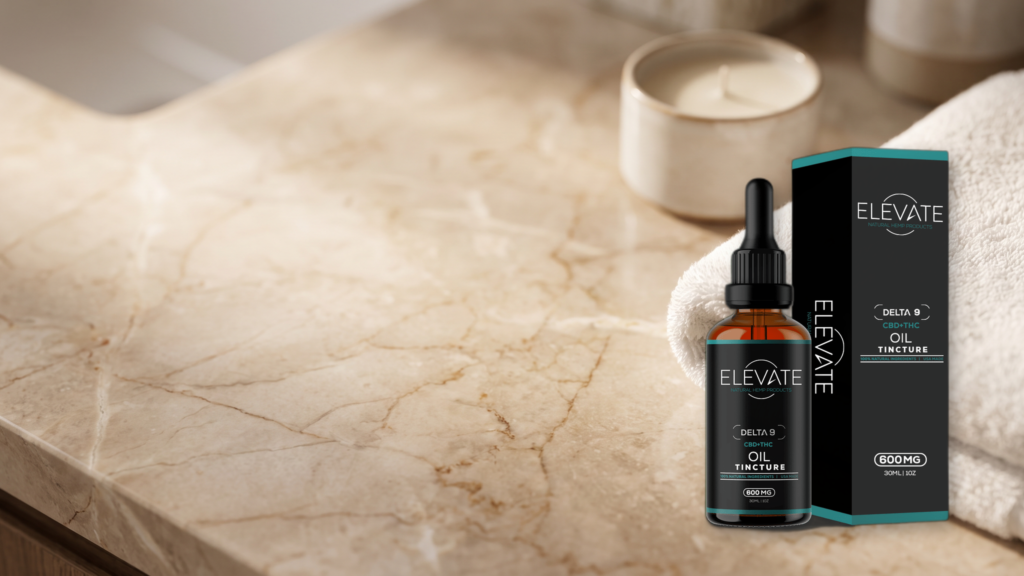
Delta 9 tinctures are liquid hemp extracts with a controlled concentration of delta-9 THC in MCT carrier oil, dosed by dropper for precision. Elevate's tinctures are Farm Bill compliant and third-party lab tested.
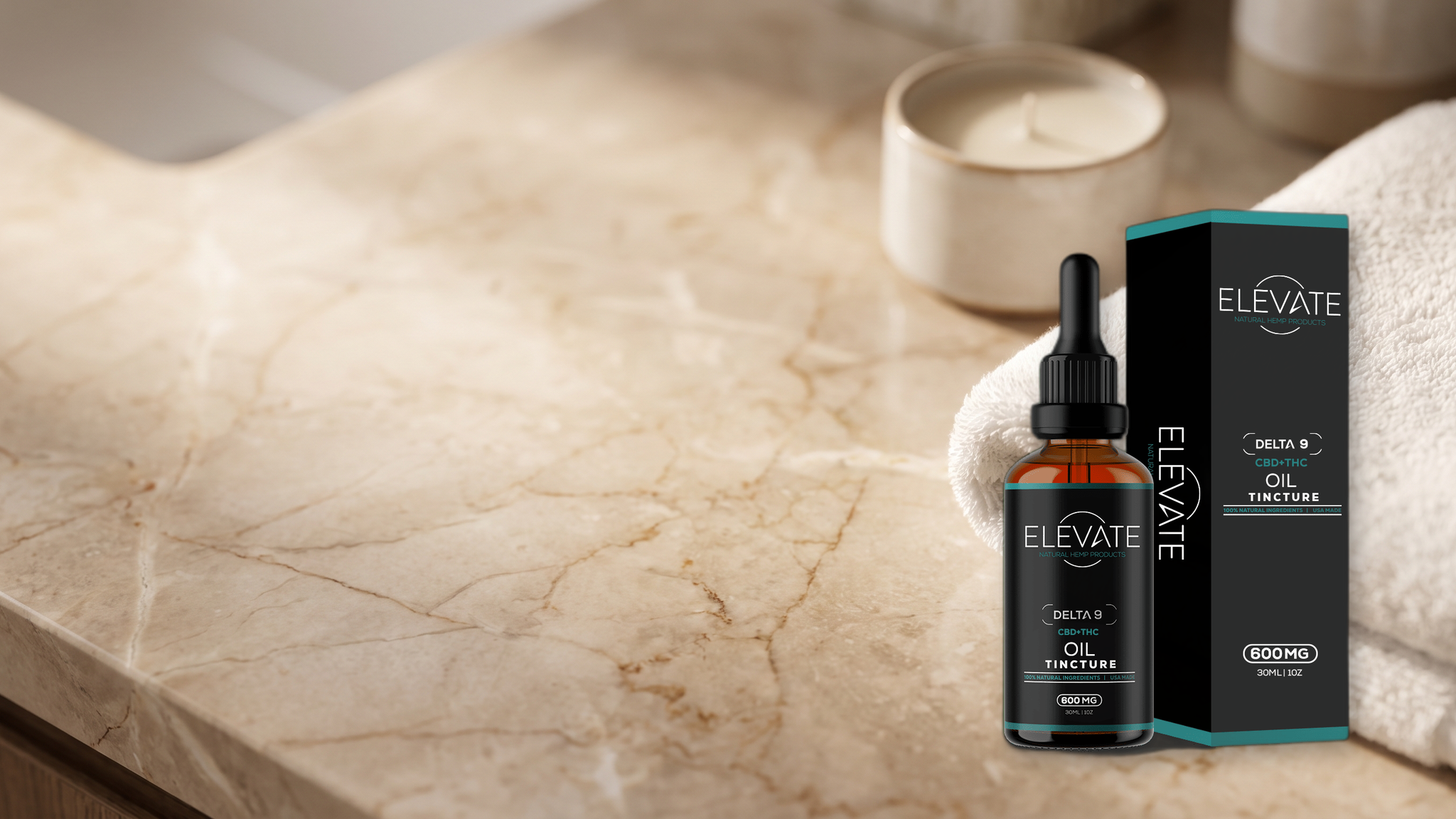
Delta 9 tinctures are liquid hemp extracts with a controlled concentration of delta-9 THC in MCT carrier oil, dosed by dropper for precision. Elevate's tinctures are Farm Bill compliant and third-party lab tested.
Adult use only 21+
Filters
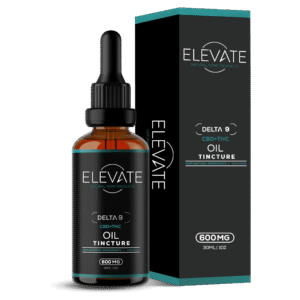
The delta-9 tinctures category contains liquid cannabinoid products measured by bottle and serving rather than by gummy count. Shoppers should compare total cannabinoid content, amount per milliliter, carrier oil, complete ingredients, dropper markings, serving directions, warnings, and batch-linked testing documentation. Confirm which figures describe the bottle versus one serving.
How to Use a Delta 9 THC Tincture Sublingually
Sublingual administration is widely considered the most efficient way to use a delta 9 THC tincture, and the technique itself is straightforward once you understand the mechanics behind it. The thin mucous membrane beneath your tongue is rich in capillaries, which allows cannabinoids to pass directly into the bloodstream without first traveling through the digestive tract. This shortcut is precisely why sublingual delivery offers notably higher bioavailability compared to swallowing a tincture outright—more of the active compound reaches systemic circulation rather than being partially broken down by first-pass liver metabolism.
To begin, shake the bottle gently to ensure the formulation is evenly distributed. Using the included dropper, draw up your desired dose. Most products mark their dropper with volume measurements, and the label should tell you exactly how many milligrams of delta 9 THC correspond to a full dropper or a partial squeeze. If you're working with a tincture that contains 30 milligrams per milliliter, for example, a half-dropper delivers roughly 15 milligrams—though you should always verify this against the product's certificate of analysis for accuracy.
Once you've measured your dose, lift your tongue and place the oil directly into the sublingual pocket—the soft tissue just beneath and behind the tongue. Hold it there for 60 to 90 seconds without swallowing. This dwell time is critical. Rushing the process by swallowing too early effectively converts your sublingual dose into an edible one, which reduces bioavailability and delays onset by 45 minutes to two hours. When held properly, most users report feeling initial effects within 15 to 30 minutes.
Understanding potency is essential for dialing in the right experience. If you're new to delta 9 tinctures, starting with a low dose—typically 2.5 to 5 milligrams—gives your body time to respond before you consider increasing. This "start low, go slow" approach is especially important with sublingual delivery because the faster absorption means you'll feel the effects sooner, giving you a clearer feedback loop for adjusting your next session.
A few practical tips make the process smoother. Avoid eating or drinking for at least 10 minutes after dosing, as food and liquid can wash the tincture away from the sublingual tissue prematurely. Store your THC tincture in a cool, dark place to preserve its potency over time—heat and light degrade cannabinoids and carrier oils alike. And always check the dropper mechanism before each use; a cracked bulb or damaged glass tube can compromise dose accuracy.
If you want to learn more about delta 9 tinctures and how different formulations affect your experience, understanding sublingual technique is the foundation everything else builds on. Mastering this simple method puts you in control of your dosing with a level of precision that few other delivery formats can match.
Delta 9 Tincture Dosage: Finding the Right Amount
Getting the dosage right is arguably the single most important factor in having a positive experience with delta 9 THC tinctures. Unlike edibles where serving sizes are predetermined or smoking where absorption is rapid and difficult to measure, a tincture paired with a calibrated dropper gives you granular control over exactly how many milligrams enter your system. That precision is the format's greatest advantage—but only if you know how to use it.
The general principle governing delta 9 THC dosage is simple: start low, go slow. Most newcomers benefit from beginning with 2 to 5 milligrams of delta 9 THC per serving. This micro-dose range allows you to observe how your body responds without overshooting into uncomfortable territory. After maintaining a consistent dose for several days, you can increase by 1 to 2.5 milligrams at a time until you find the level that aligns with your personal goals—whether that's calm focus, better sleep, or general relaxation.
Several variables influence where your ideal dosage ultimately lands. Body weight, individual metabolism, prior cannabinoid experience, and even recent food intake all shape how you process delta 9 THC. Someone weighing 200 pounds with regular cannabinoid exposure may need 15 to 25 milligrams to notice meaningful effects, while a 130-pound newcomer might find 3 milligrams more than sufficient. There is no universal number—only the number that works for you.
Understanding your tincture's potency is essential to accurate dosing. Every reputable product lists total milligrams of delta 9 THC per bottle and milligrams per dropper (or per milliliter). If a 30 mL bottle contains 300 milligrams total and uses a 1 mL dropper, each full dropper delivers roughly 10 milligrams. A half dropper would yield approximately 5 milligrams. Always read the label math before your first dose—potency varies widely between products, and assumptions based on bottle size alone can lead to significant miscalculations.
Sublingual administration adds another layer worth understanding. When you hold the tincture beneath your tongue for 60 to 90 seconds, a portion of the delta 9 THC absorbs directly through the mucous membranes and into the bloodstream, bypassing first-pass liver metabolism. Users report feeling initial effects within 15 to 30 minutes via this route. Any liquid swallowed afterward follows the slower digestive pathway, where onset may take 60 to 120 minutes. Because these two absorption windows overlap, patience between doses is critical—redosing too quickly is the most common mistake new users make.
Keeping a simple dosage journal accelerates the process of finding your sweet spot. Note the time, the number of milligrams consumed, whether you ate beforehand, and how you felt at 30-minute, one-hour, and two-hour marks. Within a week or two of consistent tracking, patterns emerge that remove guesswork from the equation entirely. If you'd like to learn more about delta 9 tinctures and how different formulations affect dosing, building that foundational knowledge will make your journal entries even more useful.
Ultimately, responsible dosage management transforms a delta 9 tincture from a source of uncertainty into a reliable, personalized tool—one calibrated not by someone else's recommendation, but by your own recorded experience.
Are Hemp-Derived Delta 9 Tinctures Legal?
The legal status of delta 9 THC tinctures is one of the most frequently misunderstood aspects of the modern cannabinoid market—and understandably so. For decades, any product containing delta 9 THC was categorically illegal under federal law. That changed in December 2018, but the nuances of the change still trip up consumers, retailers, and even some law enforcement agencies.
The 2018 Agriculture Improvement Act—commonly known as the Farm Bill—redefined "hemp" as cannabis containing no more than 0.3% delta 9 THC on a dry weight basis. Crucially, the legislation removed hemp and its derivatives from the Controlled Substances Act, effectively creating a legal pathway for products that contain delta 9 THC as long as they remain at or below that 0.3% concentration threshold. This single provision is what makes hemp derived delta 9 tinctures federally permissible.
The "dry weight basis" qualifier is important to understand. It means the delta 9 THC concentration is measured against the total weight of the finished product—not just the active ingredients. A tincture bottled in a carrier oil like MCT or hemp seed oil has substantial total mass, which allows a meaningful amount of delta 9 THC per serving while keeping the overall concentration well below the 0.3% ceiling. For example, a 30 mL bottle weighing roughly 28 grams could legally contain up to approximately 84 mg of delta 9 THC in total and still comply with federal limits.
However, federal legality does not guarantee legality in every state. Cannabis regulation in the United States operates on a dual-sovereignty framework, meaning individual states retain the authority to impose restrictions that exceed federal standards. Some states have enacted their own hemp laws that mirror the Farm Bill's language almost identically, while others have introduced additional restrictions on THC content, product types, or sales channels. A handful of states have explicitly banned or heavily regulated hemp derived cannabinoid products regardless of their Farm Bill compliance. Before purchasing or traveling with any delta 9 tincture, checking your specific state's current statutes is essential.
Equally important is verifying that the product itself actually meets the legal standard. Reputable manufacturers publish third-party certificates of analysis that confirm the delta 9 THC concentration falls within the 0.3% dry weight limit. Without that documentation, you have no way to independently confirm the product's compliance—and neither does any regulatory body reviewing it. A certificate of analysis is not a marketing perk; it is the document that stands between a legal hemp product and a controlled substance.
It is also worth noting that legal does not mean unregulated. The FDA has not approved non-prescription delta 9 THC products for any specific health claim, and the agency has issued warning letters to companies making unsubstantiated therapeutic statements. Consumers should approach marketing language critically and look for brands that stay within compliant messaging rather than promising outcomes that no tincture can guarantee.
If you want to explore federally compliant options and understand what distinguishes a quality formulation from a questionable one, browse our full collection of delta 9 tinctures to see how proper labeling, transparent testing, and Farm Bill compliance come together in a finished product.
Third-Party Testing and Quality Indicators for Delta 9 Tinctures
The hemp-derived cannabinoid market remains largely self-regulated at the federal level, which means the burden of quality verification falls squarely on the consumer. For delta 9 tinctures, this reality makes independent laboratory analysis not just a nice-to-have feature but an essential prerequisite before any product enters your routine. Understanding what constitutes rigorous testing—and what red flags to watch for—can be the difference between a reliable tincture and one that contains undisclosed contaminants, inaccurate cannabinoid levels, or even non-compliant THC concentrations.
The gold standard in the industry is a product that has been third party tested by an ISO 17025-accredited laboratory—a designation confirming that the lab meets international standards for testing competence. When a manufacturer sends its tincture to an independent facility rather than relying on in-house analysis, there is a structural separation between the entity profiting from the product and the entity verifying its contents. This independence is what gives a Certificate of Analysis (COA) its credibility. Always confirm that the COA corresponds to the specific batch or lot number printed on your tincture's label; a generic or outdated certificate offers little assurance about the bottle in your hand.
A comprehensive COA should address several key panels. The potency analysis quantifies each cannabinoid present—delta 9 THC, CBD, CBN, CBG, and others—verifying both the milligram-per-serving claim and the total THC concentration by dry weight, which must remain at or below 0.3% to satisfy federal compliance under the 2018 Farm Bill. Beyond potency, look for residual solvent testing (confirming extraction chemicals like ethanol or CO₂ have been purged to safe levels), heavy metals screening (lead, arsenic, mercury, cadmium), pesticide panels, and microbial contamination checks for mold, yeast, and bacteria. Any manufacturer that omits one or more of these panels is cutting corners.
Several practical quality indicators go beyond the COA itself. Transparent brands publish lab results directly on their website with a scannable QR code on the packaging. They identify the laboratory by name and provide the lab's own reference number so you can cross-check results independently. They also specify whether their hemp is domestically grown under a state agricultural program, which subjects cultivation to additional oversight. Conversely, vague language like "lab tested" without documentation, missing batch numbers, or COAs from unaccredited facilities should raise immediate concern.
Ultimately, no tincture label is trustworthy on its own—only verified data is. If you want to explore delta 9 tinctures with confidence, treat the COA as your first point of contact with any product, not an afterthought. A few minutes of verification protects both your safety and your investment in a cannabinoid experience that actually matches what the bottle promises.
Delta 9 Tinctures and Drug Testing: What You Should Know
If you're subject to workplace or athletic drug screenings, understanding how delta 9 THC interacts with standard testing protocols is essential before incorporating any THC tincture into your routine. The bottom line is straightforward: delta 9 THC from hemp-derived tinctures is metabolized identically to delta 9 THC from any other cannabis source, and standard immunoassay panels cannot distinguish between the two.
Most employment and federal drug tests screen for THC-COOH, the primary metabolite your liver produces after processing delta 9 THC. Whether you consumed a federally compliant hemp tincture containing less than 0.3% THC by dry weight or a state-dispensary product at much higher concentrations, the metabolite that appears in your urine, blood, or hair is chemically the same. The test does not measure intent, product legality, or source—it simply detects the presence or absence of THC-COOH above a defined threshold, typically 50 nanograms per milliliter for initial urine screens.
Detection windows vary based on several individual factors. Occasional users may clear the threshold within a few days, while consistent daily use of a THC tincture can extend the detection window to several weeks or longer. Body composition, hydration levels, metabolic rate, and the total milligrams of delta 9 THC consumed per session all influence how quickly metabolites clear your system.
There are a few practical steps worth considering. First, review your employer's specific drug-testing policy—some organizations have updated their standards in response to evolving hemp legislation, while many have not. Second, if you know a test is approaching, understand that no reliable method exists to accelerate metabolite clearance beyond the body's natural timeline. Third, keep certificates of analysis from your products on file; while a COA won't override a positive result, it documents that you purchased a legally compliant product.
To learn more about delta 9 tinctures and how different formulations may affect your experience, explore our educational resources before making your purchase decision.
FAQ
What are delta 9 tinctures?
Delta 9 tinctures are liquid hemp extract formulations containing a controlled concentration of delta 9 THC dissolved in a carrier oil such as MCT oil, hemp seed oil, or olive oil. They come with a graduated dropper for precise dosing and are designed for sublingual or oral use.
How do you use a delta 9 tincture sublingually?
Shake the bottle gently, draw your desired dose with the dropper, place the oil beneath your tongue, and hold it there for 60 to 90 seconds before swallowing. This allows delta 9 THC to absorb directly into the bloodstream through the capillary-rich mucous membrane under the tongue.
How long do delta 9 tinctures take to work?
When taken sublingually, users typically report feeling initial effects within 15 to 45 minutes. This is considerably faster than standard edibles, which must travel through the entire digestive tract before cannabinoids reach systemic circulation.
How do delta 9 tinctures interact with the endocannabinoid system?
Delta 9 THC has a strong binding affinity for CB1 receptors in the brain and spinal cord, which is associated with psychoactive and mood-modulating properties. It also engages CB2 receptors in immune tissues, and this dual interaction may support physiological processes including appetite regulation, stress response, and sleep-wake cycles.
How long do delta 9 tinctures stay potent?
When stored in a cool, dark environment, a properly formulated Cannabis sativa tincture can maintain its potency for 12 months or longer without significant cannabinoid degradation.
Why choose a tincture over other delta 9 THC products?
Tinctures offer three key advantages: dosing granularity (as little as 1 mg per squeeze), discretion (no vapor, smoke, or significant odor), and excellent shelf stability compared to many other cannabis product formats.