Delta 11 Gummies
Delta 11 gummies are edibles infused with delta-11 THC, a hemp-derived cannabinoid produced by converting CBD through selective chemistry, known for a stronger, longer-lasting experience than delta 9. Elevate's delta 11 gummies are lab tested and Farm Bill compliant.

Delta 11 gummies are edibles infused with delta-11 THC, a hemp-derived cannabinoid produced by converting CBD through selective chemistry, known for a stronger, longer-lasting experience than delta 9. Elevate's delta 11 gummies are lab tested and Farm Bill compliant.

Adult use only 21+
Filters
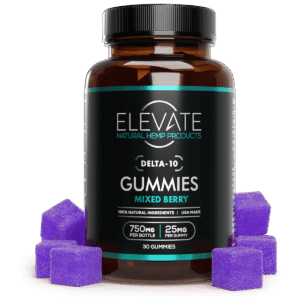
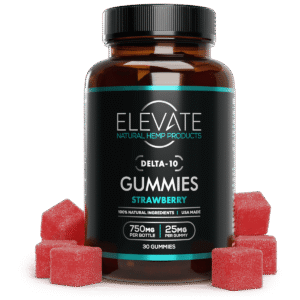
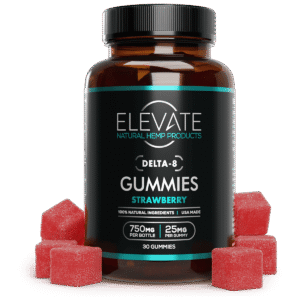
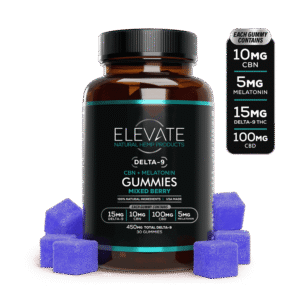
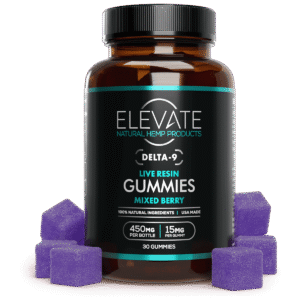
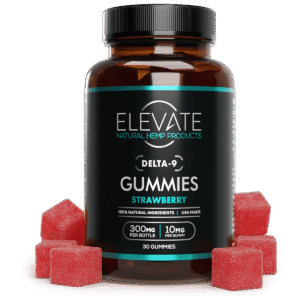
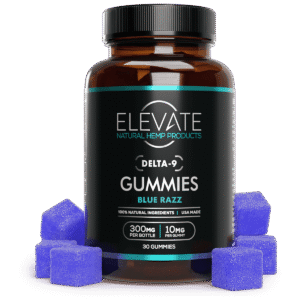
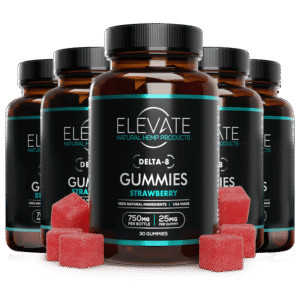
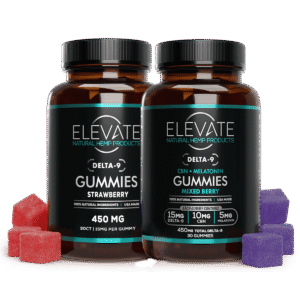
Compare Products
Compare our Delta 11 edibles against the broader THC gummy range to find the right strength step for your routine.
| Product | Potency | Type | Best For |
|---|---|---|---|
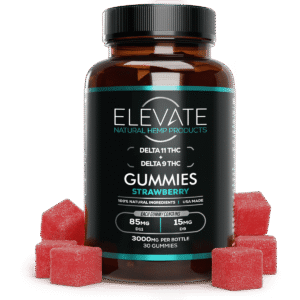
Delta 11 + Delta 9 THC Gummies | Delta 11 + Delta 9 blend | Hybrid Delta 11/9 Gummy | Adventurous users trying Delta 11 |
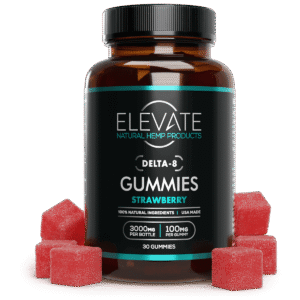
Delta 8 THC Gummies | Delta 8 THC gummy | Delta 8 Gummy | Beginners & gentle relaxation |
3000mg Delta 8 Gummies | 3000 mg | High-Potency Delta 8 Gummy | Experienced users seeking value & strength |
Delta 10 THC Gummies | Delta 10 THC gummy | Delta 10 Gummy | Daytime uplift |
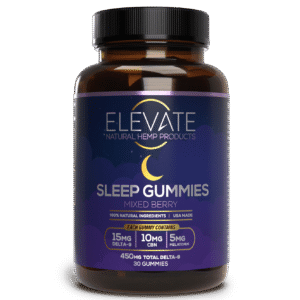
Delta 9 + CBN Sleep Gummies - Mixed Berry | Delta 9 + CBN blend | Delta 9 + CBN Sleep Gummy | Nighttime wind-down |
Delta 11 vs. Delta 9 vs. Delta 8: Key Differences
With the hemp-derived cannabinoid market expanding rapidly, understanding the distinctions between delta 11, delta 9, and delta 8 THC is essential before choosing any THC gummies. While all three share a similar molecular backbone, subtle differences in their chemical structure — specifically, the placement of a double bond on the carbon chain — influence how each compound interacts with the body's endocannabinoid system. If you want to learn more about delta 11 gummies before diving into comparisons, that's a smart starting point.
A 2025 study indexed on PubMed (PMID: 40880172) highlights how novel THC analogs are reshaping the cannabinoid landscape, noting that many of these emerging compounds lack the extensive clinical data available for delta 9 THC. This reality means consumers should approach potency and effect claims with healthy skepticism and rely on hedged, experience-based reporting rather than definitive conclusions.
The following comparison table summarizes the key practical differences users commonly report across these three cannabinoids:
When evaluating delta 11 effects specifically, it's important to note that the available data is almost entirely anecdotal at this stage. Users commonly report a balanced experience — less anxious headspace than high-dose delta 9, yet noticeably more pronounced than delta 8. Some describe a gentle body-centric calm paired with mild cerebral engagement, though these accounts should not be interpreted as guaranteed outcomes. Individual biochemistry, tolerance, and dosage all play decisive roles.
Potency is perhaps the most misunderstood factor in this comparison. Marketing materials sometimes position delta 11 as dramatically stronger than delta 9, but these claims lack peer-reviewed support. What we can say is that the metabolic pathway for delta 11 — particularly when consumed as an edible and processed through first-pass liver metabolism — may influence how the compound is experienced relative to its inhaled form. This is consistent with the broader pattern seen across all THC analogs in edible formats.
For consumers interested in a full spectrum experience, some manufacturers formulate gummies that combine delta 11 with other cannabinoids like CBD, CBG, or even trace-legal amounts of delta 9. These full spectrum blends are designed to leverage the entourage effect, a hypothesis suggesting that cannabinoids may work synergistically. While preliminary research supports this concept in general terms, specific full spectrum formulations containing delta 11 have not been independently studied.
The bottom line: all three cannabinoids offer distinct profiles worth understanding, but delta 11 remains the least researched of the group. Approach it with curiosity, start with a conservative dose, and always verify third-party lab results before purchasing any THC gummies — regardless of which analog they contain.
Delta 11 Gummy Dosage: A Beginner's Guide
Finding the right delta 11 dosage is one of the most common questions newcomers ask — and one of the most important to get right. Because delta 11 THC is a relatively novel cannabinoid in the consumer market, there are no universally standardized dosing guidelines. What follows is general education to help you build a framework, not medical advice. Consult a healthcare professional before use.
Most gummy edibles on the market list their cannabinoid content in milligrams per piece, which gives you a measurable starting point. A widely adopted approach among experienced cannabinoid consumers is the "start low and go slow" method. For someone entirely new to delta 11 gummies, that typically means beginning with a single gummy containing 5–10 milligrams of delta 11 THC, then waiting at least 90 minutes to two hours before considering any additional amount. Edibles must pass through the digestive system before cannabinoids reach the bloodstream, so onset is significantly slower than with inhalation — and the effects, once they arrive, can feel more pronounced and longer-lasting.
As you become more familiar with how your body responds, you can gradually adjust your delta 11 dosage upward in small increments. Many users report settling into a comfortable range between 10 and 25 milligrams per session, though individual responses vary based on body weight, metabolism, tolerance, and even recent food intake. If you want to learn more about delta 11 gummies and what to expect from the experience, building that knowledge base before your first dose is a smart move.
Here's a critical point that extends beyond personal experimentation: the milligram count printed on a label isn't always what you actually get. A 2025 study published in Cannabis and Cannabinoid Research analyzed commercially available THC-containing edibles and found significant variability between labeled cannabinoid content and actual tested amounts, with some products deviating substantially from their stated potency (PubMed ID: 41025251). This kind of inconsistency underscores exactly why third-party lab testing and accurate labeling are non-negotiable when choosing gummy edibles. Always look for a current Certificate of Analysis from an independent laboratory that confirms the cannabinoid profile and screens for contaminants like heavy metals, pesticides, and residual solvents.
Ultimately, responsible dosing starts with verified products and patience. No two people metabolize cannabinoids identically, so treat every published dosage range — including the ones above — as a general reference point rather than a prescription. Consult a healthcare professional before use, especially if you take other medications or have underlying health conditions.
Will Delta 11 Gummies Show Up on a Drug Test?
Yes — almost certainly. This is one of the most important things to understand before trying any delta 11 THC product, and we want to be completely straightforward about it.
Standard drug tests — whether urine, blood, saliva, or hair follicle — don't actually screen for a specific THC molecule. Instead, they detect THC-COOH, a metabolite your liver produces when it breaks down THC compounds. Because delta 11 THC shares the same core molecular structure as delta 9 and delta 8 THC, your body processes it through the same metabolic pathways. The end result is the same metabolite that triggers a positive reading on an immunoassay panel.
This applies regardless of whether the product is hemp-derived, sold legally in your state, or marketed as a milder alternative. Drug testing technology simply cannot distinguish between metabolites produced by different THC variants. A confirmation test using gas chromatography-mass spectrometry (GC-MS) may narrow down the specific compound, but initial screenings — the ones used by most employers, athletic organizations, and government agencies — cast a wide net that catches all THC metabolites equally.
Several factors influence how long delta 11 THC metabolites remain detectable in your system. Frequency of use is the biggest variable: occasional users may clear metabolites within a few days, while regular consumers could test positive for several weeks. Body composition matters too, since THC metabolites are lipophilic, meaning they bind to fat cells and release slowly over time. Metabolism rate, hydration levels, and the potency of the delta 11 gummies you consume all play a role as well.
Because delta 11 is psychoactive, this shouldn't come as a surprise — but it's a detail that marketing materials frequently gloss over. If you face upcoming drug testing for employment, probation, military service, or any other reason, the safest course of action is to avoid delta 11 gummies entirely until your testing window has passed. No detox drink or timing strategy is reliable enough to guarantee a negative result, and the consequences of a positive test can be significant. Honesty here matters more than a sale.
Safety, Lab Testing, and How to Read a COA
When you're shopping for any hemp-derived cannabinoid product — including delta 11 gummies — the single most important safeguard between you and an unreliable product is independent laboratory verification. Without it, you're relying entirely on a brand's label claims, and recent research shows that trust alone isn't enough.
A 2025 study published in the Journal of Analytical Toxicology examined commercially available hemp-derived THC products and found significant variability between the cannabinoid content listed on labels and what independent labs actually measured (PubMed ID: 41025251). Some products contained substantially more or less THC than advertised, which has obvious implications for both safety and consistent dosing. This discrepancy underscores why every delta 11 gummy you consider should be third party tested by an accredited, independent laboratory — not just tested in-house by the manufacturer.
Compounding this issue, a separate 2025 investigation highlighted the rapid emergence of novel and sometimes unexpected cannabinoid analogs appearing in consumer products, many of which aren't adequately characterized or disclosed (PubMed ID: 40880172). When novel compounds show up in products without transparent reporting, consumers have no way to evaluate what they're actually ingesting. This is precisely why independent verification isn't optional — it's essential.
The tool that makes this verification possible is the certificate of analysis, commonly called a COA. A proper COA should include the product name and batch number, the name of the independent lab that performed the testing, potency results showing the concentration of each cannabinoid detected (including delta 11 THC and any other analogs present), and results for contaminant panels covering pesticides, heavy metals, residual solvents, and microbial impurities. Look for a QR code or direct link on the packaging that takes you to the actual lab report — not just a generic results page.
When reviewing a COA, confirm that the batch number on the report matches the batch number on your product packaging. Check that the listed potency aligns closely with what the label claims. If the numbers diverge by more than about ten percent, that's a red flag worth taking seriously.
At Elevate Right, we provide batch-specific COAs for every product we sell, making it straightforward for you to verify exactly what's in your delta 11 gummies before you take your first dose. We believe transparency isn't a marketing advantage — it's the baseline standard every consumer deserves.
What Is Delta 11?
FAQ
What is delta 11 THC?
Delta 11 THC (Δ11-tetrahydrocannabinol) is a naturally occurring cannabinoid found in Cannabis sativa in trace amounts. Most delta 11 gummies on the market are manufactured from hemp-derived CBD through selective chemistry, keeping production within the legal framework established by the 2018 Farm Bill.
How do delta 11 gummies compare to delta 9 and delta 8 gummies?
All three cannabinoids share a similar molecular backbone, but the placement of a double bond on the carbon chain differs. Users commonly report that delta 11 delivers a potent, full-bodied experience — often described as stronger than delta 8 yet qualitatively different from a standard delta 9 high. Individual responses vary based on tolerance, metabolism, and dosage.
Are delta 11 gummies psychoactive?
Yes. Delta 11 THC is a psychoactive cannabinoid. Users report effects such as deep relaxation, euphoria, and heightened sensory perception, though experiences vary widely from person to person.
Are delta 11 gummies safe?
Because delta 11 THC is psychoactive, accurate dosing is important. Research has shown significant label-accuracy variability across THC edibles, so consumers should demand third-party lab verification, review Certificates of Analysis, and start with a low dose. Peer-reviewed clinical data on delta 11 specifically remains extremely limited.
Are delta 11 gummies legal?
Delta 11 gummies derived from hemp containing no more than 0.3% delta 9 THC by dry weight fall under the framework established by the 2018 Farm Bill at the federal level. However, state laws vary, so consumers should verify local regulations before purchasing.
Why does third-party lab testing matter for delta 11 gummies?
A 2025 study found significant variability between the THC content reported on edible labels and the amount actually measured in products. Third-party lab testing and Certificates of Analysis help verify that the delta 11 gummy you purchase contains what the label claims, supporting safer dosing.