Thca Hemp Flower
THCa hemp flower is raw, Farm Bill-compliant hemp rich in tetrahydrocannabinolic acid — the non-intoxicating precursor to delta-9 THC. When heated through smoking, vaping, or cooking, THCa converts to THC through decarboxylation. In its raw form, this flower delivers cannabinoids and terpenes without intoxication, making it a versatile option for wellness-minded consumers.

THCa hemp flower is raw, Farm Bill-compliant hemp rich in tetrahydrocannabinolic acid — the non-intoxicating precursor to delta-9 THC. When heated through smoking, vaping, or cooking, THCa converts to THC through decarboxylation. In its raw form, this flower delivers cannabinoids and terpenes without intoxication, making it a versatile option for wellness-minded consumers.
Easter Sale
Any one-time purchase
When you subscribe*
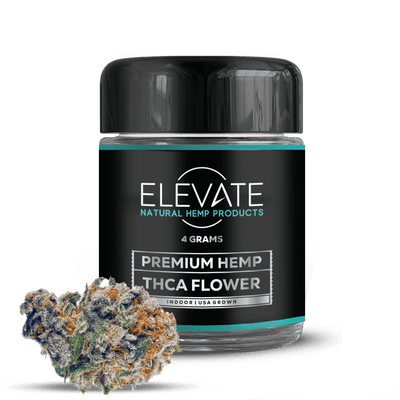
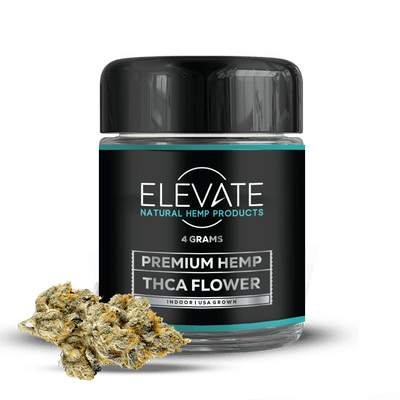
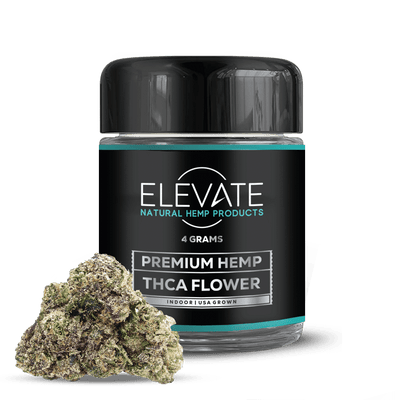
THCa hemp flower is legally grown hemp rich in tetrahydrocannabinolic acid, a non-intoxicating cannabinoid that converts to THC only when exposed to heat. Federally compliant under the 2018 Farm Bill when containing less than 0.3% delta-9 THC by dry weight, it offers consumers access to full-spectrum cannabinoid and terpene profiles in whole-flower form.

Compare Our Thca Hemp Flower
Swipe to explore — find the formula that fits your lifestyle.
| Product | Potency | Type | Best For |
|---|---|---|---|
|
Elevate Premium
| 25mg | Gummy | Daily wellness |
|
Elevate Premium
| 25mg | Gummy | Daily wellness |
|
Elevate Premium
| 25mg | Gummy | Daily wellness |
Premium THCa Hemp Flower — Curated for the Informed Consumer
Interest in THCa hemp flower has surged, and for good reason. As consumers look beyond CBD into the broader cannabinoid spectrum, tetrahydrocannabinolic acid has emerged as one of the most compelling compounds in the hemp plant. Unlike its well-known counterpart delta-9 THC, THCa is non-intoxicating in its raw, acidic form. It only converts to psychoactive THC through decarboxylation — the application of heat via smoking, vaping, or cooking.
That distinction makes THCa flower uniquely versatile. For those exploring the entourage effect — the synergistic interplay between cannabinoids, terpenes, and flavonoids — whole flower preserves the plant's full chemical profile in a way that isolates and concentrates simply can't replicate. Every trichome, every terpene, every trace cannabinoid stays intact until you decide how to use it.
At Elevate Right, this collection is built on three non-negotiable standards:
- Transparent sourcing — every strain is U.S.-grown under established state agricultural programs
- Rigorous lab testing — batch-specific Certificates of Analysis verify potency, terpene content, and the absence of pesticides, heavy metals, and microbial contaminants
- Curated variety — from sativa-dominant strains with bright, uplifting terpene profiles to indica-leaning cultivars rich in myrcene and linalool, our selection is designed for informed choice
Whether you're an experienced hemp consumer expanding your cannabinoid exploration or someone researching THCa for the first time, you're in the right place. Below, you'll find a detailed buying guide, answers to the most common questions about THCa hemp flower, and the science that separates quality product from marketing noise. Browse with confidence — every product in this collection meets the standard we'd set for ourselves.
Verified Purity: Every batch is rigorously tested by ACS Laboratory, an independent ISO 17025-accredited facility. View the full results in our Trust Center.
How to Choose the Best THCa Hemp Flower
Verify the Source and Lab Results
Start with origin. U.S.-grown hemp cultivated under state-regulated agricultural programs ensures compliance with the 2018 Farm Bill's 0.3% delta-9 THC dry-weight threshold. Then check the Certificate of Analysis: a legitimate COA from an ISO 17025-accredited third-party lab will show cannabinoid potency, terpene breakdown, and screening results for pesticides, heavy metals, residual solvents, and microbial contaminants. If a brand doesn't publish batch-specific COAs, keep looking.
Understand Strain Profiles
THCa content varies significantly by strain — and potency is only part of the picture. Sativa-dominant cultivars often feature energizing terpene profiles heavy in limonene and pinene, while indica-dominant genetics lean toward myrcene and caryophyllene. Hybrids split the difference. Match the terpene profile to your intended experience, because the cannabinoid-terpene relationship shapes the outcome as much as raw potency numbers do.
Evaluate Form and Freshness
Whole flower offers the most complete terpene preservation. Pre-rolls add convenience but may use trim or shake — ask before you buy. Always check for a harvest date or packaging date. THCa degrades over time, especially with heat and light exposure, so quality flower should arrive in airtight, opaque containers. If there's no date on the label, that's a red flag.
Compare Price Honestly
Calculate cost per gram across weight tiers (3.5g, 7g, 14g, 28g). Premium indoor-grown THCa flower typically commands higher prices than greenhouse or outdoor cultivation — that reflects controlled growing environments, hand-trimmed finishing, and tighter quality control. The cheapest option is rarely the best value. Prioritize verified quality over sticker price, and you'll spend less in the long run on flower that actually delivers.
From Our Blog
Is THCA Legal in Alaska? (2026 Guide for Hemp & Cannabis Shoppers)
If you're searching "is thca legal in alaska," the answer is more nuanced than a simple yes or no...
Read MoreIs THCA Legal in Montana? 2026 State & Federal Law Guide
As of mid-2026, THCA products sold as hemp are effectively not legal in Montana retail because of...
Read MoreIs THCA Legal in New Jersey in 2026? (Post‑S4509 Guide)
As of April 13, 2026, THCA is banned outside New Jersey's licensed cannabis market under S4509 (t...
Read MoreFrequently Asked Questions
What exactly is THCa and how is it different from THC?
THCa (tetrahydrocannabinolic acid) is the naturally occurring acidic precursor to delta-9 THC found in raw cannabis and hemp plants. The difference is molecular: THCa carries an extra carboxyl group that promotes it from binding efficiently to CB1 receptors in the brain, which means it does not produce intoxication in its raw form. When THCa is exposed to heat — a process called decarboxylation — it loses that carboxyl group and converts to delta-9 THC. Research published through the National Center for Biotechnology Information confirms this conversion pathway is heat-dependent and does not occur at room temperature under normal storage conditions.
Will THCa hemp flower make me feel high?
In its raw, unheated form, THCa hemp flower is non-intoxicating. THCa does not efficiently activate the CB1 receptors responsible for the euphoric effects associated with THC. However, if you apply heat — by smoking, vaping, or cooking — THCa converts to delta-9 THC through decarboxylation, which can produce intoxicating effects. The method of consumption determines the experience. Eating raw flower or using it in cold preparations keeps THCa in its acidic, non-intoxicating state. Individual responses vary based on tolerance, metabolism, and the specific cannabinoid and terpene profile of the strain you choose.
Is THCa hemp flower legal under federal law?
Under the 2018 Farm Bill (Agriculture Improvement Act), hemp is defined as Cannabis sativa L. containing no more than 0.3% delta-9 THC on a dry-weight basis. Because THCa is a distinct compound from delta-9 THC, hemp flower high in THCa but below the delta-9 threshold is federally compliant. That said, state laws vary significantly — some states have enacted restrictions on THCa products specifically. Always verify your state's current regulations before purchasing. Elevate Right ships only to jurisdictions where THCa hemp flower is permitted under both federal and state law.
How does THCa convert to THC through heat?
Decarboxylation begins when THCa is heated to approximately 220°F (104°C), where the carboxyl group starts to detach. Conversion efficiency peaks between 240–250°F (115–121°C) with sustained exposure of 30–45 minutes. Above 300°F (149°C), THC itself begins to degrade into CBN (cannabinol), a less potent cannabinoid. This temperature curve explains why different consumption methods produce different experiences: smoking and vaping achieve rapid, high-temperature conversion, while low-temperature oven decarboxylation for edibles allows more controlled, gradual conversion with less cannabinoid loss.
Will THCa hemp flower show up on a drug test?
Yes — there is a significant risk. Standard drug tests screen for THC metabolites (THC-COOH), not THCa specifically. If you heat THCa hemp flower through smoking, vaping, or cooking, it converts to THC, which your body metabolizes into the same compounds detected by urine, blood, and hair follicle tests. Even handling or storing THCa flower can result in minor natural decarboxylation over time. If you are subject to drug testing for employment or any other reason, exercise caution and consult with your testing administrator before using any THCa hemp product.
What are the potential benefits of THCa?
Preliminary research suggests THCa may interact with the endocannabinoid system differently than THC due to its acidic molecular structure. A 2017 study published in the International Journal of Molecular Sciences noted THCa's interaction with PPAR-gamma receptors, which play a role in metabolic and inflammatory pathways. However, laboratory research on THCa in humans remains limited, and no definitive health claims can be made at this time. Many consumers report choosing THCa hemp flower for its full-spectrum cannabinoid and terpene content as part of a broader wellness routine. Individual experiences vary, and THCa should not be considered a substitute for professional wellness advice.
How should I store THCa hemp flower?
Store THCa hemp flower in an airtight, opaque container — glass jars with sealed lids work best. Keep it in a cool, dark location between 60–70°F (15–21°C) with relative humidity around 55–62%. Exposure to heat, light, and oxygen accelerates both terpene evaporation and THCa degradation. Avoid plastic bags, which generate static that strips trichomes from the flower surface, and skip the refrigerator or freezer — temperature fluctuations cause moisture condensation that promotes mold. Properly stored THCa hemp flower maintains peak potency and flavor for approximately 6–8 months from the harvest date.
What's the difference between THCa flower and CBD flower?
The primary difference is the dominant cannabinoid. CBD flower is bred to express high concentrations of cannabidiol with minimal THCa, while THCa flower is cultivated for elevated tetrahydrocannabinolic acid content. CBD is non-intoxicating regardless of heat application — it doesn't convert to THC. THCa, by contrast, converts to delta-9 THC when heated. Both types of hemp flower contain terpenes and minor cannabinoids, but their chemical profiles and potential effects differ substantially. If you're weighing both options, our CBD flower collection offers a direct comparison point.
Can I cook or bake with THCa hemp flower?
Absolutely. If you want to convert THCa to THC for its activated effects, decarboxylate the flower first by spreading it on a parchment-lined baking sheet and heating at 240°F for 30–40 minutes. Then infuse it into a fat-based carrier like butter or coconut oil. If you'd rather keep THCa in its raw, non-intoxicating acidic form, add unheated flower to smoothies, cold sauces, or salad dressings — any preparation that avoids sustained heat above 200°F. The method you choose determines whether the THCa remains in its original state or converts to THC.
How much THCa hemp flower should I use?
There is no universal dosage for THCa hemp flower because individual factors — body weight, tolerance, metabolism, and consumption method — all influence the experience. A common starting point for new consumers is 0.1–0.25 grams in a single session, adjusting gradually based on personal response. Keep in mind that consuming raw (unheated) flower produces a fundamentally different experience than heated consumption, since THCa remains in its non-intoxicating acidic form without heat. Start low, go slow, and give yourself adequate time to assess effects before increasing. Check the COA for the specific THCa percentage to understand the cannabinoid content per gram of your chosen strain.
What do lab results actually show about THCa hemp flower quality?
A comprehensive Certificate of Analysis from an ISO 17025-accredited laboratory reveals several critical quality indicators: cannabinoid potency (THCa, delta-9 THC, CBD, CBG, and minor cannabinoids expressed as percentages), terpene profile and concentrations, and safety screenings for pesticides, heavy metals (lead, arsenic, mercury, cadmium), residual solvents, mycotoxins, and microbial contaminants like E. coli and salmonella. The COA should reference a specific batch number that matches the product packaging. If a COA is missing any of these panels or comes from an unaccredited lab, it's an incomplete picture of quality — and that's a reason to look elsewhere.
Is THCa hemp flower the same as marijuana?
Legally, no. Under the 2018 Farm Bill, hemp and marijuana are both Cannabis sativa L., but they are classified differently based on delta-9 THC content. Hemp must contain 0.3% or less delta-9 THC by dry weight; marijuana exceeds that threshold. THCa hemp flower can contain high levels of THCa while remaining below the delta-9 limit, making it federally legal hemp — not marijuana. Chemically, the raw flower may look, smell, and taste similar to marijuana strains because they share genetic lineage, terpenes, and cannabinoid pathways. The legal distinction rests entirely on the measured delta-9 THC concentration at the time of testing.