
Will Delta 8 Show On Drug Test? What You Need to Know

Yes, Delta 8 THC will show on standard drug tests because it metabolizes into identical THC-COOH metabolites that drug screens detect, regardless of source.
Table of Contents
- What Is Delta-8 THC?
- Delta-8 vs. Delta-9 THC: What's the Difference?
- Will Delta-8 Show Up on a Drug Test?
- Can a Drug Test Tell the Difference Between Delta-8 and Delta-9?
- How Long Does Delta-8 Stay in Your System?
- Factors That Affect How Long Delta-8 Stays in Your System
- Will CBD Cause a Positive Drug Test?
- The Bottom Line: What You Should Know Before a Drug Test
What Is Delta-8 THC?
Delta-8 THC is a naturally occurring cannabinoid found in trace concentrations within the cannabis plant. Unlike its more abundant cousin, delta-9 THC—the primary psychoactive compound in marijuana—delta-8 THC typically exists at levels too low to extract economically from raw plant material. As a result, most commercial Delta-8 THC products are synthesized from cannabidiol (CBD) sourced from hemp, placing them in a legal gray area that continues to generate debate among regulators, retailers, and consumers alike. The 2018 Farm Bill federally legalized hemp and hemp-derived products containing no more than 0.3 percent Delta-9 THC by dry weight. Because the legislation did not explicitly address Delta-8 THC, manufacturers have argued that their products fall within the law's boundaries. However, the FDA has not approved any Delta-8 THC products for safe use, and the agency has issued public warnings about the potential risks associated with their unregulated production and labeling. Structurally, delta-8 THC and delta-9 THC differ by the placement of a single chemical bond. According to toxicology research from Vanderbilt University Medical Center, this minor molecular distinction does not stop the body from metabolizing both compounds into nearly identical THC metabolites—most notably THC-COOH [vumc-toxicology-delta8]. That shared metabolic pathway is the central reason anyone asking "will delta 8 show on drug test" needs to understand the science before assuming hemp origin equals testing safety.Delta-8 vs. Delta-9 THC: What's the Difference?
Delta-8 THC and Delta-9 THC are both forms of THC—the primary psychoactive cannabinoid found in marijuana—but they differ in one small yet significant structural detail. The double bond in delta-8 sits on the eighth carbon chain, while in delta-9 THC it sits on the ninth. That single-bond shift makes Delta-8 THC roughly half as potent psychoactively, which is why many users report a milder, clearer-headed experience.
drug testing, however, that molecular distinction is essentially irrelevant. According to reporting by GoodRx, both compounds are metabolized by the liver into nearly identical THC metabolites—most notably THC-COOH, the exact marijuana metabolites that standard immunoassay drug screens are designed to detect [goodrx-delta8-drug-test]. Because the test targets this shared metabolite rather than the parent cannabinoid itself, a panel cannot differentiate between someone who consumed a hemp-derived delta-8 gummy and someone who smoked traditional marijuana.
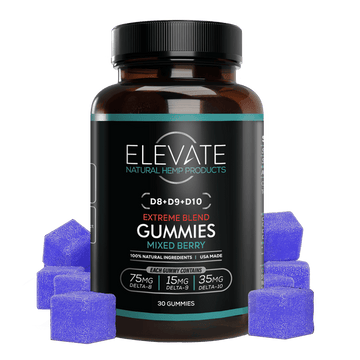
[PRODUCT:1]Legal status compounds the confusion. Delta-8 THC occupies a gray area under federal and state law, leading many consumers to assume that "legal" automatically means "undetectable." It does not. Legality is a regulatory question; detection is a biochemical one. If you want to learn more about will delta 8 show on drug test implications, understanding this metabolite overlap is the essential starting point.
Will Delta-8 Show Up on a Drug Test?
Yes—Delta-8 THC will almost certainly cause you to fail a drug test. The reason is biochemical, not legal. When your body metabolizes Delta-8 THC, it produces 11-nor-9-carboxy-THC (THC-COOH)—the same primary metabolite generated by Delta-9 THC. This shared metabolite is precisely what standard drug screening panels are designed to detect. A standard urine drug screen (UDS), the type used by most employers and laboratories including Quest Diagnostics, relies on immunoassay technology. These immunoassay panels do not distinguish between cannabinoid sources. They simply flag the presence of THC metabolites above a set threshold, typically 50 ng/mL. Because Delta-8 and Delta-9 share this metabolic pathway, even a single use of a hemp-derived Delta-8 product can produce a detectable concentration of THC-COOH in urine, leading to a positive drug test result. What about confirmatory testing? When an initial urine drug test comes back positive, laboratories often use gas chromatography–mass spectrometry (GC-MS) to verify the result. However, as toxicology researchers at Vanderbilt University Medical Center have noted, GC-MS has significant limitations in reliably distinguishing Delta-8 THC metabolites from Delta-9 THC metabolites due to their near-identical molecular structures [vumc-toxicology-delta8]. This means confirmatory testing is unlikely to clear you, and claiming the result is a false positive because you "only used Delta-8" is not a dependable defense. The bottom line: legal status has no bearing on whether a substance is detectable in a drug screening. If you face an upcoming urine drug test or are subject to routine workplace or court-ordered testing, assume that any Delta-8 THC product will produce the same outcome as conventional THC. To learn more about will delta 8 show on drug test timelines and the factors that influence detection, read on.Can a Drug Test Tell the Difference Between Delta-8 and Delta-9?
The short answer: not with the tests most employers actually use. Can delta-8 fail a urine test? Absolutely—and the biochemistry explains why. A standard urine drug screen (UDS) relies on immunoassay technology designed to flag THC metabolites like 11-nor-9-carboxy-THC (THC-COOH). Because delta-8 and delta-9 THC share a nearly identical molecular structure, the body breaks both down into overlapping metabolites that trigger the same antibody response on the test strip. According to toxicology guidance from Vanderbilt University Medical Center, delta-8 consumption produces metabolites that are essentially indistinguishable from delta-9 on routine drug screening panels.
More advanced confirmatory methods—specifically GC-MS (gas chromatography–mass spectrometry) and LC-MS/MS—can theoretically differentiate the two compounds by isolating their unique spectral signatures. However, major testing laboratories such as Quest Diagnostics do not routinely apply these techniques unless specifically requested, and most employer-ordered screens never reach that stage. A positive immunoassay result is often enough for an employer to rescind a job offer or initiate disciplinary action, regardless of the THC source.
The National Drug Court Institute has similarly cautioned that participants using delta-8 products risk a false positive interpretation—where the result is pharmacologically "true" but attributed to the wrong cannabinoid—because court-ordered panels use the same immunoassay thresholds. Employer and testing-lab policies rarely distinguish between hemp-derived and marijuana-derived THC metabolites, meaning the legal origin of your product offers no protection once the sample is collected. If you want to learn more about will delta 8 show on drug test scenarios, understanding this metabolic overlap is the essential starting point.
How Long Does Delta-8 Stay in Your System?
There is no single answer, because detection windows depend on how often you use, your body composition, metabolism, hydration levels, and the sensitivity of the test itself. What we can say with confidence is that Delta-8 THC produces THC metabolites—primarily THC-COOH—that are virtually indistinguishable from the marijuana metabolites generated by delta-9 THC. That shared metabolite is exactly what standard panels screen for. Urine testing is the most common format. For an occasional user (one to three times per week), THC-COOH is generally detectable on a urine drug test for roughly 3 to 15 days after the last dose. Frequent or daily users may test positive for 30 days or longer, because THC metabolites are fat-soluble and accumulate in adipose tissue over time. According to reporting from GoodRx, even a single moderate dose of Delta-8 can leave enough metabolite behind to exceed the typical 50 ng/mL immunoassay cutoff. Blood and saliva tests have shorter windows—typically 1 to 3 days for occasional users—but can extend further with chronic use. These methods are more commonly deployed in roadside or post-accident scenarios rather than pre-employment screens. Hair follicle testing offers the longest look-back period, with metabolites potentially detectable for up to 90 days regardless of usage frequency. The biological half-life of Delta-8 THC and its metabolites falls in a similar range to delta-9, meaning clearance is gradual rather than abrupt. Factors like BMI, liver enzyme activity, exercise habits, and even genetics all influence how quickly your body processes and excretes these compounds. Higher body fat generally means longer retention, because cannabinoids bind to lipid-rich tissues. The takeaway: assume that if you have used Delta-8 THC within the relevant detection window for your test type, there is a meaningful probability it will be detectable. To learn more about will delta 8 show on drug test timelines and what you can realistically do before a scheduled screening, keep reading.Factors That Affect How Long Delta-8 Stays in Your System
Several biological and behavioral variables determine how long Delta-8 THC remains detectable in your body. Understanding these factors can help you gauge your personal clearance timeline before any screening. Body fat percentage plays a significant role because THC metabolites are lipophilic—they bind to fat cells and release slowly over time. Individuals with higher body fat may store these byproducts longer than leaner individuals. Closely related is metabolism rate: a faster metabolism breaks down and excretes THC-COOH more efficiently, while a slower metabolism extends the detection window. Dosage and frequency of use are arguably the most influential factors. According to Healthline's reporting on delta-8 and drug testing, even occasional low-dose use can produce detectable metabolite levels, and chronic consumers accumulate far higher concentrations that take weeks to clear. A single gummy metabolizes very differently than daily vaping over several months. Hydration affects urine concentration, though overhydrating can flag a sample as dilute rather than actually speeding elimination. Finally, method of consumption matters: inhalation delivers THC into the bloodstream almost instantly with a shorter metabolic tail, while edibles undergo first-pass liver metabolism, potentially extending how long metabolites linger. For a deeper dive, learn more about will delta 8 show on drug test timelines and testing types in our full guide.Will CBD Cause a Positive Drug Test?
Pure CBD isolate, which contains no measurable THC, should not trigger a positive drug test on standard drug screening panels. These tests are designed to detect THC metabolites—specifically THC-COOH—rather than CBD itself. However, the picture becomes more complicated with full-spectrum hemp-derived products, which legally contain up to 0.3% THC under FDA guidelines established by the 2018 Farm Bill. That trace amount may seem negligible, but according to research from Vanderbilt University Medical Center's toxicology department, even small concentrations of THC or related cannabinoids in CBD products can accumulate with regular use and produce enough metabolites to cause a false positive on an immunoassay screen. Some CBD products have also been found to contain undisclosed delta-8 or delta-9 THC due to inconsistent manufacturing standards, further increasing detection risk. If you face an upcoming drug screening, consult a healthcare provider before using any CBD or cannabinoid product. You can also learn more about will delta 8 show on drug test results and the science behind metabolite detection to make a fully informed decision.The Bottom Line: What You Should Know Before a Drug Test
If you use delta-8 products, the most important takeaway is this: Delta-8 THC produces the same primary metabolite—THC-COOH—as Delta-9 THC, which means you will almost certainly fail a standard drug screening. As research from Vanderbilt University Medical Center's toxicology department confirms, immunoassay panels cannot distinguish between these cannabinoids at the metabolite level. A positive drug test result carries real consequences for employment, legal standing, and medical clearances—regardless of whether the substance was legally purchased. If you face an upcoming drug test, consider being transparent with your employer or medical review officer about your delta-8 use. Consulting a healthcare professional for personalized guidance is always advisable. To learn more about will delta 8 show on drug test, explore our detailed breakdown. These statements have not been evaluated by the FDA. This content is for informational purposes only and is not intended to diagnose, treat, cure, or prevent any disease.Join Our Newsletter
Sign up to be the first to know about our can't-miss product drops, special VIP offers & exclusive discounts.